The History of Bochum in 10 Stops
Experience Bochum Anew: Your Time Travel in 10 Stops – as a Route for Your Next Visit
This route is intended as a concrete planning aid for your next Bochum day: 10 stops that you can visit one after the other in the future (e.g. next weekend or in the coming months)—conveniently on foot, by bike, and with public transport.
Important: This page is a future-oriented route (planning & visit), not a chronicle
All content is formulated to help you with the planning of upcoming visits: What you see, hear, and experience on site and how to sensibly connect the stops. Concrete program data (opening hours, special exhibitions, guided tours, ticket models) change regularly—so check the linked official pages before you travel.
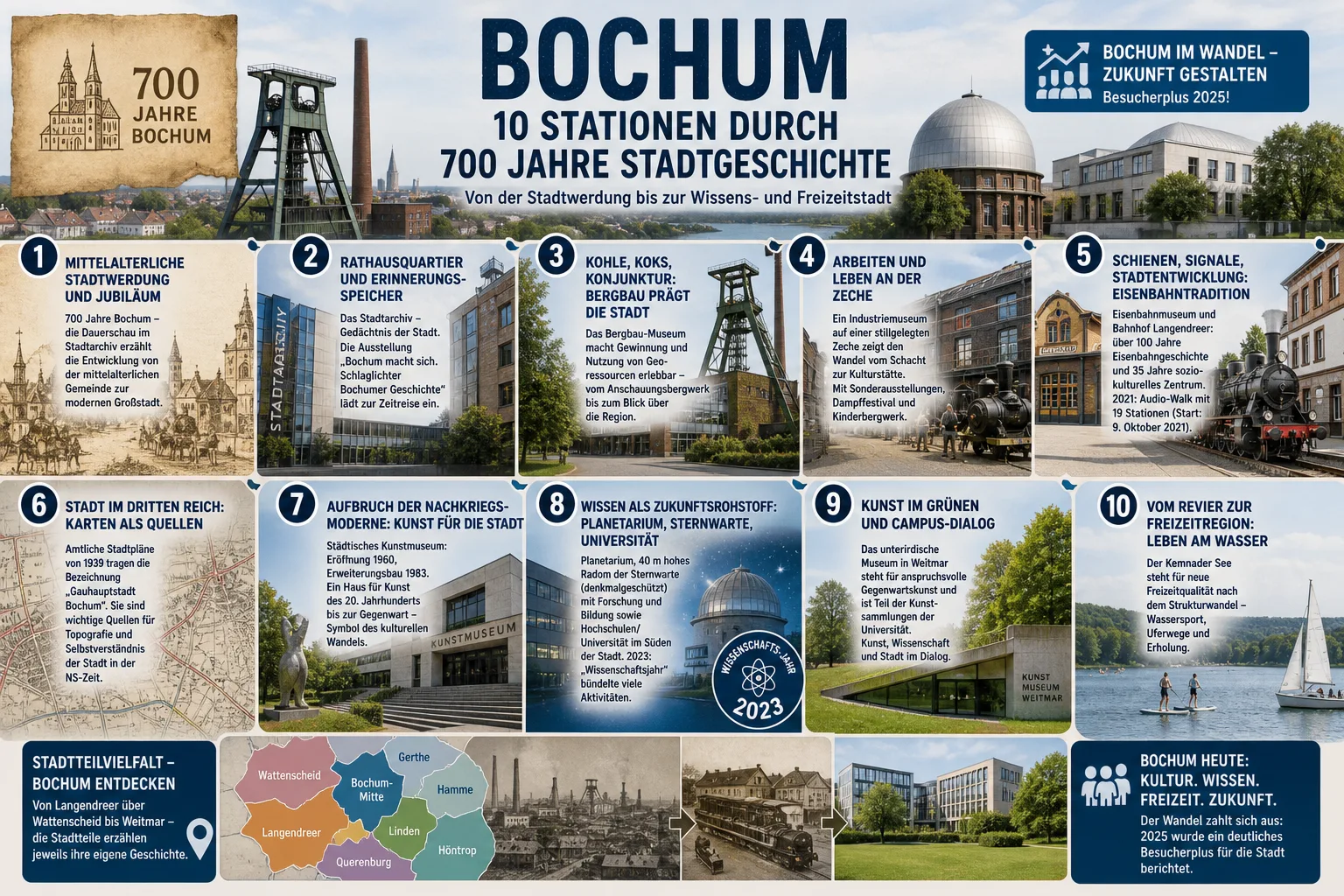
The 10 Stops (ideal as a 1–2-day route)
- City Center Start: Town Hall Area as Orientation Point
- Bochum City Archive: Entry via Original Sources
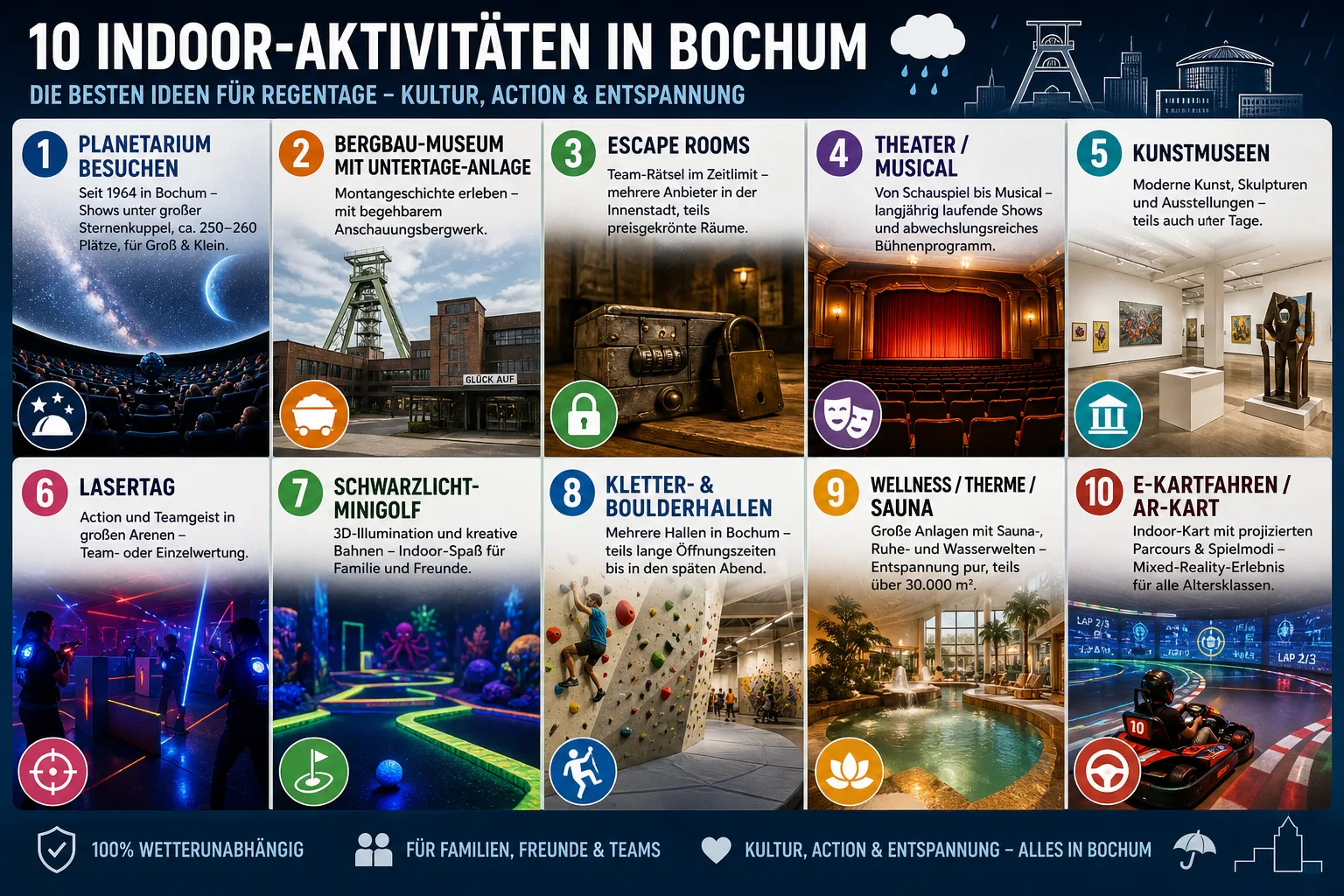
- German Mining Museum: Underground Experience & Overview
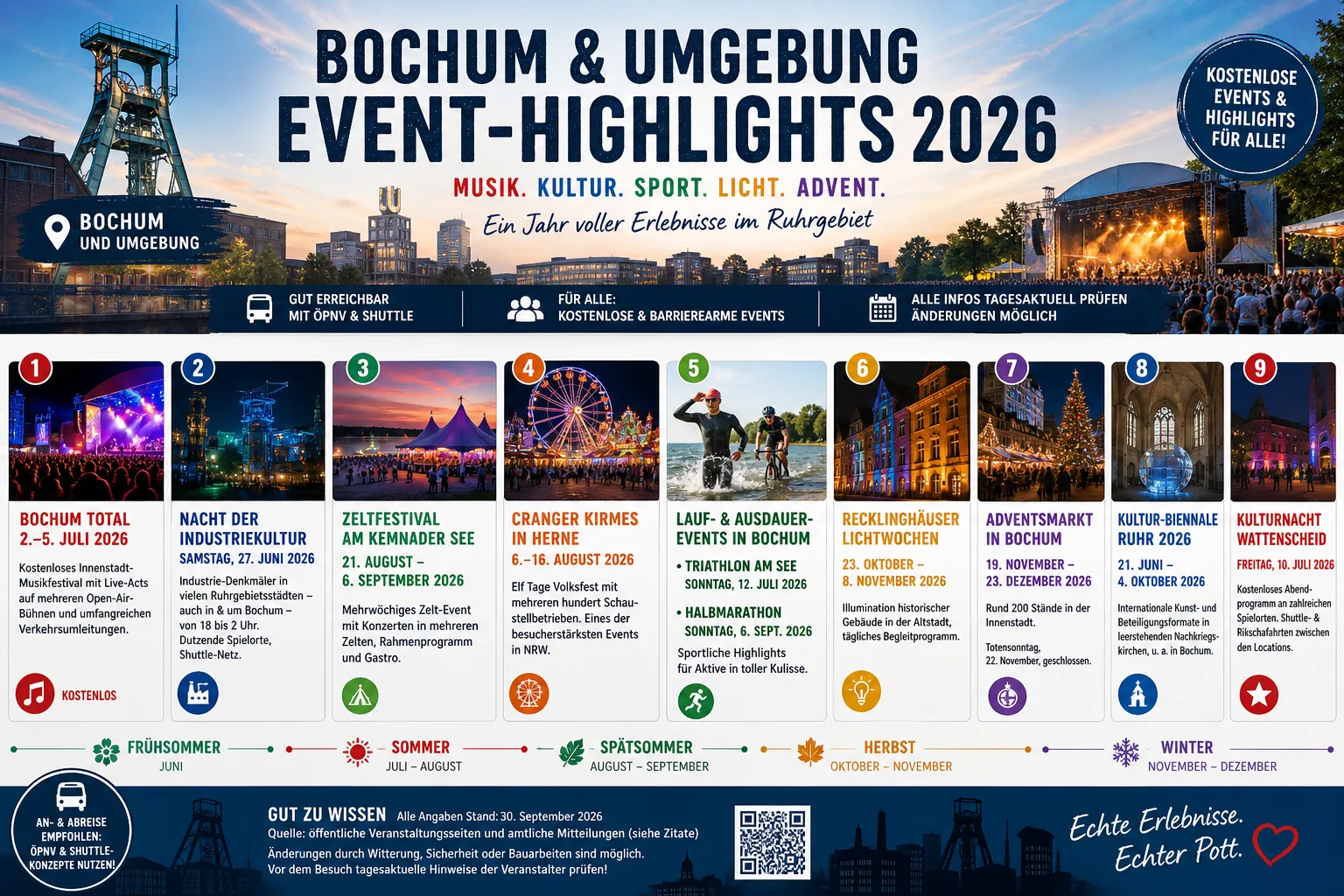
- Industrial Culture in the Ruhr: Colliery and Factory Backdrops as Learning Sites
- Experience Railways: Museum & Train as Urban Experience
- Remembrance Culture on Site: Document-Based Perspectives
- Bochum Art Museum: Cultural Program for Your Next City Block
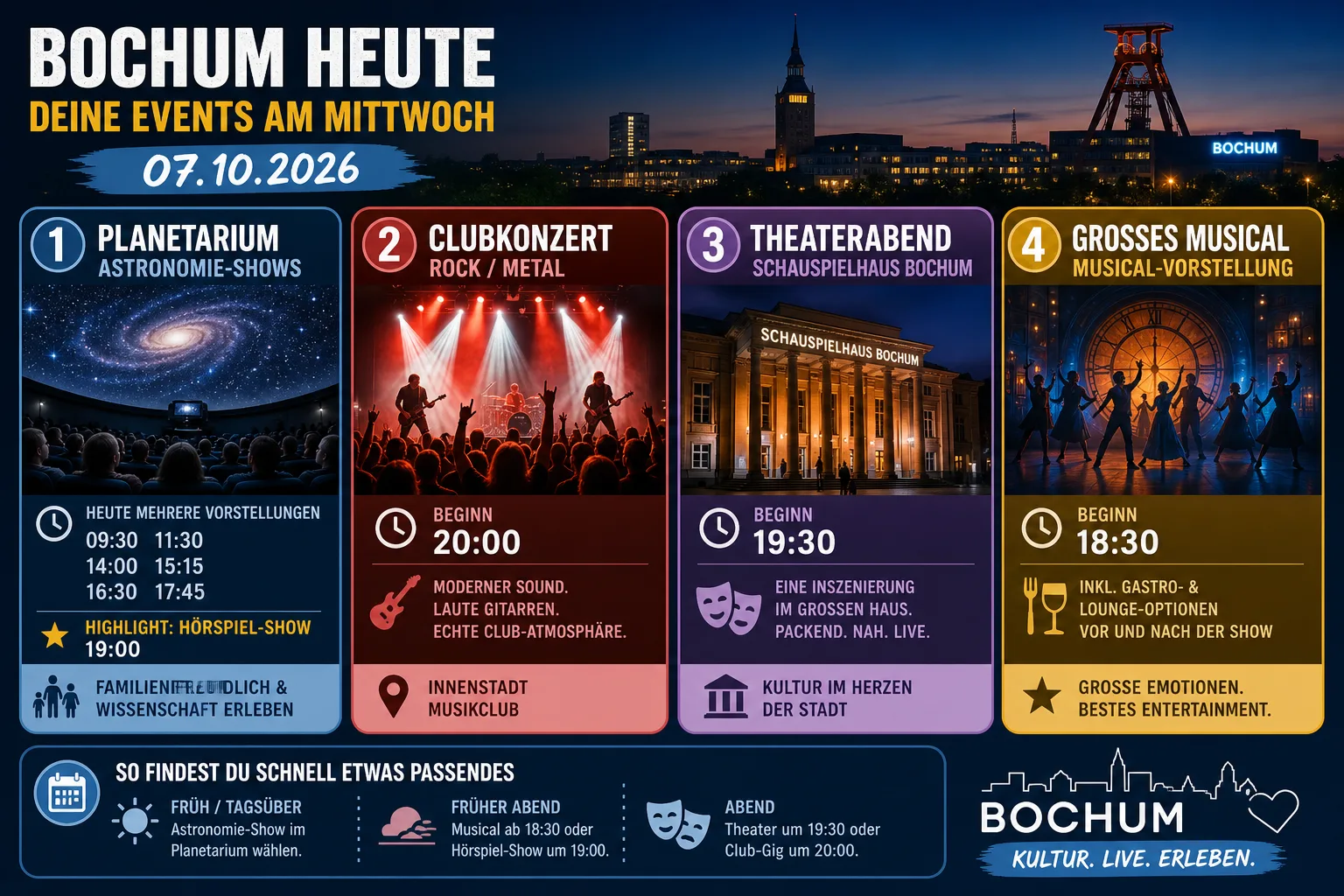
- Planetarium & Science: An Evening Program with Aha Effect
- Kemnader Lake: Active Break by the Water
- District Options: Langendreer, Weitmar & Other Branches
1) City Center Start: Town Hall Area as Orientation Point
Begin your next visit to Bochum in the city center area around the town hall. This starting point is suitable for structuring your route: From here, you can reach several stops on foot and can switch to bus and train at any time if needed.
- Practical for your visit: Arrange a meeting point (e.g. at the town hall), set a start time, and plan a first short coffee break.
- How to get more out of it: Write down 3 questions in advance that you want to answer that day (e.g. "Which places show change?", "Which perspective interests me: work, culture, nature?").
2) Bochum City Archive: Entry via Original Sources
If you don't just want to "look at" the city in the future, but want to understand it, the city archive is a strong entry point. Here you can use exhibitions and materials that make backgrounds on districts, everyday life, and changes in urban space tangible.
- Visit idea: Plan 45–90 minutes, depending on whether you just want an overview or want to delve into a specific topic.
- Group tip: Split up: One person collects info on districts, one on mobility/transport, one on culture—and at the end, you exchange the most important findings.
- Plan for accessibility: Check the current information on accessibility and any registration rules on the official site in advance.
3) German Mining Museum: Underground Experience & Overview
The German Mining Museum Bochum is particularly suitable as the next stop for all those who want to experience technology, work, and geoscience in a concentrated way during a future visit. Depending on the program, you can visit exhibitions and (if offered) also plan an underground or experience format.
- How to plan efficiently: Buy or reserve tickets in advance if possible and check time slots if individual areas are limited.
- For families: Set a "discovery focus" (e.g. machines, raw materials, everyday objects). This makes the tour more plannable.
- For photo enthusiasts: Find out in advance about photo rules and places with a good perspective (e.g. outdoor areas, viewpoints).
4) Industrial Culture in the Ruhr: Colliery and Factory Backdrops as Learning Sites
For your next trip, it is worth planning industrial culture sites in addition to a large museum: areas with former work and production backdrops, which are now often used for exhibitions, education, events, and leisure.
This makes the day more varied: You alternate between indoor spaces (exhibitions) and outdoor spaces (grounds, paths, sightlines) and get a better feel for scale and atmosphere.
- Visit idea: Combine a guided tour/intro (if offered) with a free walk.
- Weather backup: In case of rain, plan indoor stops (museum/archive/art) first and postpone outdoor areas to a dry time slot.
5) Experience Railways: Museum & Train as Urban Experience
Bochum can be discovered particularly well in the future via rail routes—as practical mobility and as a theme. A railway museum offers a vivid visit module: vehicles, technology, and signal worlds make railways "readable".
Additionally, you can consciously include a train station as a stop: as a place where you experience changing, arriving, and continuing—and thus also feel the rhythm of the city.
- Planning: Check in advance whether the museum has seasonal opening days and whether there are combination offers (admission/guided tour).
- Extra idea: Supplement the visit with an audio walk or audio route, if currently offered—this is a low-threshold option for future trips, even without a guide.
6) Remembrance Culture on Site: Document-Based Perspectives
If you want to include not only "highlights" but also reflective stops on your next visit to Bochum, plan a document-based perspective—for example, through maps, photos, newspaper collections, or curated contributions in exhibitions.
The added value: You train a "source view" of the city—you look more closely, ask about context, and distinguish between representation, document, and interpretation.
- To keep it concrete: Choose a single guiding theme for this section (e.g. urban planning, everyday life, migration, work, housing).
- For school and study groups: Set a small task list in advance (3 observations, 2 questions, 1 surprise).
7) Bochum Art Museum: Cultural Program for Your Next City Block
Plan a cultural block as a future stop—the Bochum Art Museum is suitable for this because you can combine collection, special exhibitions, and educational formats there depending on the program. This way, your route is not only "urban history" but also contemporary culture.
- Time slot: 60–120 minutes is a good range for many visitors.
- Added value: Check the program in advance: Public tours, talks, or family offers can often be integrated into your future day plan.
8) Planetarium & Science: An Evening Program with Aha Effect
For the next Bochum evening, a visit to the planetarium is a good option. This is a good choice if you are looking for a program point after a day with lots of walking (city center, museums, paths) where you can experience something new while sitting—often with changing shows, lectures, or themed formats.
- Ticket strategy: Popular dates are often sold out in advance—check the schedules in good time.
- Route idea: Place the planetarium at the end of the day and then plan a short snack/restaurant stop nearby.
9) Kemnader Lake: Active Break by the Water
As a balance to indoor stops, the Kemnader Lake is worthwhile for your next visit—ideal for an active break: walk, bike ride, or (depending on season and offer) water sports and lakeside gastronomy.
- How it fits into the day: Use the lake as a "reset" stop between two cultural points—30 to 120 minutes is often enough for a noticeable change of perspective.
- For families: Plan a clear mini-route (e.g. "lakeside path there, short stop, lakeside path back") so the schedule for the rest of the day holds.
- Travel sustainably: Check public transport connections and bike paths if you want to leave your car behind.
10) District Options: Langendreer, Weitmar & Other Branches
If you want to turn the 10-stop route into a repeatable discovery series, add a district focus per visit in the future. This keeps your trips varied without having to do "everything" every time.
- Langendreer: suitable as a rail and culture branch (arrival, audio formats, local places).
- Weitmar: suitable as a green and art branch (walk + culture stop).
- City center remains the base: Starting/ending in the city makes transfers easy and ensures flexible food and break options.
Planning principle for future visits: a maximum of 3–4 main stops plus breaks per day. This leaves enough time for routes, spontaneous discoveries, and conversations.
Practical Tips for Your Upcoming Bochum Days
Arrival & Getting Around
- Public transport first: Plan the route so you can use short train/bus hops between clusters (city center, museum, lake, districts).
- Combine walking & cycling: For many sections, a mix is ideal—especially if you include outdoor areas.
Tickets, Times, Program
- Check in advance: Opening hours, special programs, holiday regulations, and possible time slots.
- Reserve where sensible: Especially for shows, guided tours, or limited formats.
Inclusion & Accessibility
If you are planning for accessibility (mobility, seeing/hearing, neurodiverse needs), use the official information from the respective institutions. Many venues publish current notes on access, companion regulations, and aids.