
André le Brun
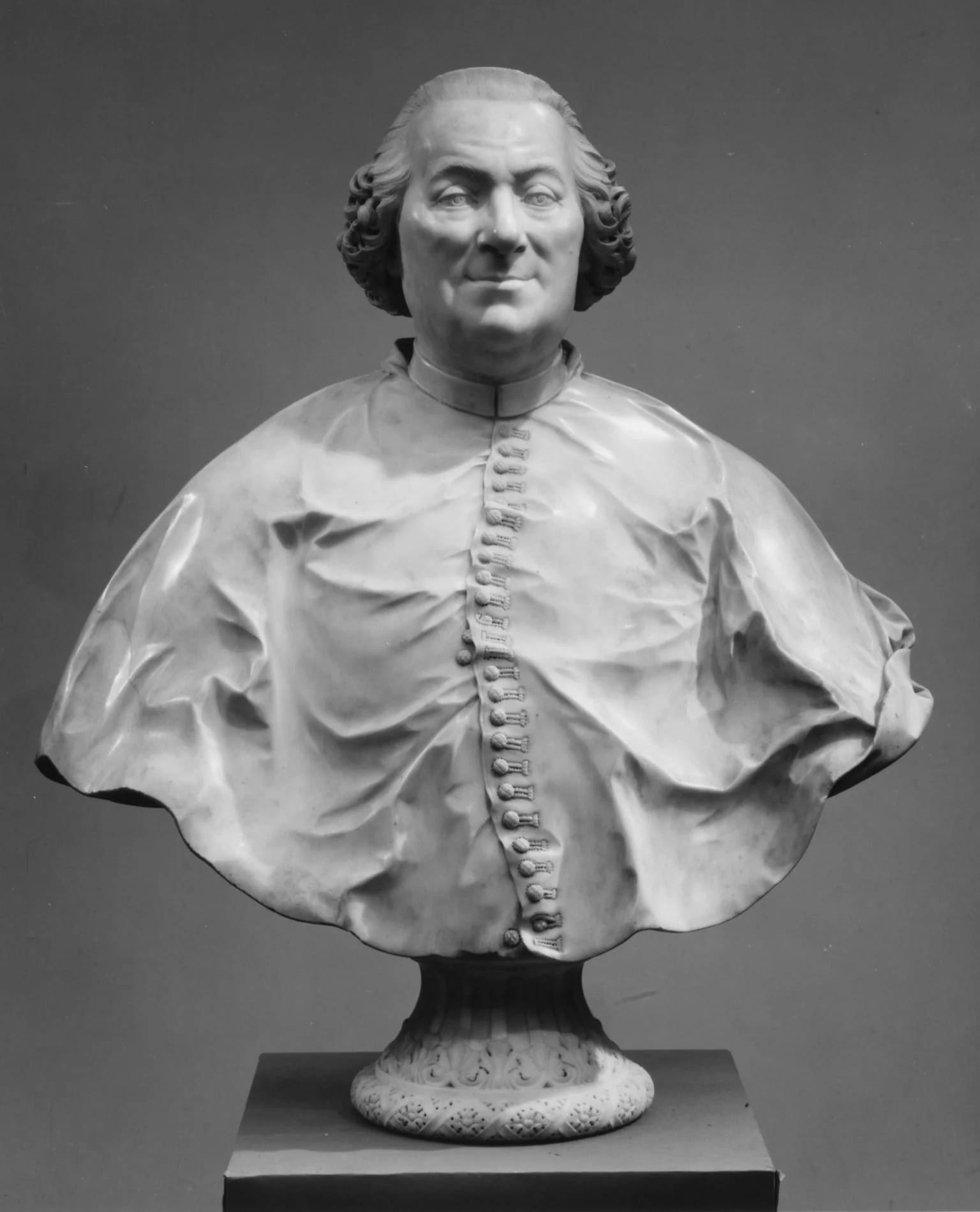
Image from Wikipedia
Image from Wikipedia
André le Brun – French Sculpture Between Rome, Warsaw, and Vilnius
An Enlightenment Artist Influencing European Court Art
André le Brun, sometimes referred to as André-Jean le Brun, is among those French sculptors of the 18th century whose careers connect the great art centers of Europe. Born in 1737 in Paris and died in 1811 in Vilnius, he worked in Rome, Warsaw, and Saint Petersburg, navigating an artistic tension between academic training, court representation, and international exchange. His career exemplifies how significantly sculpture during the Enlightenment was shaped by networks, patronage, and institutional support.
Le Brun's work embodies an art that combined classical education, technical precision, and decorative effect. As a French sculptor and draftsman who worked at significant European courts, he represented the mobility of an artist whose reputation was built not only on individual works but also on the quality of his presence in prestigious environments. This combination of academic foundation and international practice makes him an intriguing figure in art history.
Biographical Beginnings: Paris, Education, and the Path to Rome
Le Brun was born in 1737 in Paris and received his training under the sculptor Jean-Baptiste Pigalle. This early education laid the groundwork for his formal thinking, his drawing language, and his ability to model three-dimensional forms with clarity and balance. Even at this stage, the close connection between academic discipline and artistic ambition is evident, which would define his later career.
In 1756, he won the Prix de Rome from the Académie royale de peinture et de sculpture. This success was far more than an award: it provided access to the Académie de France in Rome, where Le Brun continued his studies and engaged directly with ancient and Italian sculpture. For him, Rome was a laboratory of form, a place of comparison and deepening where French education and Italian tradition overlapped productively.
Rome as an Artistic Springboard
The years in Rome allowed Le Brun to sharpen his signature in dialogue with the classical tradition. He created a series of statues for the church of San Carlo al Corso, proving that he found an impressive sculptural language not only for court representation but also for sacred contexts. Such works demanded not only technical sovereignity but also a sense of spatial impact, iconography, and the subtly graded dignity of ecclesiastical image programs.
His successes in Rome were crucial for his subsequent career. The recommendation from Madame Geoffrin, a significant intermediary figure in French cultural life, led to the Polish King Stanislaus II inviting him to Warsaw. This invitation marked the transition from the training phase to maturity: Le Brun entered a court service where sculpture was part of politics, prestige, and cultural self-representation.
Warsaw: Court Sculptor of a King
In 1768, Le Brun arrived in Poland and took on the position of “first sculptor” at the court of Stanislaus August Poniatowski for nearly three decades. This role made him a key figure in the royal representation culture of Warsaw. As court sculptor, he not only shaped individual works but also influenced a visual climate reflecting the ruler's claim to education, taste, and European connectivity.
The Łazienki Residence and its surroundings still give an impression of this distinguished position. Le Brun worked in an environment where sculpture was not merely decoration but part of a larger program of architecture, collecting, and political self-presentation. That he held such a position for so long reveals continuity, trust, and an artistic quality that was permanently valued at court.
Drawing, Sculpture, and Thinking in Forms
André le Brun was not only a sculptor but also a draftsman. This dual talent is significant for understanding his art since in 18th-century sculpture, much began with the line: with design, proportion, silhouette, and the mental anticipation of the body in space. His drawing thinking strengthened his ability to create sculptural effects that were controlled and elegant.
His works can be understood as an expression of a classicist-influenced form culture that favored clarity, harmony, and a certain dignity of expression. At the same time, his art remained functional, as it served religious, courtly, and institutional patrons. This combination of aesthetic rigor and representative practicality makes Le Brun a typical yet distinctive master of his time.
Vilnius and the Late Phase of a European Career
After his years in Warsaw, Le Brun's path led him to Vilnius, where he died in 1811. There, in 1804, he assumed a professorship in sculpture at the University of Vilnius. This step is historically significant as it marks the transition from court artist to academic teacher. With this, Le Brun became part of a system where knowledge was shared, collections were built, and the foundations of education were institutionalized.
His contribution to establishing a sculpture collection at the university from 1802 is particularly noteworthy. Thus, he worked not only as a producer of artworks but also as an organizer of cultural knowledge. In this role, he emerges as a mature artist who not only practices his craft but also structures, archives, and makes it available for future generations.
Character of Work and Art Historical Classification
The works of Le Brun that have been preserved show an artist who mastered the language of classical sculpture with confidence. Portrait busts, religious sculptures, and decorative commissions are part of the field in which he operated. His art was designed for visibility: it had to succeed equally in palaces, churches, and academic spaces, asserting its presence there.
The art historical significance of Le Brun lies less in spectacular individual innovations than in the continuity and scope of his activity. He combined French training, Italian influence, and Central European court culture into a career that exemplifies the transnational dimension of the 18th century. Thus, he belongs to the artists whose significance is fully revealed only in the interplay of work, place, and patron.
Cultural Influence and Aftermath
Le Brun's influence is particularly evident in his institutional impact. As the court sculptor in Warsaw and later as a professor in Vilnius, he shaped the way sculpture was understood, collected, and taught at courts and universities. His role in the university's art collection illustrates that he worked not only for his own time but also shaped the conditions for later art transmission.
Even today, art historical reception places him as a French sculptor with significant centers of influence in Italy and Poland. His biography makes clear how closely intertwined the art of Europe was in the 18th century. Those who consider Le Brun see not only an individual artist but also a bridge between court representation, academic education, and the exchange among European metropolises.
Current Projects and Publications
No current projects, albums, singles, tours, or other music-related publications for André le Brun have been documented. The preserved focus of research and museum studies lies on his historical activities as a sculptor, draftsman, court artist, and professor. Thus, his reception today primarily reflects the art historical classification, collection history, and museum communication.
Recent engagements with his work arise in the context of art history, museum projects, and university collections. This keeps his significance alive, even though it is conveyed not through contemporary publications but through exhibition contexts, catalogs, and research literature.
Conclusion: Why André le Brun Continues to Fascinate Today
André le Brun fascinates as a European artist of the Enlightenment, who impressively combined technique, education, and representation. His career from Paris through Rome and Warsaw to Vilnius illustrates how far a sculptor of his time could go when academic training, court acknowledgment, and institutional trust converged. This international reach makes his biography remarkably distinctive.
Anyone interested in art history, court culture, and the development of European sculpture will find in Le Brun a multifaceted and rewarding figure. His work speaks of classical formal rigor, cultural mobility, and the ambition to understand art as part of a larger intellectual and political project. A visit to the collections and places associated with him is worthwhile, as it reveals how profoundly a single sculptor could shape the artistic landscape of an entire era.
Official Channels of André le Brun:
- Instagram: No official profile found
- Facebook: No official profile found
- YouTube: No official profile found
- Spotify: No official profile found
- TikTok: No official profile found