
Collegium musicum
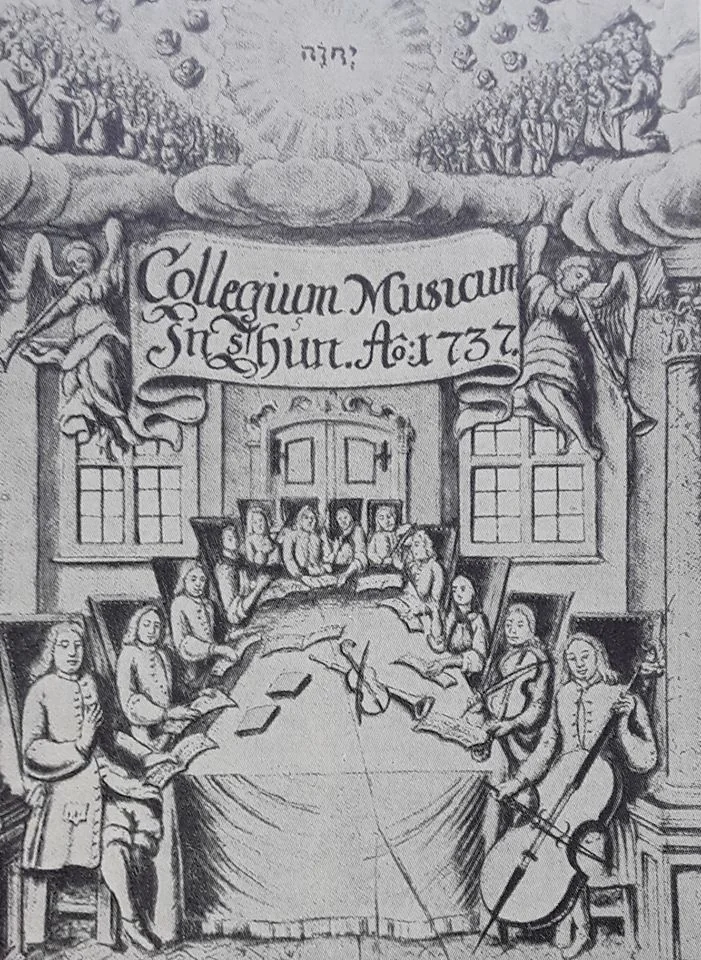
Image from Wikipedia
Image from Wikipedia
Collegium musicum – The Living Music Tradition between University, Baroque and Public Concert Life
A Term with History, Attitude, and Remarkable Radiance
The Collegium musicum is not a single artist in the usual sense, but rather a designation for a music community with a centuries-old tradition. Originally, in the German-speaking world, the term referred to a private association of music lovers, usually from student or bourgeois backgrounds, who made music together, thus creating a space between amateur culture, scholarship, and public performance culture. Its true historical significance unfolds in the 17th and 18th centuries, when such assemblies became an important foundation of urban musical life and early concert culture. ([de.wikipedia.org](https://de.wikipedia.org/wiki/Collegium_musicum))
The idea of the Collegium musicum lives on today in university ensembles, chamber orchestras, and academic choirs. The term represents far more than an old designation: it marks the transition from private music making to publicly perceivable music practice, from home music to institutionalized concert form. Particularly in music history, the Collegium musicum is a key term because it encapsulates the development of vocal music, instrumental music, academic education, and bourgeois musical culture in a single model. ([de.wikipedia.org](https://de.wikipedia.org/wiki/Collegium_musicum))
The Origins: From Music Circle to Urban Concert Culture
In the 16th century, Collegia musica were primarily characterized by vocal music, but their golden age lay in the 17th and 18th centuries when instrumental works increasingly came to the forefront. According to historical accounts, the first public concerts of a Collegium musicum took place in Hamburg in 1660 under Matthias Weckmann. This made visible a model that developed from a closed group of enthusiasts to a form of public music communication. ([de.wikipedia.org](https://de.wikipedia.org/wiki/Collegium_musicum))
Particularly famous was the Leipzig Collegium musicum, founded in 1701 by Georg Philipp Telemann and later continued among others by Johann Sebastian Bach. The Leipzig concerts combined student music practice with urban representation and are among the most important building blocks of early bourgeois concert life in Germany. In competition with this was the second Leipzig Collegium musicum founded by Johann Friedrich Fasch, known as the "Professorencollegium." ([de.wikipedia.org](https://de.wikipedia.org/wiki/Collegium_musicum))
Telemann, Bach, and the Birth of Public Music Life
The historical significance of the Leipzig Collegium musicum extends far beyond individual names. Telemann promoted professional concerts in Frankfurt and Hamburg in the late 1720s, contributing to the emergence of subscription concerts—the bourgeois concert form that continues to shape musical life today. Bach, in turn, led the Leipzig ensemble from 1729 to 1737 and composed several concertos and dramatic works for its performances. ([en.wikipedia.org](https://en.wikipedia.org/wiki/Collegium_Musicum))
Thus, the Collegium musicum became a laboratory of music history. Here, composition, performance practice, and social self-assertion intersected. The ensembles performed not only for entertainment but also at religious, academic, and state occasions; at the same time, they opened some performances to non-members. This very mixture of exclusivity and accessibility constituted their cultural appeal. ([de.wikipedia.org](https://de.wikipedia.org/wiki/Collegium_musicum))
From Decline to Rediscovery in the 20th Century
In the 19th century, the term Collegium musicum initially faded into the background. It was only with the re-establishment of an ensemble of this name by Hugo Riemann in 1908 or 1909 that a new upswing began, closely connected to historical performance practice. This renaissance occurred at a time when music research, university life, and the rediscovery of old sound ideals mutually inspired each other. ([de.wikipedia.org](https://de.wikipedia.org/wiki/Collegium_musicum))
The modern usage of the term is now diversified: it refers to student, university, and professional ensembles, often focusing on early music and historical instrumentation, but not restricted solely to that. This makes the name so adaptable: it stands for musical education, ensemble spirit, and a style-conscious approach to repertoire that can radiate from Baroque music to the present. ([snl.no](https://snl.no/collegium_musicum))
Repertoire Instead of Discography: What Artistically Shapes a Collegium musicum
A classical discography in the pop or jazz sense does not exist for the Collegium musicum as a historical genre. Its artistic identity is manifested more in the repertoire, in the selection of works, in performance practice, and in the social function of making music. The connection to vocal and instrumental music of the Renaissance, Baroque, and early Classical periods is particularly strong, in other words, to those eras when the interplay between amateurs, students, and professional musicians opened up productive cultural spaces. ([de.wikipedia.org](https://de.wikipedia.org/wiki/Collegium_musicum))
This very openness is its hallmark. Collegia musica could allow listeners, occasionally incorporate professional musicians, and thereby develop a sound image that mediates between amateur ensembles and public concert life. In modern university culture, this idea lives on, for example, in Tübingen, where the Collegium Musicum offers musical training to students of all faculties and regularly organizes concerts with an orchestra, choir, and chamber choir. ([de.wikipedia.org](https://de.wikipedia.org/wiki/Collegium_musicum))
Musical Development and Cultural Influence
The cultural influence of the Collegium musicum lies in its role as a link between education, urban society, and professional music. In Leipzig, the model laid the groundwork for public concert series and strengthened the position of instrumental music in the Baroque period. In later centuries, the term was re-embraced in university cities worldwide and associated with historical performance practice, academic music culture, and ensemble work. ([de.wikipedia.org](https://de.wikipedia.org/wiki/Collegium_musicum))
This tradition is impressively reflected in today’s ensembles that carry the name Collegium musicum. The examples range from Basel to Bonn and Salzburg to Cambridge, Heidelberg, or Columbia University. Thus, the term has become an international seal for musical education and style-conscious ensemble art that connects historical heritage with vibrant practice. ([de.wikipedia.org](https://de.wikipedia.org/wiki/Collegium_musicum))
Current Significance: Academic Stage, Living Practice, Cultural Continuity
Even in the 21st century, the Collegium musicum remains relevant because it embodies a form of music-making that combines community, discipline, and interpretative curiosity. University ensembles like those in Tübingen demonstrate how broad the spectrum is today: from symphonic works to oratorios, to a cappella projects and concert tours abroad. The name thus continues to represent a music practice that not only preserves but also renews. ([uni-tuebingen.de](https://uni-tuebingen.de/universitaet/campusleben/kunst-kultur-und-freizeit/collegium-musicum/))
For music lovers, this is precisely the appeal: the Collegium musicum tells the story of the transition from private music making to public concert culture and connects this tradition with academic excellence. Anyone interested in Baroque music, historical performance practice, and the development of bourgeois musical culture will find here a term of enormous depth and remarkable presence. ([de.wikipedia.org](https://de.wikipedia.org/wiki/Collegium_musicum))
Conclusion: A Historical Name with Modern Resonance
The Collegium musicum remains exciting because it makes music visible not only as an art form but also as a social practice. From the early Leipzig and Hamburg beginnings through the revival in the 20th century to today’s university ensembles, the term stands for ensemble spirit, sound culture, and musical education at the highest level. Those who experience this tradition live do not just hear works but experience music history in motion. ([de.wikipedia.org](https://de.wikipedia.org/wiki/Collegium_musicum))
Official Channels of Collegium musicum:
- Instagram: no official profile found
- Facebook: no official profile found
- YouTube: no official profile found
- Spotify: no official profile found
- TikTok: no official profile found
Sources:
Upcoming Events
Symphony Concert Collegium Musicum in Pommersfelden
Great orchestral colors in the Marble Hall: Collegium Musicum meets Rachmaninoff and Bartók. A summer evening full of tension, brilliance, and sound #Classical
Chamber Music Evening I
A summer evening full of sound colors in the Marble Hall of Schloss Weissenstein: Chamber music, Big Band, and baroque atmosphere on July 28, 2026. #Concert
Chamber Music Evening II
An evening full of fine chamber music in the Marble Hall of Schloss Weissenstein: Experience Beethoven, Weber, and Tchaikovsky live. 29.07.2026, tickets from €31. #Classical
Children's Concert II: Peter and the Wolf in Pommersfelden
A summer morning full of sound and fantasy: Peter and the Wolf in the Marble Hall of Schloss Weissenstein. 30.07.2026, tickets from 10 euros. Experience it live now! #Classical
Symphonic Concert Collegium Musicum
Great symphonic music in the Marble Hall: Collegium Musicum brings Wagner, Mozart, and Rimsky-Korsakov to Pommersfelden. 01.08.2026, tickets from €35. #Classical
Open Air in the Castle Courtyard with Baroque Fireworks
Classical music under the open sky in a baroque backdrop: Pommersfelden experiences a festive evening with choir, orchestra, and fireworks. #Concert #Classical
Symphony Concert of the Collegium Musicum
Let yourself be enchanted by Wagner, Mozart, and Rimsky-Korsakov in the historic Schloss Weißenstein.
Collegium Musicum – Chamber Music Evening III in Pommersfelden
An evening for connoisseurs and music lovers: Chamber music in the chapel of Pommersfelden with spiritual depth and baroque brilliance. #ChamberMusic
Symphony Concert Collegium Musicum
Enjoy classical masterpieces by Weber, Shostakovich, and Brahms at Schloss Weissenstein.
Chamber Music Evening V – Baroque Evening in Pommersfelden
Baroque sound in the Marble Hall of Schloss Weissenstein: A summer evening full of history, fine acoustics, and castle magic. 11.08.2026, tickets from 31 €. #Concert