
Midori Seiler
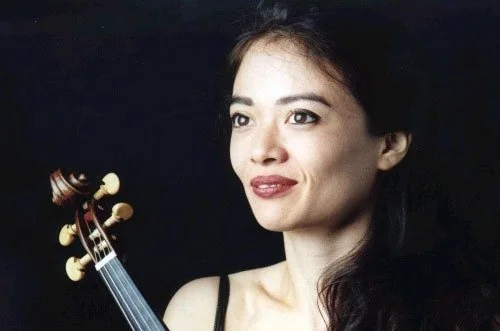
Image from Wikipedia
Image from Wikipedia
Midori Seiler: The Art of Historical Performance Practice with Soul, Risk, and Brilliance
A Violinist Between Baroque, Classical, and Artistic Freedom
Midori Seiler is one of the defining violinists of historical performance practice in the German-speaking world. The German-Japanese artist, born in Osaka in 1969 and raised in Salzburg, has shaped a music career that combines stylistic precision, physical presence, and interpretive curiosity. Her artistic profile goes far beyond mere specialization: she moves confidently between baroque virtuosity, classical repertoire, and contemporary projects. ([midoriseiler.de](https://midoriseiler.de/web/lesen/?utm_source=openai))
From an early age, she formed an understanding of music as a vibrant, breathing art form. Her education took her to Basel, London, and Berlin, where she studied with personalities representing very different aesthetic approaches. This breadth continues to shape her playing today: Midori Seiler thinks in tones, articulations, and affects, without committing herself to a single school. ([midoriseiler.de](https://midoriseiler.de/web/lesen/?utm_source=openai))
Biographical Roots and Musical Influence
The biography of Midori Seiler tells of a musician who feels at home in multiple cultural spaces. As a Bavarian-Japanese daughter of two pianists, she grew up in Salzburg and developed an early closeness to the international music scene, which significantly influenced her subsequent career. The stations of Basel, London, and Berlin mark not only educational steps but also the development of an artistic identity that combines precision and openness. ([midoriseiler.de](https://midoriseiler.de/web/lesen/?utm_source=openai))
Among her teachers were representatives of modern violin playing, including Helmut Zehetmair, Sandòr Végh, Adelina Oprean, David Takeno, and Eberhard Feltz; additionally, two specialists in early music, Stephan Mai and Thomas Hengelbrock, contributed to her education. This constellation explains a significant part of her profile: Midori Seiler thinks historically informed, but not museum-like. Her approach to the repertoire remains musically fluid and dramaturgically alert. ([midoriseiler.de](https://midoriseiler.de/web/lesen/?utm_source=openai))
The Breakthrough with the Akademie für Alte Musik Berlin
Midori Seiler achieved international recognition as a member of the Akademie für Alte Musik Berlin. From 2005 to 2014, she also served as concertmaster, shaping numerous concert and recording projects. This phase became a central chapter in her discography and established her reputation as one of the most versatile violinists in the baroque scene. ([midoriseiler.de](https://midoriseiler.de/web/lesen/?utm_source=openai))
Her work on CD recordings, where she participated as a soloist, was particularly significant. Her recording of Vivaldi's "Four Seasons" is regarded as outstanding, not least because of the choreographic concept with Juan Cruz de Garaio Esnaola. Here, Seiler demonstrates how consistently she thinks about music, space, and movement together: the concert is not merely played, but made experienceable as a scenic event. ([midoriseiler.de](https://midoriseiler.de/web/lesen/?utm_source=openai))
Repertoire: From Baroque to Classical with Historical Elegance
Midori Seiler is one of the few specialists in historical performance practice who feels at home in various epochs. Her repertoire includes baroque violin concertos as well as classical and early romantic works by Mendelssohn and Beethoven. She has performed with original instruments ensembles such as Anima Eterna, the Akademie für Alte Musik, and Concerto Köln in significant venues like Wigmore Hall, Concertgebouw, and the Wiener Musikverein. ([midoriseiler.de](https://midoriseiler.de/web/lesen/?utm_source=openai))
This stylistic breadth sets her apart from many purely specialized colleagues. Seiler combines historical playing technique with a lively, almost chamber-music-like directness that makes the musical phrase transparent. Her interpretations are never abstract; they seek speaking details, rhetorical emphasis, and direct contact with the audience. ([midoriseiler.de](https://midoriseiler.de/web/lesen/?utm_source=openai))
Discography, Recordings, and Critical Reception
The discography of Midori Seiler is extensive and documents her versatility as a soloist, concertmaster, and chamber musician. On her official website, one can find recordings of Bach's solo violin sonatas and partitas, Beethoven's sonatas, Mozart's violin concertos No. 2 and 3, Schubertiads, Haydn concertos, Telemann, Vivaldi, and even Rimsky-Korsakov's "Scheherazade." This selection portrays a career that does not reduce historical performance practice to the baroque but understands it as a stance across multiple musical worlds. ([midoriseiler.de](https://midoriseiler.de/web/hoeren/?utm_source=openai))
Early on, the press acknowledged her with phrases like “violinist with a spirit of freedom” and “a great violinist in the small circle of baroque violinists.” Such voices highlight her exceptional position: Seiler is regarded as a prominent interpreter, whose playing not only convinces technically but also possesses a clear artistic direction. Other reviews emphasize the tension created by her Bach interpretations and the risky intensity of her live performances. ([midoriseiler.de](https://midoriseiler.de/web/lesen/?utm_source=openai))
Collaboration, Teaching, and Artistic Authority
Since April 2020, Midori Seiler has been teaching at the Folkwang University of the Arts in Essen, passing on her experience to the next generation. In her official biography, she emphasizes that her teaching focuses on individual development and musical responsibility. This attitude aligns with her artistic thinking: technique serves not to control but to open up musical expression. ([de.wikipedia.org](https://de.wikipedia.org/wiki/Midori_Seiler?utm_source=openai))
Additionally, she has been the artistic director of the BachCollektiv at the Köthener Bach Festival since 2016. The ensemble is modeled after the historical Köthener Hofkapelle and consists of 18 musicians from 12 nations. With this project, Seiler connects historically informed practice with programmatic imagination, securing a firm place in the European early music scene. ([midoriseiler.de](https://midoriseiler.de/web/lesen/?utm_source=openai))
Current Projects and Recent Developments
Even in 2025, Midori Seiler remains active and present. Her official website has announced a new video series featuring music by Georg Philipp Telemann and Malika Kishino for July and August 2025, to be published on YouTube in seven parts. Additionally, there is a link to a current album catalog, while under "Current Concerts," the notice "No shows booked at the moment" is displayed. This indicates an artist who organizes her presence flexibly between video format, recordings, and project work. ([midoriseiler.de](https://midoriseiler.de/web/?utm_source=openai))
Notably, she will also serve as the artistic director of the first zamus: early music festival in Cologne in May 2025 under the motto "Contemplation & Ecstasy." The program, featuring over 20 events, underscores Seiler's role as a creator of musical spaces, not just as a soloist. In such projects, her career condenses into a clear artistic vision. ([midoriseiler.de](https://midoriseiler.de/web/lesen/?utm_source=openai))
Style, Impact, and Cultural Influence
Midori Seiler's significance lies in the connection between historical knowledge and personal signature. She plays early music not as a stylistic reconstruction but as contemporary art with depth. In this way, an interpretation arises that respects the written score while revealing tension, color, and dramatic concentration. ([midoriseiler.de](https://midoriseiler.de/web/lesen/?utm_source=openai))
Her influence extends into concert dramaturgy. Projects involving dance, electronic elements, and choreographed formats show that Seiler productively shifts the boundaries of traditional concert activities. Particularly her reconstruction of the lost Bach Violin Concert BWV 1052 and her experimental formats with the BachCollektiv make her an artist who intertwines research, repertoire cultivation, and stage imagination. ([midoriseiler.de](https://midoriseiler.de/web/lesen/?utm_source=openai))
Conclusion: A Violinist with Intellectual Depth and Electrifying Presence
Midori Seiler captivates because she understands historical performance practice as a lively, risk-taking, and deeply personal art form. Her career connects international stages, strong recordings, pedagogical work, and artistic direction into a compelling whole. Those who follow her work experience not mere stylistic maintenance, but a violinist who makes the repertoire newly audible. A live evening with Midori Seiler promises concentration, richness of sound, and that rare mix of intelligence and emotion that makes great music evenings unforgettable. ([midoriseiler.de](https://midoriseiler.de/web/lesen/?utm_source=openai))
Official Channels of Midori Seiler:
- Instagram: No official profile found
- Facebook: No official profile found
- YouTube: No official profile found
- Spotify: No official profile found
- TikTok: No official profile found