
Susan Sontag
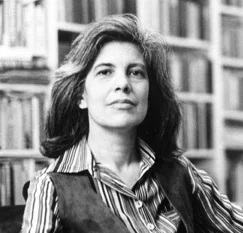
Image from Wikipedia
Image from Wikipedia
Susan Sontag: The Unsparing Voice of Modernity Between Essay, Cultural Critique, and Political Resistance
An Intellectual Who Redefined the 20th Century
Susan Sontag was one of the most influential American intellectuals of the 20th century: a writer, essayist, cultural critic, novelist, and director, whose work has profoundly changed the perspective on art, photography, illness, war, and societal power dynamics. Born on January 16, 1933, in New York City and passed away in Manhattan in 2004, she combined analytical sharpness with literary energy and early on became one of the most discussed voices of her time. ([britannica.com](https://www.britannica.com/biography/Susan-Sontag))
Biography: Early Education, International Influence, Intellectual Restlessness
Sontag grew up in New York, Tucson, and Los Angeles and studied English literature, philosophy, and theology at Berkeley, Chicago, Connecticut, Harvard, and Oxford. By the age of 20, she was teaching English in Connecticut and later taught the philosophy of religion in New York; in 1958, she lived in Paris for an extended period during her studies. This early geographical and academic mobility shaped her intellectual stance: open to European theory but always rooted in an American contemporary context. ([britannica.com](https://www.britannica.com/biography/Susan-Sontag))
Her career path does not show a linear progression but rather a continuous expansion of expressive space. Sontag wrote literary criticism, theoretical essays, novels, plays, film critiques, and screenplays; she directed films herself and publicly emerged as a political voice. It is this versatility that makes her artistic development extraordinary: She did not understand writing as a specialty, but rather as a means of questioning cultural reality in all its complexity. ([britannica.com](https://www.britannica.com/biography/Susan-Sontag))
The Breakthrough: "Notes on 'Camp'" and the Birth of an Icon
Her breakthrough as an author was marked by the 1964 essay "Notes on 'Camp'," which appeared in the Partisan Review and brought Sontag national fame. The text described Camp as an aesthetic stance, a sensibility for artifice, exaggeration, and style—which introduced a new language for pop culture, queer coding, and aesthetic irony into public discourse. Britannica and other references pinpoint this moment as the point at which Sontag became a central figure in modern cultural criticism. ([britannica.com](https://www.britannica.com/biography/Susan-Sontag))
Before that, she had published her first novel The Benefactor in 1963, but it was the essays of the early 1960s that made her voice unmistakable. In collections like Against Interpretation and later Styles of Radical Will, she displayed a method that focused less on definitive interpretation and more on attention, form consciousness, and intellectual discipline. Her texts became a kind of cultural sensorium for a generation that no longer wanted to read art, politics, and identity separately. ([britannica.com](https://www.britannica.com/biography/Susan-Sontag))
Body of Work and Discography of Ideas: Books Instead of Albums, Influence Instead of Charts
Since Susan Sontag was not a musical artist, there is no discography in the traditional sense. However, her body of work functions in a comparable logic to a significant album and body of work series: each book shifted the tonal landscape, expanded the resonance space, and set a new standard. Among her most important titles are Against Interpretation (1966), On Photography (1977), Illness as Metaphor (1978), Under the Sign of Saturn (1980), AIDS and Its Metaphors (1989), The Volcano Lover (1992), and In America (2000). ([britannica.com](https://www.britannica.com/biography/Susan-Sontag))
Especially On Photography developed into a key text of visual modernity. The book analyzes not only the act of photographing but also the cultural power of images, their role in consumption, memory, and the perception of suffering. In reception, Sontag became an authority far beyond literature; her theses shaped film, art theory, media criticism, and the later debate on image politics. ([britannica.com](https://www.britannica.com/biography/Susan-Sontag))
Her novels also mark milestones. The Volcano Lover brought her wider popularity, while In America won the National Book Award in 2000. The National Book Foundation describes the latter novel as historically set but with "contemporary resonance"; it also notes that Sontag dedicated herself entirely to writing after a teaching career and published her first novel at just 30 years old. ([nationalbook.org](https://www.nationalbook.org/people/susan-sontag/))
Style, Method, and Intellectual Stage Presence
Sontag's style was precise, dense, vividly awake, and often provocative. Her essays intertwine philosophical argumentation with literary sensibility; they analyze not only content but also form itself as a bearer of meaning. In her powerful expression and thought dramaturgy lay a unique stage presence: Sontag wrote not only about culture but staged thinking as an event. ([britannica.com](https://www.britannica.com/biography/Susan-Sontag))
Her themes ranged from film and theater to literature and aesthetics to illness, photography, and violence. At the same time, she worked with European authors and thinkers, such as bringing Elias Canetti's work to the US and editing writings by Roland Barthes and Antonin Artaud. This mediator role between Europe and the United States gave her work authority and international reach. ([tagesspiegel.de](https://www.tagesspiegel.de/kultur/vereinfachung-niemals-1595980.html?utm_source=openai))
Cultural Influence: From Camp to Contemporary Image Criticism
Sontag's influence extends far into the present. Her Camp essay became a reference point for queer culture, fashion, pop aesthetics, and postmodern theory; her photography book influenced generations of art historians, journalists, and visual culture theorists. Museums and cultural institutions continue to reference her concepts and thought models, as exhibitions and programs on "Camp" or Sontag inspirations in 2025 demonstrate. ([britannica.com](https://www.britannica.com/topic/camp-style?utm_source=openai))
Her political stance also forms part of her cultural impact. Sontag publicly advocated for human rights, criticized societal conditions in the US, and intervened in debates about war, violence, and public morality. It is precisely this combination of aesthetic radicality and moral discomfort that made her one of the most influential intellectuals in her country. ([britannica.com](https://www.britannica.com/biography/Susan-Sontag?utm_source=openai))
Current Projects, Legacy, and Today's Relevance
As a deceased author, Susan Sontag naturally has no new publications in 2024 or 2025. Instead, her work continues to live on in exhibitions, archive projects, reprints, and public programs; for instance, the Bundeskunsthalle is dedicating an exhibition in 2025 to her thoughts on perception and images, and several cultural institutions still reference her key texts. The Susan Sontag Foundation also maintains her memory and refers to archival and funding work surrounding her legacy. ([bundeskunsthalle.de](https://www.bundeskunsthalle.de/fileadmin/user_upload/Pressemeldungen/2025/Sontag/Press_kit_SUSAN_SONTAG.pdf?utm_source=openai))
Conclusion: Why Susan Sontag Continues to Captivate
Susan Sontag remains fascinating because she brought together thinking, literature, and cultural critique with a rare intensity. She wrote with intellectual precision but never sterile; she posed questions that continue to resonate in art, media, and politics today. Those seeking to understand the present will find in her work no easy answers, but a benchmark for attention, judgment, and aesthetic alertness. ([britannica.com](https://www.britannica.com/biography/Susan-Sontag))
This is precisely why engaging with Sontag is always worthwhile: as reading, as debate, and as a confrontation with a mind that made contradiction productive. Her work challenges, inspires, and shifts perspectives on the world—a live intellectual experience that has lost none of its sharpness decades after her death. ([nationalbook.org](https://www.nationalbook.org/people/susan-sontag/))
Voices of the Fans
No official profile found.
Official Channels of Susan Sontag:
- Instagram: no official profile found
- Facebook: no official profile found
- YouTube: no official profile found
- Spotify: no official profile found
- TikTok: no official profile found