
Udo Lindenberg
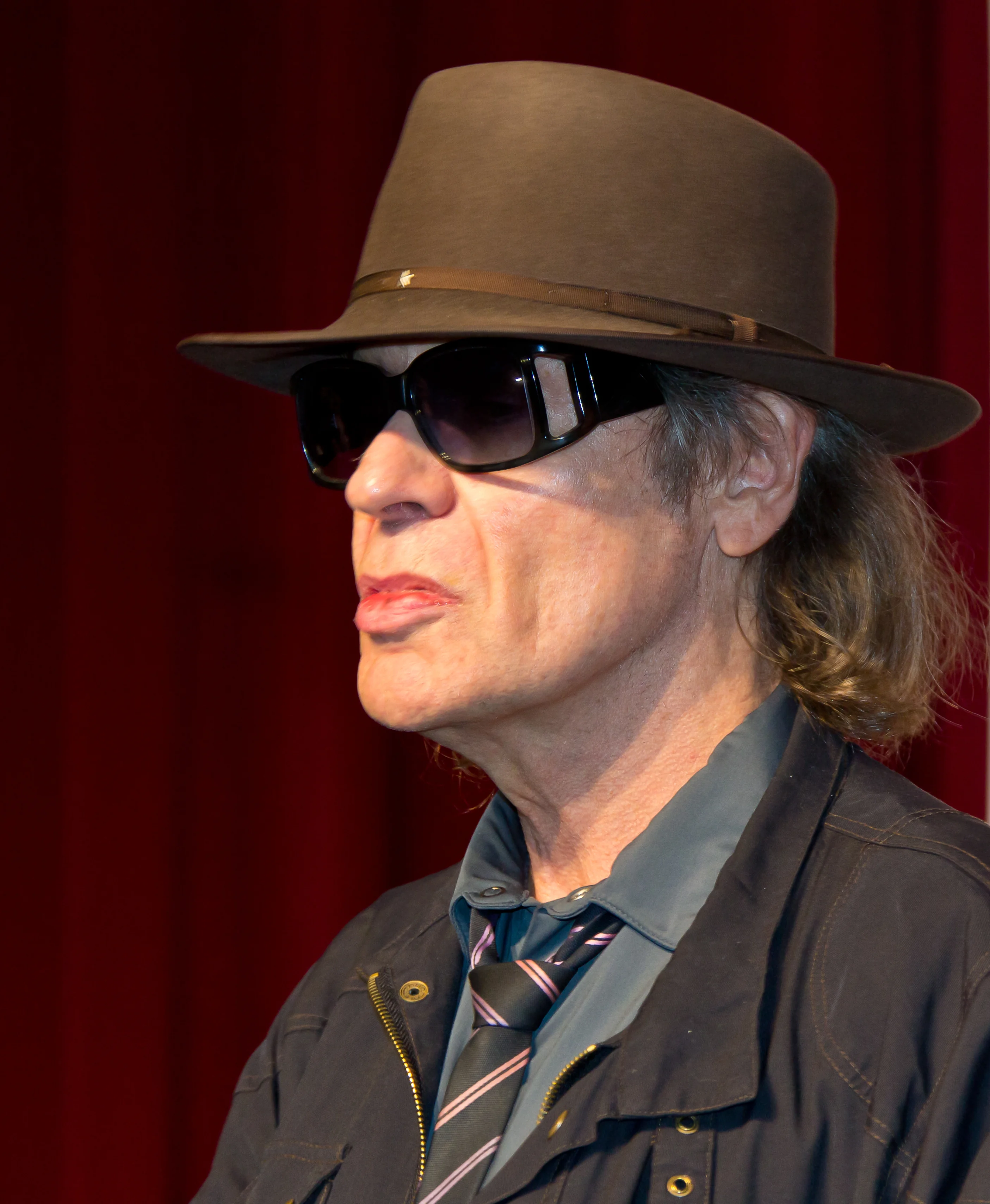
Image from Wikipedia
Image from Wikipedia
Udo Lindenberg – Panic Rock, Poetry, and German Music Myth
The Man with the Hat, Attitude, and Distinctive Voice
Udo Lindenberg is one of the most influential personalities in the history of German pop and rock music. Born on May 17, 1946, in Gronau, this musician, writer, and painter developed a unique music career from his start as a drummer in the 1960s, breaking language barriers and making German-language rock appealing to the masses. His name stands for stage presence, stylistic independence, and an artistic evolution that connects music, politics, and the visual arts. ([universal-music.de](https://www.universal-music.de/udolindenberg/biografie?utm_source=openai))
From an early age, Lindenberg showcased a talent for rhythm, urgency, and making a grand impression. His journey as a drummer with bands and projects like the City Preachers, Free Orbit, and collaborations with Peter Herbolzheimer shaped an artist's biography that gradually led him from accompanying musician to solo star. His major breakthrough came in 1973 with Alles klar auf der Andrea Doria, an album that definitively catapulted him to the forefront of German-language rock music. ([udo-lindenberg.de](https://www.udo-lindenberg.de/udo-lindenberg-das-panikorchester--50-jahre-rocknroll-in-der-bunten-republik.42096.htm?utm_source=openai))
From Drummer to the Voice of a Generation
Lindenberg's path did not begin as a frontman but rather in the background. At the end of the 1960s, he initially worked as a drummer before increasingly focusing on singing and writing his own songs from the early 1970s onwards. This transition proved to be an artistic turning point, as it birthed a new form of rock in German that felt neither forced nor merely translated. Instead, Lindenberg merged everyday language, irony, and laconic directness with international rock aesthetics. ([universal-music.de](https://www.universal-music.de/udolindenberg/biografie?utm_source=openai))
Of particular importance was the consistency with which he established German lyrics in a genre long dominated by English. His songs infused humor, social critique, and romantic melancholy into a language that had previously been seen as cumbersome in rock music. This made Lindenberg a gateway for later generations wanting to express themselves in German without compromising their style. ([universal-music.de](https://www.universal-music.de/udolindenberg/biografie?utm_source=openai))
The Breakthrough with Alles klar auf der Andrea Doria
The album Alles klar auf der Andrea Doria, released in 1973, marked the true beginning of the legend. The work not only signaled a commercial breakthrough but also the birth of the Panikorchester as an artistic collective. The album made it clear that this was no mere entertainer but a songwriter with a distinct style, bringing rock, chanson, cabaret, and street slang into a new form. ([universal-music.de](https://www.universal-music.de/udolindenberg/biografie?utm_source=openai))
In the following years, a repertoire was created that remains part of the cultural canon to this day. Songs like Alles klar auf der Andrea Doria, Cello, Wozu sind Kriege da?, Sonderzug nach Pankow, Horizont, Ich lieb’ Dich überhaupt nicht mehr, Ein Herz kann man nicht reparieren, and Wenn Du durchhängst showcase the range between love songs, protest songs, and laconic observations of life. These titles represent a discography that not only produced hits but also became a seismograph for German sentiments. ([universal-music.de](https://www.universal-music.de/udolindenberg/biografie?utm_source=openai))
Panikorchester, Rock Theater, and German Pop History
In 1973, Lindenberg founded the Panikorchester with Steffi Stephan, Gottfried Böttger, Peter "Backi" Backhausen, and Karl Allaut, which quickly became a hallmark of his music career. The band merged rock hardness with jazz, theatrical, and cabaret elements. This mixture lent the concerts a special dramaturgy, in which music was never merely accompaniment but always a form of staging. ([udo-lindenberg.de](https://www.udo-lindenberg.de/udo-lindenberg-das-panikorchester--50-jahre-rocknroll-in-der-bunten-republik.42096.htm?utm_source=openai))
The musical evolution of the 1970s and 1980s placed Lindenberg in a position that went far beyond mere chart success. His albums were often certified gold, and he established himself as a fixture in the German music scene. With works like Votan Wahnwitz, his talent for dense arrangements, playful exaggeration, and a rock sound oscillating between pathos and satire became evident. The 2025 remastered release of this album today underscores its significance as a key work. ([universal-music.de](https://www.universal-music.de/udolindenberg/biografie?utm_source=openai))
Hamburg, GDR, and the Political Weight of His Songs
In the 1980s, Lindenberg became a voice that sought recognition not just musically but also politically. His efforts to perform in the GDR were particularly significant, culminating in a monitored concert at the Palace of the Republic in East Berlin in 1983. A planned tour the following year was later canceled, making the conflict between pop culture and state power even clearer. ([universal-music.de](https://www.universal-music.de/udolindenberg/biografie?utm_source=openai))
Even the famous exchange with Erich Honecker showcased Lindenberg's symbolic strength: leather jacket for shawm, later the guitar inscribed with "Guitars instead of Guns." These actions demonstrated that his art always conveyed a stance. Lindenberg understood rock as a social commentary without falling into preachy severity; his language remained direct, witty, and impactful. ([universal-music.de](https://www.universal-music.de/udolindenberg/biografie?utm_source=openai))
The Great Solo Career and Late Chart Summit
After his early successes, Lindenberg's career remained remarkably stable yet adaptable. With his 34th studio album Stark wie Zwei, he reached number one in the German charts in 2008 for the first time, a late triumph that impressively confirmed his long-distance quality. That an artist with decades of history can once again top the charts speaks to the unbroken bond between Lindenberg and his audience. ([universal-music.de](https://www.universal-music.de/udolindenberg/biografie?utm_source=openai))
His discography illustrates how broadly he has worked across rock, ballads, pop, and narratorial songcraft. The most successful release, Komet, featuring Apache 207, became a long-runner at the top of the charts in 2023 and set a new standard for the artist's relevance in the 21st century. The song became the most successful number-one single since the introduction of the weekly singles charts in 1971 and proved that Lindenberg's voice still holds cultural pull today. ([de.wikipedia.org](https://de.wikipedia.org/wiki/Udo_Lindenberg/Diskografie?utm_source=openai))
Musical Language, Arrangements, and Style
Lindenberg's style thrives on clear melodic lines, pointed lyrics, and an intuitive sense of arrangement that conveys between rough rock and poetic precision. His songs often carry the tone of storytelling: short sentences, vivid imagery, and an attitude that generates both distance and closeness. This quality makes his pieces often sound like snapshots from contemporary German history. ([universal-music.de](https://www.universal-music.de/udolindenberg/biografie?utm_source=openai))
Additionally, he is characterized by his ability to amalgamate seriousness and irony within the same composition. Love songs like Horizont or Cello stand alongside songs with political sharpness and social resonance. This breadth makes his music career unusually resilient, as it cannot be reduced to a single image. ([universal-music.de](https://www.universal-music.de/udolindenberg/biografie?utm_source=openai))
Painting, Likörelle, and the Second Artistic Life
Since the 1990s, Lindenberg has also emerged as a painter, adding a strongly visual dimension to his work. First exhibitions starting in 1996 led to further presentations, including Keine Panik. Udo Lindenbergs bunte Republik at the House of History in Bonn. His visual language, often combined with pop art influences, cartoons, and the famous Likörelle, became part of his public mythos. ([universal-music.de](https://www.universal-music.de/udolindenberg/biografie?utm_source=openai))
This development is more than a sideline. Lindenberg's painting expands his artistic biography with a second realm of expression where the same themes recur: freedom, humor, counterculture, and German contemporary history. The fact that works of his are located in the Berlin Federal Chancellery and that the Federal Ministry of Finance issued special stamps featuring his motifs in 2010 demonstrates the cultural anchoring of his overall work. ([universal-music.de](https://www.universal-music.de/udolindenberg/biografie?utm_source=openai))
Current Projects, Anniversaries, and New Releases
In 2025 and 2026, Lindenberg will remain active. His official website announces for 2026 the exhibition UDOVERSUM – The Great Udo Lindenberg Exhibition in Hamburg, the tribute album WE LOVE UDO, the fan compilation Alles unter einem Hut – Eure Favoriten, and the 41-CD box set Alles unter einem Hut. These releases consolidate his life's work and demonstrate how consistently his brand lives on across music, exhibition culture, and archival work. ([udo-lindenberg.de](https://www.udo-lindenberg.de/udoversum-die-grosse-udo-lindenberg-ausstellung.98049.htm?utm_source=openai))
The official website emphasizes the historical breadth of his oeuvre from the early 1970s to Komet in 2023. At the same time, the announcement of the anniversary projects points to the artist's status as an institution in German pop culture. Lindenberg remains not only a nostalgic reflection but also an active part of the present. ([udo-lindenberg.de](https://www.udo-lindenberg.de/alles-unter-einem-hut.98051.htm?utm_source=openai))
Conclusion: Why Udo Lindenberg Continues to Fascinate
Udo Lindenberg is fascinating because he is more than a singer with a vast repertoire. He is a chronicler, style figure, stage personality, and cultural enabler whose songs have accompanied generations. His career unites the early emergence of German-language rock, political stance, visual art, and a late chart summit that confirms his relevance to this day. ([universal-music.de](https://www.universal-music.de/udolindenberg/biografie?utm_source=openai))
Those who experience Lindenberg live see not just a concert but a piece of German music history in motion. His stage presence, distinctive delivery, and the strength of his classics make every performance a culturally deep event. This is where the lasting fascination of this exceptional artist lies. ([universal-music.de](https://www.universal-music.de/udolindenberg/biografie?utm_source=openai))
Official Channels of Udo Lindenberg:
- Instagram: https://www.instagram.com/udolindenberg/?hl=de
- Facebook: https://www.facebook.com/UdoLindenberg/?locale=de_DE
- YouTube: https://www.youtube.com/channel/UC5x11zriypVlJH73_h_8o4w
- Spotify: https://open.spotify.com/artist/7iWcRnQMinCoV2u5ICgsW0?si=Vp077k0kTD6y1tCT49ChZg
- TikTok: No official profile found
Sources:
- Udo Lindenberg - Official Website
- UDOVERSUM - The Great Udo Lindenberg Exhibition - Official Website
- WE LOVE UDO - The Udo Lindenberg Tribute Album - Official Website
- Alles unter einem Hut - Official Website
- Udo Lindenberg & Panik-Orchester „Votan Wahnwitz (50th Anniversary Edition-Remastered)“ - Official Website
- Udo Lindenberg - Panic in Tübingen - Official Website
- The Udoversum Is Coming to the Ruhr Area! - Official Website
- Udo Lindenberg & Panik-Orchester – 50 Years of Rock’n’Roll in the Colorful Republic - Official Website
- Udo Lindenberg | Biography - Universal Music
- Wikipedia: Udo Lindenberg
- Wikipedia: Udo Lindenberg/Diskography
Upcoming Events
UDOPIA – A Tribute to Udo Lindenberg
Panic rock, sing-along moments, and real live atmosphere: UDOPIA brings Udo Lindenberg's greatest songs to Duisburg. Free entry on 16.05.2026. #Duisburg #PanicRock
UDOPIA - the full program
UDOPIA is a magnificent show – the full program of the best songs of the singing nightingale Udo Lindenberg.