Dortmund
Königswall 15, 44137 Dortmund, Deutschland
Dortmund Central Station | Parking & Arrival
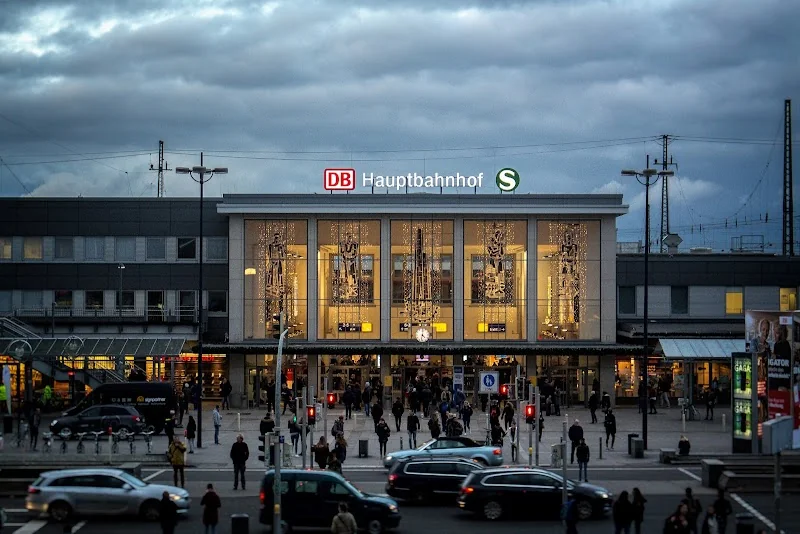
The Dortmund Central Station at Königswall 15 is much more than a classic transfer point. It is a central transport hub where long-distance traffic, regional trains, light rail, buses, pedestrian pathways, and urban life converge. Deutsche Bahn reports around 80,000 travelers and tens of thousands of visitors per day, as well as about 600 trains daily. At the same time, the location is designed for short distances to the city center, the bus station, and other mobility services. Therefore, those arriving here experience not just tracks and platforms, but a densely interconnected piece of the city that is designed for quick orientation, barrier-free pathways, and many everyday needs. This is precisely why Dortmund Central Station is so important for commuters, travelers, day visitors, and transfer passengers. ([www1.deutschebahn.com](https://www1.deutschebahn.com/resource/blob/12910092/3bbd7765197892d4ff8e7abbc8c90e59/20240610-Faktenblatt-Dortmund-Hbf-data.pdf))
The recent modernizations have visibly changed the station. Deutsche Bahn reports seven newly constructed platforms, renewed roof areas, modern lighting, new displays, an improved blind guidance system, seven elevators, and six escalators. The pedestrian underpass has also been widened, making the path between the reception area and platforms appear more spacious and welcoming. This is particularly pleasant for visitors, as the station today is not only functional but also more clearly structured. Additionally, there are lockers, Wi-Fi, a DB travel center, DB information, service personnel, and a wide range of shops and dining options. Thus, Dortmund Central Station becomes a place where one does not just pass through but can also practically supply themselves and orient themselves well. ([www1.deutschebahn.com](https://www1.deutschebahn.com/resource/blob/12910092/3bbd7765197892d4ff8e7abbc8c90e59/20240610-Faktenblatt-Dortmund-Hbf-data.pdf))
Arrival, Departure, and Platform Map at Dortmund Central Station
For those wanting to orient themselves at Dortmund Central Station, it is best to start with the digital offerings on the station's website. There, live departures and arrivals, schedules as PDFs, a site plan for the station and surrounding area, and information about elevators are available. This is especially helpful for travelers who need to transfer spontaneously, respond to delays, or find the next connection. The area for replacement transport is also documented with a site plan as a PDF. This makes the station easier to plan for people with little time, luggage, or limited mobility. In practice, this means: arrival, departure, and platform changes can be assessed much better in advance than by merely looking at the boards on-site. ([bahnhof.de](https://www.bahnhof.de/en/dortmund-hbf))
The official station map also shows how the pathways in the station are organized. It marks, among other things, Exit 1 at Königswall with reference to the city, Exit Bahnhofstraße, and Exit 2 at Paul-Winzen-Straße. It also shows which paths lead to platforms 2 to 5 and to platforms 6 to 7. This is particularly helpful for visitors experiencing Dortmund for the first time, as it allows the station to function not just as a stop but as a spatially well-readable hub. Inside the station, the DB travel center, DB information, and mobile service staff complement the digital orientation. Therefore, those who combine arrival and departure with a glance at the map can move through the building much more relaxed and often save valuable minutes on the way to their connection. ([bahnhof.de](https://www.bahnhof.de/downloads/station-plans/1289.pdf?_rsc=1x6bk))
Parking at Dortmund Central Station
For drivers, there are several specific parking options at and around Dortmund Central Station. The official parking page from Bahnhof.de lists, among others, Steinstraße 44 with 650 parking spaces, including seven barrier-free spaces, Westentor with 341 parking spaces, Kampstraße 45-47 with 330 parking spaces, and the parking lot at Königswall with 18 spaces, three of which are barrier-free. Additional options include Auf dem Berge 6, Leopoldstraße 50, or Schmiedingstraße 7. Those using the station for an appointment, pickup, or a short stay will find a fairly large selection within walking distance. It is particularly relevant that the parking garages vary in size, cost, and opening hours at different times of the day. Therefore, a quick look at the respective parking option is always worthwhile. ([bahnhof.de](https://www.bahnhof.de/en/dortmund-hbf/parking-spaces))
Parking is also an important topic at the north exit. The city of Dortmund describes the central bus station at the north exit of the main station and directly mentions a parking lot at Steinstraße with 53 spaces, including five disabled parking spaces and two spaces for families with strollers. Additionally, the Alte Post and Cinestar parking garages are located in the immediate vicinity. For pickup and drop-off traffic, this is a very practical area, as one is close to the train and bus connections without having to drive through the entire city center first. Therefore, those approaching Dortmund Central Station by car should decide in advance whether they need a large parking garage, a short-term space, or a parking solution at the bus station. This makes the approach significantly less stressful and keeps the distances short. ([dortmund.de](https://www.dortmund.de/themen/mobilitaet-und-verkehr/mobilitaetsplanung/%C3%B6pnv/busbahnhof/?utm_source=openai))
Lockers, Service, and Barrier-Free Orientation
Lockers are available at Dortmund Central Station, which is particularly practical during longer transfers, a city visit with luggage, or a spontaneous stop. The station's website also mentions Wi-Fi, a bicycle garage, bicycle parking spaces, restrooms, and a taxi stand as facilities on-site. This makes the station significantly more comfortable in everyday life, as many small needs can be resolved directly on-site. For example, those arriving by bike will find secure parking options; those traveling with a suitcase can store their luggage; and those wanting to continue quickly after arrival can easily switch to a taxi or public transport. This combination of mobility and service is a key reason why Dortmund Central Station is perceived as a particularly important hub. ([bahnhof.de](https://www.bahnhof.de/en/dortmund-hbf))
Additionally, there is a dense service network in the station. The railway mentions the DB travel center, DB information, mobile service staff, a station mission, a lost property office, the 3-S-Center contact for service, safety, and cleanliness issues, as well as the federal police as points of contact. The lost property office is open on weekdays, while the 3-S-Center is available around the clock. Significant investments have also been made for barrier-free pathways: seven new elevators, six escalators, a new blind guidance system, and barrier-free access via the north entrance improve accessibility. The pedestrian underpass has also been widened from about nine to 13 meters. Those traveling with strollers, wheelchairs, or heavy luggage benefit directly from this. The station is thus not only technically modernized but also noticeably easier to use in everyday life. ([bahnhof.de](https://www.bahnhof.de/en/dortmund-hbf))
Shops and Dining at Dortmund Central Station
Dortmund Central Station is also a small supply location. Bahnhof.de lists ten food options, four shopping options, and another service area at the site. This is useful for travelers, as the stay is not only reduced to waiting and transferring but also includes coffee, breakfast, snacks, drugstore items, press, or quick takeaway products. Those wanting to drink something before departure, buy something for the journey, or pick up a small item after arrival will find several suitable places in the station. Especially at a station with so many travelers per day, this mix of gastronomy and quick shopping options is a real added value. ([bahnhof.de](https://www.bahnhof.de/en/dortmund-hbf))
Among the named offerings are Kamps Backstube, Kamps Bäckerei, HBB Bistro, Haferkater, REWE To Go, ROSSMANN EXPRESS, McDonald's with McCafé, Coffee Fellows, DUNKIN' DONUTS, and asiagourmet - to go only. Some shops are located in the reception hall, others in the passage to the U-Bahn and S-Bahn, or directly at the main entrance. REWE To Go is open around the clock, McDonald's with McCafé is also open 24 hours, and several bakeries have very early opening hours. This is ideal for travelers, as one can often still get a drink, pastry, snack, or everyday necessities regardless of the time. Especially for early trains, late arrivals, or longer waiting times, this infrastructure is a real advantage. ([bahnhof.de](https://www.bahnhof.de/en/dortmund-hbf/shopping-and-eating/kamps-backstube/?utm_source=openai))
Address, North Exit, and Directions to the Station
The official address of the station is Königswall 15, 44137 Dortmund. This information is particularly important when entering navigation, taxi, pickup and drop-off traffic, or a spontaneous meeting point correctly. The city of Dortmund also emphasizes that the city center is quickly reachable from the main station. This is part of the strength of this location: those arriving are directly close to the city, public transport, and other transport lines. For visitors who are unfamiliar, this is a huge advantage, as distances shorten and the station can be used as a reliable starting point for almost any city visit. ([bahnhof.de](https://www.bahnhof.de/en/dortmund-hbf))
Particularly important is the north exit. There is the Central Bus Station, which, according to the city of Dortmund, has been located at Steinstraße since March 2012 and is still directly anchored at the north exit of the main station. The ZOB has 13 bus bays, nine of which are for boarding and alighting, and offers additional short-term options with the parking lot at Steinstraße. In parallel, the city is working on the northern station environment to make the north exit more attractive and improve the connection to the northern city. For travelers, this means: those using buses, long-distance buses, or connecting transport should know the north exit. It is not just an exit but a separate mobility space with a short distance between train, bus, and city. ([dortmund.de](https://www.dortmund.de/themen/mobilitaet-und-verkehr/mobilitaetsplanung/%C3%B6pnv/busbahnhof/?utm_source=openai))
The connection to the airport is also clearly regulated. The city's travel page mentions a regular shuttle bus Airport-Express between the main station and the airport. This is interesting for anyone traveling with luggage and a schedule and looking for a manageable transfer. Additionally, the city refers to Dortmund Central Station as one of the most significant railway junctions in Germany. In practice, this means: those wanting to go from here to the airport, city center, or other parts of the region will find a very dense connection of trains, buses, and urban mobility. This multifaceted nature makes the location so relevant. ([dortmund.de](https://www.dortmund.de/dortmund-erleben/besuch-planen/anreise/?utm_source=openai))
Dortmund Central Station in Modern Reconstruction
The current quality of the station is the result of a large modernization project. Deutsche Bahn mentions in its fact sheet, among other things, the construction of seven platforms, around 17,500 square meters of paved area, 2,100 meters of renewed platform length, modernized platform roofs with 12,100 square meters of area, new benches, new signage, improved sound and lighting, as well as more than 150 monitors with LED displays. Additionally, there are seven elevators, six escalators, a new blind guidance system, and barrier-free access via the north entrance. Such measures not only change the appearance but also the usability in everyday life. For travelers, the station thus becomes clearer, brighter, and more intuitive. ([www1.deutschebahn.com](https://www1.deutschebahn.com/resource/blob/12910092/3bbd7765197892d4ff8e7abbc8c90e59/20240610-Faktenblatt-Dortmund-Hbf-data.pdf))
Equally remarkable is the spatial dimension of the location. The railway speaks of about 5,200 square meters of rented space, a widened underpass area, and around 80,000 travelers plus tens of thousands of visitors per day. The city of Dortmund also ranks the main station as one of the most significant railway junctions in Germany. In combination with the central bus station, lockers, shopping options, and good accessibility to the city center, a station emerges that not only handles traffic but also visibly shapes the city. Therefore, those using Dortmund Central Station experience a location that simultaneously bundles mobility, orientation, and urban everyday life. This is exactly what makes it so relevant for arrival, departure, and transfer. ([www1.deutschebahn.com](https://www1.deutschebahn.com/resource/blob/12910092/3bbd7765197892d4ff8e7abbc8c90e59/20240610-Faktenblatt-Dortmund-Hbf-data.pdf))
Sources:
Mehr anzeigenWeniger anzeigen
Dortmund Central Station | Parking & Arrival
The Dortmund Central Station at Königswall 15 is much more than a classic transfer point. It is a central transport hub where long-distance traffic, regional trains, light rail, buses, pedestrian pathways, and urban life converge. Deutsche Bahn reports around 80,000 travelers and tens of thousands of visitors per day, as well as about 600 trains daily. At the same time, the location is designed for short distances to the city center, the bus station, and other mobility services. Therefore, those arriving here experience not just tracks and platforms, but a densely interconnected piece of the city that is designed for quick orientation, barrier-free pathways, and many everyday needs. This is precisely why Dortmund Central Station is so important for commuters, travelers, day visitors, and transfer passengers. ([www1.deutschebahn.com](https://www1.deutschebahn.com/resource/blob/12910092/3bbd7765197892d4ff8e7abbc8c90e59/20240610-Faktenblatt-Dortmund-Hbf-data.pdf))
The recent modernizations have visibly changed the station. Deutsche Bahn reports seven newly constructed platforms, renewed roof areas, modern lighting, new displays, an improved blind guidance system, seven elevators, and six escalators. The pedestrian underpass has also been widened, making the path between the reception area and platforms appear more spacious and welcoming. This is particularly pleasant for visitors, as the station today is not only functional but also more clearly structured. Additionally, there are lockers, Wi-Fi, a DB travel center, DB information, service personnel, and a wide range of shops and dining options. Thus, Dortmund Central Station becomes a place where one does not just pass through but can also practically supply themselves and orient themselves well. ([www1.deutschebahn.com](https://www1.deutschebahn.com/resource/blob/12910092/3bbd7765197892d4ff8e7abbc8c90e59/20240610-Faktenblatt-Dortmund-Hbf-data.pdf))
Arrival, Departure, and Platform Map at Dortmund Central Station
For those wanting to orient themselves at Dortmund Central Station, it is best to start with the digital offerings on the station's website. There, live departures and arrivals, schedules as PDFs, a site plan for the station and surrounding area, and information about elevators are available. This is especially helpful for travelers who need to transfer spontaneously, respond to delays, or find the next connection. The area for replacement transport is also documented with a site plan as a PDF. This makes the station easier to plan for people with little time, luggage, or limited mobility. In practice, this means: arrival, departure, and platform changes can be assessed much better in advance than by merely looking at the boards on-site. ([bahnhof.de](https://www.bahnhof.de/en/dortmund-hbf))
The official station map also shows how the pathways in the station are organized. It marks, among other things, Exit 1 at Königswall with reference to the city, Exit Bahnhofstraße, and Exit 2 at Paul-Winzen-Straße. It also shows which paths lead to platforms 2 to 5 and to platforms 6 to 7. This is particularly helpful for visitors experiencing Dortmund for the first time, as it allows the station to function not just as a stop but as a spatially well-readable hub. Inside the station, the DB travel center, DB information, and mobile service staff complement the digital orientation. Therefore, those who combine arrival and departure with a glance at the map can move through the building much more relaxed and often save valuable minutes on the way to their connection. ([bahnhof.de](https://www.bahnhof.de/downloads/station-plans/1289.pdf?_rsc=1x6bk))
Parking at Dortmund Central Station
For drivers, there are several specific parking options at and around Dortmund Central Station. The official parking page from Bahnhof.de lists, among others, Steinstraße 44 with 650 parking spaces, including seven barrier-free spaces, Westentor with 341 parking spaces, Kampstraße 45-47 with 330 parking spaces, and the parking lot at Königswall with 18 spaces, three of which are barrier-free. Additional options include Auf dem Berge 6, Leopoldstraße 50, or Schmiedingstraße 7. Those using the station for an appointment, pickup, or a short stay will find a fairly large selection within walking distance. It is particularly relevant that the parking garages vary in size, cost, and opening hours at different times of the day. Therefore, a quick look at the respective parking option is always worthwhile. ([bahnhof.de](https://www.bahnhof.de/en/dortmund-hbf/parking-spaces))
Parking is also an important topic at the north exit. The city of Dortmund describes the central bus station at the north exit of the main station and directly mentions a parking lot at Steinstraße with 53 spaces, including five disabled parking spaces and two spaces for families with strollers. Additionally, the Alte Post and Cinestar parking garages are located in the immediate vicinity. For pickup and drop-off traffic, this is a very practical area, as one is close to the train and bus connections without having to drive through the entire city center first. Therefore, those approaching Dortmund Central Station by car should decide in advance whether they need a large parking garage, a short-term space, or a parking solution at the bus station. This makes the approach significantly less stressful and keeps the distances short. ([dortmund.de](https://www.dortmund.de/themen/mobilitaet-und-verkehr/mobilitaetsplanung/%C3%B6pnv/busbahnhof/?utm_source=openai))
Lockers, Service, and Barrier-Free Orientation
Lockers are available at Dortmund Central Station, which is particularly practical during longer transfers, a city visit with luggage, or a spontaneous stop. The station's website also mentions Wi-Fi, a bicycle garage, bicycle parking spaces, restrooms, and a taxi stand as facilities on-site. This makes the station significantly more comfortable in everyday life, as many small needs can be resolved directly on-site. For example, those arriving by bike will find secure parking options; those traveling with a suitcase can store their luggage; and those wanting to continue quickly after arrival can easily switch to a taxi or public transport. This combination of mobility and service is a key reason why Dortmund Central Station is perceived as a particularly important hub. ([bahnhof.de](https://www.bahnhof.de/en/dortmund-hbf))
Additionally, there is a dense service network in the station. The railway mentions the DB travel center, DB information, mobile service staff, a station mission, a lost property office, the 3-S-Center contact for service, safety, and cleanliness issues, as well as the federal police as points of contact. The lost property office is open on weekdays, while the 3-S-Center is available around the clock. Significant investments have also been made for barrier-free pathways: seven new elevators, six escalators, a new blind guidance system, and barrier-free access via the north entrance improve accessibility. The pedestrian underpass has also been widened from about nine to 13 meters. Those traveling with strollers, wheelchairs, or heavy luggage benefit directly from this. The station is thus not only technically modernized but also noticeably easier to use in everyday life. ([bahnhof.de](https://www.bahnhof.de/en/dortmund-hbf))
Shops and Dining at Dortmund Central Station
Dortmund Central Station is also a small supply location. Bahnhof.de lists ten food options, four shopping options, and another service area at the site. This is useful for travelers, as the stay is not only reduced to waiting and transferring but also includes coffee, breakfast, snacks, drugstore items, press, or quick takeaway products. Those wanting to drink something before departure, buy something for the journey, or pick up a small item after arrival will find several suitable places in the station. Especially at a station with so many travelers per day, this mix of gastronomy and quick shopping options is a real added value. ([bahnhof.de](https://www.bahnhof.de/en/dortmund-hbf))
Among the named offerings are Kamps Backstube, Kamps Bäckerei, HBB Bistro, Haferkater, REWE To Go, ROSSMANN EXPRESS, McDonald's with McCafé, Coffee Fellows, DUNKIN' DONUTS, and asiagourmet - to go only. Some shops are located in the reception hall, others in the passage to the U-Bahn and S-Bahn, or directly at the main entrance. REWE To Go is open around the clock, McDonald's with McCafé is also open 24 hours, and several bakeries have very early opening hours. This is ideal for travelers, as one can often still get a drink, pastry, snack, or everyday necessities regardless of the time. Especially for early trains, late arrivals, or longer waiting times, this infrastructure is a real advantage. ([bahnhof.de](https://www.bahnhof.de/en/dortmund-hbf/shopping-and-eating/kamps-backstube/?utm_source=openai))
Address, North Exit, and Directions to the Station
The official address of the station is Königswall 15, 44137 Dortmund. This information is particularly important when entering navigation, taxi, pickup and drop-off traffic, or a spontaneous meeting point correctly. The city of Dortmund also emphasizes that the city center is quickly reachable from the main station. This is part of the strength of this location: those arriving are directly close to the city, public transport, and other transport lines. For visitors who are unfamiliar, this is a huge advantage, as distances shorten and the station can be used as a reliable starting point for almost any city visit. ([bahnhof.de](https://www.bahnhof.de/en/dortmund-hbf))
Particularly important is the north exit. There is the Central Bus Station, which, according to the city of Dortmund, has been located at Steinstraße since March 2012 and is still directly anchored at the north exit of the main station. The ZOB has 13 bus bays, nine of which are for boarding and alighting, and offers additional short-term options with the parking lot at Steinstraße. In parallel, the city is working on the northern station environment to make the north exit more attractive and improve the connection to the northern city. For travelers, this means: those using buses, long-distance buses, or connecting transport should know the north exit. It is not just an exit but a separate mobility space with a short distance between train, bus, and city. ([dortmund.de](https://www.dortmund.de/themen/mobilitaet-und-verkehr/mobilitaetsplanung/%C3%B6pnv/busbahnhof/?utm_source=openai))
The connection to the airport is also clearly regulated. The city's travel page mentions a regular shuttle bus Airport-Express between the main station and the airport. This is interesting for anyone traveling with luggage and a schedule and looking for a manageable transfer. Additionally, the city refers to Dortmund Central Station as one of the most significant railway junctions in Germany. In practice, this means: those wanting to go from here to the airport, city center, or other parts of the region will find a very dense connection of trains, buses, and urban mobility. This multifaceted nature makes the location so relevant. ([dortmund.de](https://www.dortmund.de/dortmund-erleben/besuch-planen/anreise/?utm_source=openai))
Dortmund Central Station in Modern Reconstruction
The current quality of the station is the result of a large modernization project. Deutsche Bahn mentions in its fact sheet, among other things, the construction of seven platforms, around 17,500 square meters of paved area, 2,100 meters of renewed platform length, modernized platform roofs with 12,100 square meters of area, new benches, new signage, improved sound and lighting, as well as more than 150 monitors with LED displays. Additionally, there are seven elevators, six escalators, a new blind guidance system, and barrier-free access via the north entrance. Such measures not only change the appearance but also the usability in everyday life. For travelers, the station thus becomes clearer, brighter, and more intuitive. ([www1.deutschebahn.com](https://www1.deutschebahn.com/resource/blob/12910092/3bbd7765197892d4ff8e7abbc8c90e59/20240610-Faktenblatt-Dortmund-Hbf-data.pdf))
Equally remarkable is the spatial dimension of the location. The railway speaks of about 5,200 square meters of rented space, a widened underpass area, and around 80,000 travelers plus tens of thousands of visitors per day. The city of Dortmund also ranks the main station as one of the most significant railway junctions in Germany. In combination with the central bus station, lockers, shopping options, and good accessibility to the city center, a station emerges that not only handles traffic but also visibly shapes the city. Therefore, those using Dortmund Central Station experience a location that simultaneously bundles mobility, orientation, and urban everyday life. This is exactly what makes it so relevant for arrival, departure, and transfer. ([www1.deutschebahn.com](https://www1.deutschebahn.com/resource/blob/12910092/3bbd7765197892d4ff8e7abbc8c90e59/20240610-Faktenblatt-Dortmund-Hbf-data.pdf))
Sources:
Dortmund Central Station | Parking & Arrival
The Dortmund Central Station at Königswall 15 is much more than a classic transfer point. It is a central transport hub where long-distance traffic, regional trains, light rail, buses, pedestrian pathways, and urban life converge. Deutsche Bahn reports around 80,000 travelers and tens of thousands of visitors per day, as well as about 600 trains daily. At the same time, the location is designed for short distances to the city center, the bus station, and other mobility services. Therefore, those arriving here experience not just tracks and platforms, but a densely interconnected piece of the city that is designed for quick orientation, barrier-free pathways, and many everyday needs. This is precisely why Dortmund Central Station is so important for commuters, travelers, day visitors, and transfer passengers. ([www1.deutschebahn.com](https://www1.deutschebahn.com/resource/blob/12910092/3bbd7765197892d4ff8e7abbc8c90e59/20240610-Faktenblatt-Dortmund-Hbf-data.pdf))
The recent modernizations have visibly changed the station. Deutsche Bahn reports seven newly constructed platforms, renewed roof areas, modern lighting, new displays, an improved blind guidance system, seven elevators, and six escalators. The pedestrian underpass has also been widened, making the path between the reception area and platforms appear more spacious and welcoming. This is particularly pleasant for visitors, as the station today is not only functional but also more clearly structured. Additionally, there are lockers, Wi-Fi, a DB travel center, DB information, service personnel, and a wide range of shops and dining options. Thus, Dortmund Central Station becomes a place where one does not just pass through but can also practically supply themselves and orient themselves well. ([www1.deutschebahn.com](https://www1.deutschebahn.com/resource/blob/12910092/3bbd7765197892d4ff8e7abbc8c90e59/20240610-Faktenblatt-Dortmund-Hbf-data.pdf))
Arrival, Departure, and Platform Map at Dortmund Central Station
For those wanting to orient themselves at Dortmund Central Station, it is best to start with the digital offerings on the station's website. There, live departures and arrivals, schedules as PDFs, a site plan for the station and surrounding area, and information about elevators are available. This is especially helpful for travelers who need to transfer spontaneously, respond to delays, or find the next connection. The area for replacement transport is also documented with a site plan as a PDF. This makes the station easier to plan for people with little time, luggage, or limited mobility. In practice, this means: arrival, departure, and platform changes can be assessed much better in advance than by merely looking at the boards on-site. ([bahnhof.de](https://www.bahnhof.de/en/dortmund-hbf))
The official station map also shows how the pathways in the station are organized. It marks, among other things, Exit 1 at Königswall with reference to the city, Exit Bahnhofstraße, and Exit 2 at Paul-Winzen-Straße. It also shows which paths lead to platforms 2 to 5 and to platforms 6 to 7. This is particularly helpful for visitors experiencing Dortmund for the first time, as it allows the station to function not just as a stop but as a spatially well-readable hub. Inside the station, the DB travel center, DB information, and mobile service staff complement the digital orientation. Therefore, those who combine arrival and departure with a glance at the map can move through the building much more relaxed and often save valuable minutes on the way to their connection. ([bahnhof.de](https://www.bahnhof.de/downloads/station-plans/1289.pdf?_rsc=1x6bk))
Parking at Dortmund Central Station
For drivers, there are several specific parking options at and around Dortmund Central Station. The official parking page from Bahnhof.de lists, among others, Steinstraße 44 with 650 parking spaces, including seven barrier-free spaces, Westentor with 341 parking spaces, Kampstraße 45-47 with 330 parking spaces, and the parking lot at Königswall with 18 spaces, three of which are barrier-free. Additional options include Auf dem Berge 6, Leopoldstraße 50, or Schmiedingstraße 7. Those using the station for an appointment, pickup, or a short stay will find a fairly large selection within walking distance. It is particularly relevant that the parking garages vary in size, cost, and opening hours at different times of the day. Therefore, a quick look at the respective parking option is always worthwhile. ([bahnhof.de](https://www.bahnhof.de/en/dortmund-hbf/parking-spaces))
Parking is also an important topic at the north exit. The city of Dortmund describes the central bus station at the north exit of the main station and directly mentions a parking lot at Steinstraße with 53 spaces, including five disabled parking spaces and two spaces for families with strollers. Additionally, the Alte Post and Cinestar parking garages are located in the immediate vicinity. For pickup and drop-off traffic, this is a very practical area, as one is close to the train and bus connections without having to drive through the entire city center first. Therefore, those approaching Dortmund Central Station by car should decide in advance whether they need a large parking garage, a short-term space, or a parking solution at the bus station. This makes the approach significantly less stressful and keeps the distances short. ([dortmund.de](https://www.dortmund.de/themen/mobilitaet-und-verkehr/mobilitaetsplanung/%C3%B6pnv/busbahnhof/?utm_source=openai))
Lockers, Service, and Barrier-Free Orientation
Lockers are available at Dortmund Central Station, which is particularly practical during longer transfers, a city visit with luggage, or a spontaneous stop. The station's website also mentions Wi-Fi, a bicycle garage, bicycle parking spaces, restrooms, and a taxi stand as facilities on-site. This makes the station significantly more comfortable in everyday life, as many small needs can be resolved directly on-site. For example, those arriving by bike will find secure parking options; those traveling with a suitcase can store their luggage; and those wanting to continue quickly after arrival can easily switch to a taxi or public transport. This combination of mobility and service is a key reason why Dortmund Central Station is perceived as a particularly important hub. ([bahnhof.de](https://www.bahnhof.de/en/dortmund-hbf))
Additionally, there is a dense service network in the station. The railway mentions the DB travel center, DB information, mobile service staff, a station mission, a lost property office, the 3-S-Center contact for service, safety, and cleanliness issues, as well as the federal police as points of contact. The lost property office is open on weekdays, while the 3-S-Center is available around the clock. Significant investments have also been made for barrier-free pathways: seven new elevators, six escalators, a new blind guidance system, and barrier-free access via the north entrance improve accessibility. The pedestrian underpass has also been widened from about nine to 13 meters. Those traveling with strollers, wheelchairs, or heavy luggage benefit directly from this. The station is thus not only technically modernized but also noticeably easier to use in everyday life. ([bahnhof.de](https://www.bahnhof.de/en/dortmund-hbf))
Shops and Dining at Dortmund Central Station
Dortmund Central Station is also a small supply location. Bahnhof.de lists ten food options, four shopping options, and another service area at the site. This is useful for travelers, as the stay is not only reduced to waiting and transferring but also includes coffee, breakfast, snacks, drugstore items, press, or quick takeaway products. Those wanting to drink something before departure, buy something for the journey, or pick up a small item after arrival will find several suitable places in the station. Especially at a station with so many travelers per day, this mix of gastronomy and quick shopping options is a real added value. ([bahnhof.de](https://www.bahnhof.de/en/dortmund-hbf))
Among the named offerings are Kamps Backstube, Kamps Bäckerei, HBB Bistro, Haferkater, REWE To Go, ROSSMANN EXPRESS, McDonald's with McCafé, Coffee Fellows, DUNKIN' DONUTS, and asiagourmet - to go only. Some shops are located in the reception hall, others in the passage to the U-Bahn and S-Bahn, or directly at the main entrance. REWE To Go is open around the clock, McDonald's with McCafé is also open 24 hours, and several bakeries have very early opening hours. This is ideal for travelers, as one can often still get a drink, pastry, snack, or everyday necessities regardless of the time. Especially for early trains, late arrivals, or longer waiting times, this infrastructure is a real advantage. ([bahnhof.de](https://www.bahnhof.de/en/dortmund-hbf/shopping-and-eating/kamps-backstube/?utm_source=openai))
Address, North Exit, and Directions to the Station
The official address of the station is Königswall 15, 44137 Dortmund. This information is particularly important when entering navigation, taxi, pickup and drop-off traffic, or a spontaneous meeting point correctly. The city of Dortmund also emphasizes that the city center is quickly reachable from the main station. This is part of the strength of this location: those arriving are directly close to the city, public transport, and other transport lines. For visitors who are unfamiliar, this is a huge advantage, as distances shorten and the station can be used as a reliable starting point for almost any city visit. ([bahnhof.de](https://www.bahnhof.de/en/dortmund-hbf))
Particularly important is the north exit. There is the Central Bus Station, which, according to the city of Dortmund, has been located at Steinstraße since March 2012 and is still directly anchored at the north exit of the main station. The ZOB has 13 bus bays, nine of which are for boarding and alighting, and offers additional short-term options with the parking lot at Steinstraße. In parallel, the city is working on the northern station environment to make the north exit more attractive and improve the connection to the northern city. For travelers, this means: those using buses, long-distance buses, or connecting transport should know the north exit. It is not just an exit but a separate mobility space with a short distance between train, bus, and city. ([dortmund.de](https://www.dortmund.de/themen/mobilitaet-und-verkehr/mobilitaetsplanung/%C3%B6pnv/busbahnhof/?utm_source=openai))
The connection to the airport is also clearly regulated. The city's travel page mentions a regular shuttle bus Airport-Express between the main station and the airport. This is interesting for anyone traveling with luggage and a schedule and looking for a manageable transfer. Additionally, the city refers to Dortmund Central Station as one of the most significant railway junctions in Germany. In practice, this means: those wanting to go from here to the airport, city center, or other parts of the region will find a very dense connection of trains, buses, and urban mobility. This multifaceted nature makes the location so relevant. ([dortmund.de](https://www.dortmund.de/dortmund-erleben/besuch-planen/anreise/?utm_source=openai))
Dortmund Central Station in Modern Reconstruction
The current quality of the station is the result of a large modernization project. Deutsche Bahn mentions in its fact sheet, among other things, the construction of seven platforms, around 17,500 square meters of paved area, 2,100 meters of renewed platform length, modernized platform roofs with 12,100 square meters of area, new benches, new signage, improved sound and lighting, as well as more than 150 monitors with LED displays. Additionally, there are seven elevators, six escalators, a new blind guidance system, and barrier-free access via the north entrance. Such measures not only change the appearance but also the usability in everyday life. For travelers, the station thus becomes clearer, brighter, and more intuitive. ([www1.deutschebahn.com](https://www1.deutschebahn.com/resource/blob/12910092/3bbd7765197892d4ff8e7abbc8c90e59/20240610-Faktenblatt-Dortmund-Hbf-data.pdf))
Equally remarkable is the spatial dimension of the location. The railway speaks of about 5,200 square meters of rented space, a widened underpass area, and around 80,000 travelers plus tens of thousands of visitors per day. The city of Dortmund also ranks the main station as one of the most significant railway junctions in Germany. In combination with the central bus station, lockers, shopping options, and good accessibility to the city center, a station emerges that not only handles traffic but also visibly shapes the city. Therefore, those using Dortmund Central Station experience a location that simultaneously bundles mobility, orientation, and urban everyday life. This is exactly what makes it so relevant for arrival, departure, and transfer. ([www1.deutschebahn.com](https://www1.deutschebahn.com/resource/blob/12910092/3bbd7765197892d4ff8e7abbc8c90e59/20240610-Faktenblatt-Dortmund-Hbf-data.pdf))
Sources:
Frequently Asked Questions
Reviews
Lee J
30. January 2026
So I was on holiday in Düsseldorf from my home in Manchester, England 🏴 with my wife. I wanted to travel back to Gütersloh where I used to be based when I served in the British Army, so I took the train from Düsseldorf to Dortmund, and it was my first time back in Dortmund in 20 years. I forgot how big the train station 🚉 was. It hadn't changed much over the years, extremely clean, polite and friendly staff, very efficient, plenty of signs for arrivals and departures, and lots of staff on hand. 5☆ 5☆ 5☆ 5☆ I post a lot of reviews on Google and I always give my honest opinion on everything from food, cleanliness, drinks, service, value for money, setting, ambience, etc., and I have over 40,000,000+ views on Google alone. I've reviewed everything from locally in Manchester with my wife to traveling around for food with my wife both locally and internationally, to traveling around the country watching my beloved Oldham Athletic, to day trips and holidays with my wife, etc. I've reviewed everything from restaurants to bars to beaches to beach clubs to taxis to airports to flights to beauty treatments to barbers to hotels to churches to basilicas to shooting ranges to hairdressers to football stadiums, etc. From Manchester to Split (Croatia), Hvar (Croatia), Supetar (Brac, Croatia), Rome (Italy), Vatican (Italy), Bezier Cap d'Agde (South of France), Montpellier (South of France), Podgorica (Montenegro), Budva (Montenegro), Tirana (Albania), Sarande (Albania), Ksamil (Albania), Krakow (Poland), Zakopane (Poland), Santa Maria, Sal (Cape Verde), and Düsseldorf, Dortmund, and Gütersloh (Germany).
Alyona
1. January 2026
Good central station. All sights are clear. 7 minutes nearby is the market, big shopping malls. On the opposite side of the station is a football fun shop, a football museum, and a few cafes.
Fayas Nazar
6. February 2026
The information desk staff is extremely helpful and kind. She provided accurate information and patiently guided me on how to reach my destination. Her assistance made my experience smooth.
Atiq Massan
6. March 2021
Very big station with connections to everywhere. North-South and East-West S-Bahn are on different levels underground. Multiple rails and trains every 2 to 3 minutes. Some shops near the gate as well as an info center. The station itself is a small walk inside. Lifts for disabled for every platform. Everything is clean and in working order showing a perfect German engineering attitude. Excellent work.
Rich Deerdog
25. July 2024
This is a decent station - relatively new and well arranged. McDonald’s and KFC are at the front and only a short walk into the city center. The area in front of the station can be very lively, with many drunks and beggars hanging around, panhandling and calling out. Not one to arrive at late in the evening. Conveniently located for a number of local hotels, there is also a taxi rank. Decent station let down by the general state of DB these days, with large numbers of trains running late and cancelled. You are well advised to check constantly on your train before arrival, as cancellations can be swift and final. Arrival journey spoiled by forced change to a tiny commuter train at a place called Hagen - very small train with many people. Good natured but not nice.