
Bochum
Amtsstraße 4 a, 44809 Bochum, Deutschland
Gethsemane Church Bochum | Events & Tickets
The Gethsemane Church in Bochum-Hamme is a place where community, neighborhood, and culture meet in an unusually dense way. The official page of the Protestant Church Community Bochum lists the address at Amtsstraße 4a and points out that the church section is still under construction. This interim status is exciting for seekers, as it shows: This is not just a static monument address, but a vibrant church with current community relevance, changing formats, and a special role in the neighborhood. The city of Bochum used the church in 2025 as a meeting point for participation in the redesign of the Amtsplatz in Hamme, and Manifesta 16 Ruhr lists the Gethsemane Church as a Bochum venue with international attention in 2026. Therefore, anyone looking for events, tickets, directions, parking, or the history of the church will find a location that is much more than a classic sacred address: it connects post-war architecture, community life, and cultural use in a striking building in Bochum-Hamme. ([kg-bochum.ekvw.de](https://www.kg-bochum.ekvw.de/kirche-vor-ort/unsere-kirchen/gethsemane-kirche))
Events and Program at Gethsemane Church Bochum
When searching for events, it is immediately noticeable that the Gethsemane Church in Bochum does not only appear as a classic place of worship. An important format is the God's Café in Gethsemane: The Protestant Church Community Bochum has been celebrating it monthly since the end of the summer holidays, every third Thursday at 2:30 PM, with open liturgy, changing themes, and a subsequent opportunity for exchange over coffee and cookies in the community hall before the church space. This is a strong signal that the church is not only a Sunday space but also a meeting space. The announcement explicitly describes that the services work with open elements and that there is time for chatting and getting to know each other after the liturgical part. For keyword perspective, this is important because search queries for events, services, programs, or community here target not just a single date but a recurring format style. ([kirchenkreis-bochum.de](https://www.kirchenkreis-bochum.de/b/gottes-cafe-in-gethsemane-148058?utm_source=openai))
Additionally, there is the municipal dimension: In February 2025, the city of Bochum invited interested parties to the Gethsemane Church to discuss the future design of the Amtsplatz in Hamme. The church was thus not only a venue but also a place for public participation and neighborhood planning. This profile makes the location interesting for local program and neighborhood questions. For 2026, another component is added: Manifesta 16 Ruhr categorizes the Gethsemane Church as one of several Bochum locations within a larger cultural program. The official visit page announces the biennale for the period from June 21 to October 4, 2026, names Bochum as one of the four core cities, and describes a program of exhibitions, workshops, performances, and more. Therefore, anyone looking for the program of the Gethsemane Church should not only think of church services but also of a spectrum of community formats, neighborhood discussions, and contemporary culture. ([bochum.de](https://www.bochum.de/Pressemeldungen/12-Februar-2025/Beteiligung-zur-Umgestaltung-des-Amtsplatzes-in-Hamme))
Especially for an SEO perspective, this mix of regularity and special formats is valuable. The search interest in events is closely linked to the interest in a lively place where the church is visible in everyday life. The official Manifesta description emphasizes that churches in the Ruhr region can be reformed as places that act through and for their surroundings. This logic fits particularly well with the Gethsemane Church, as it can accommodate both community formats like the God's Café and temporary neighborhood and art formats. Therefore, anyone searching for program 2026, cultural events, or services Bochum will not get a one-dimensional result at this location, but a church with multiple levels of use that shape the character of the place and make it relevant for different target groups. ([manifesta16.org](https://manifesta16.org/visit))
Tickets, Admission, and Current Dates
Regarding tickets, the Gethsemane Church is an interesting special case because the place is not organized like a classic concert hall with permanent ticket sales. The official community page currently states that the church section is still under construction; a separate online ticket shop or ticket overview is not mentioned there. This suggests that specific dates and access information are communicated differently depending on the event. Therefore, anyone searching for tickets or ticket purchases should not assume a single booking model but always check the respective event announcement. For community formats like the God's Café, communication is rather organized through the church community itself, while municipal and cultural special formats may have their own ways of information. The church community provides its community office at Pariser Straße 4-6 for inquiries, thus offering a clear contact point for anyone needing date questions or organizational information. ([kg-bochum.ekvw.de](https://www.kg-bochum.ekvw.de/kirche-vor-ort/unsere-kirchen/gethsemane-kirche))
In contrast, the situation with Manifesta 16 Ruhr is quite different: The official visit page explicitly states that admission is free and open to all, and no ticket is required. This is particularly important for search intentions around tickets, as there is not a classic purchase process but an open access. The exhibition runs from June 21 to October 4, 2026, is spread across several cities in the Ruhr area, and recommends good travel planning in advance. For visitors, this means: Anyone who wants to experience the Gethsemane Church as part of Manifesta does not need a ticket but should still check the specific visit day and opening hours. The organizer states the opening hours as Tuesday to Thursday from 11:00 AM to 6:00 PM, Friday and Saturday from 11:00 AM to 7:00 PM, and Sunday from 11:00 AM to 6:00 PM. Thus, the church is embedded in a cultural context that operates openly but clearly timed. ([manifesta16.org](https://manifesta16.org/visit))
For local community and neighborhood formats, however, not every event is bundled publicly in a central calendar with ticket functionality. This is precisely why search terms like events, tickets, dates, and programs are so closely linked here. The most sensible visiting strategy is to distinguish between community formats, neighborhood formats, and large projects. The God's Café follows a recurring monthly rhythm, the participation in the redesign of the Amtsplatz was a municipal one-off event, and Manifesta 16 Ruhr is a curated cultural festival with free admission. This creates a place where the ticket logic is not at the forefront, but the fit between occasion and use. For visitors, this is practical: Those who remain flexible will find in the Gethsemane Church a program with clear but not rigid access paths. ([kirchenkreis-bochum.de](https://www.kirchenkreis-bochum.de/b/gottes-cafe-in-gethsemane-148058?utm_source=openai))
History as Bartning Emergency Church in Hamme
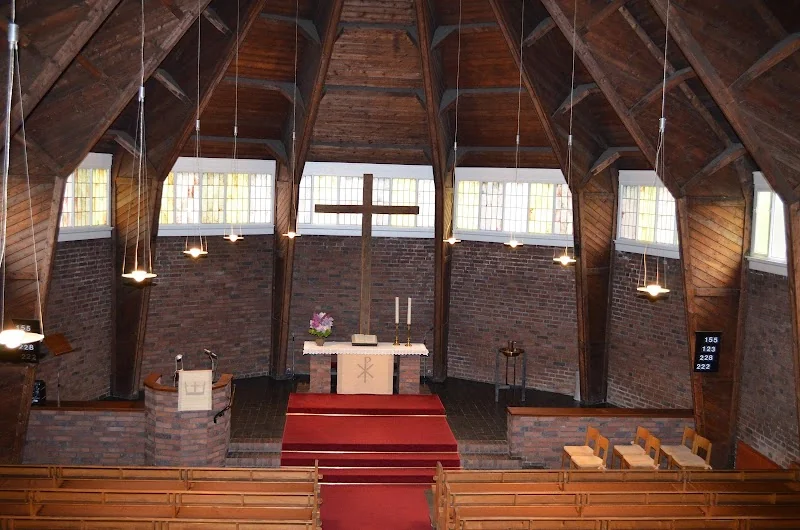
The historical significance of the Gethsemane Church lies in its time of origin and its architectural idea. Manifesta 16 Ruhr describes it as a remarkable example of a Protestant emergency church, built between 1947 and 1950 by Otto Bartning. This classification is essential because emergency churches in the post-war period provided quick, functional, and yet symbolically charged solutions for destroyed or damaged community structures. The official description on the Manifesta page explains that the community received a prefabricated church building kit from the aid organization of the Protestant churches in Germany, which provided the essential load-bearing elements made of wood and iron. This makes it clear that the church did not arise from any arbitrary standard building but from a consciously developed type that responded to the conditions of the post-war years. Thus, the Gethsemane Church is not only a building but also a document of the reconstruction history in Bochum. ([manifesta16.org](https://manifesta16.org/venues/gethsemane-kirche))
Particularly impressive is the way the community itself was involved in the reconstruction. The Manifesta description notes that the members of the community built the structure by hand and filled the walls with cleaned bricks from the rubble of the former community center. Another source explains that the church was built on the foundations of a community house destroyed in World War II. This information shows how closely the building is connected to the destroyed and then reassembled social life of the neighborhood. For search queries related to emergency church, Otto Bartning, history, or monument, the Gethsemane Church is therefore a precise hit: It embodies the principle of creating a common place from what remained after the destruction. This makes its architecture not only technically interesting but also emotionally and culturally significant. ([manifesta16.org](https://manifesta16.org/venues/gethsemane-kirche))
Even in its current appearance, this character remains readable. Manifesta 16 Ruhr does not present the church as a over-formed prestige object but as an exemplary place of functional, community-supported post-war architecture. Especially in the Ruhr region, where many buildings were created or altered due to industrial and war consequences, this form of sacred building is particularly significant. The Gethsemane Church thus represents an architecture that arose from necessity, community, and pragmatism and continues to assert itself as a usable space to this day. Understanding the history of the church also helps to understand why it is so exciting for today's visitors: It is a place where the post-war period does not remain abstract but becomes visible in wood, iron, and reused bricks. ([manifesta16.org](https://manifesta16.org/venues/gethsemane-kirche))
Directions and Parking at Amtsstraße 4a
The address of the Gethsemane Church is clear: Amtsstraße 4a, 44809 Bochum. This information can be found directly on the official community page and is also confirmed by other current uses of the place. For directions, this is helpful because search queries often target exactly the street, neighborhood, and postal code. The neighborhood of Hamme belongs to the northern Bochum area or the Bochum-Mitte area and is thus an urban, not marginal location. However, those arriving by car should note that the online published information does not specify a concrete number of parking spaces. An event announcement uses the wording parking lot and hall of the Protestant Church, which at least shows that there is a parking reference for certain formats. More than this documented statement should not be read online; the exact number of spaces or a fixed parking regulation is not publicly stated. ([kg-bochum.ekvw.de](https://www.kg-bochum.ekvw.de/kirche-vor-ort/unsere-kirchen/gethsemane-kirche))
For visitors, it is therefore advisable to keep an eye on the specific event. The city of Bochum used the church in 2025 for a citizen dialogue on the Amtsplatz, which also shows that the place is well accessible and reachable. For the large cultural format Manifesta 16 Ruhr, the organizer explicitly recommends planning the trip in advance. The official visitor information lists several travel options: public transport, bicycle, car, and regional express trains. It is also pointed out that the project locations are situated in various neighborhoods and are accessible in different ways. This is important for the Gethsemane Church because it should not be seen as an isolated destination but as part of an urban fabric. Therefore, anyone googling directions, parking, and location typically needs three things: the exact address, the context of the respective date, and a little buffer time for the last stretch. ([bochum.de](https://www.bochum.de/Pressemeldungen/12-Februar-2025/Beteiligung-zur-Umgestaltung-des-Amtsplatzes-in-Hamme))
Especially for special formats, it is worthwhile to arrive early. This is especially true when a meeting, a participation event, or a culturally public date takes place and neighborhood traffic is also happening. For search terms like parking, directions, or parking lot, the most important practical note is: The Gethsemane Church has a clearly named address but no detailed parking instructions online regarding number, access, or reservation. Those who want to plan precisely should rely on the respective event announcement and, if necessary, inquire directly with the community. This combination of a clear address and situational use makes the location realistic and user-friendly at the same time. ([kg-bochum.ekvw.de](https://www.kg-bochum.ekvw.de/kirche-vor-ort/unsere-kirchen/gethsemane-kirche))
Community Hall, Neighborhood, and Local Use
The Gethsemane Church is not only a church space but also a social place with a community hall, neighborhood reference, and multiple uses. This is particularly evident in the God's Café in Gethsemane, where time is offered for chatting, getting to know each other, and exchange in the community hall before the church space after the service. This structure is typical for the place: liturgy and conversation, community and fellowship, spirituality and everyday life merge into one another. For visitors looking for a community hall, for encounters, or for a church atmosphere, this is an important signal. The neighborhood reference is also strong: The city of Bochum used the church for discussions about the future of the Amtsplatz in Hamme, thus addressing a concrete urban issue that directly affects the neighborhood. This makes the Gethsemane Church a place where religious, social, and communal questions overlap. ([kirchenkreis-bochum.de](https://www.kirchenkreis-bochum.de/b/gottes-cafe-in-gethsemane-148058?utm_source=openai))
Other local formats also confirm this character. In an AWO magazine for the exchange day in Hamme, the address Amtsstraße 4a is explicitly referred to as the parking lot and hall of the Protestant Church. An exchange format was announced there, where clothing, bric-a-brac, toys, and more could be exchanged, and there was also provision for physical well-being. Such events show that the church functions as a low-threshold meeting point in the neighborhood. This is a significant difference from places that are only open for individual large events: Here, the value also lies in the everyday, recurring, and neighborhood-oriented offerings. For the SEO perspective, this is particularly useful because search queries for events, community hall, neighborhood, or Hamme accurately reflect this type of use. Thus, those visiting the place experience not only architecture but also a functioning social space concept. ([awo-ruhr-mitte.de](https://www.awo-ruhr-mitte.de/files/26374-3-0-98d4/WDN-2022_Magazin-A6_webversion.pdf))
Additionally, there is cultural connectivity. Manifesta 16 Ruhr describes the Bochum churches of the project as places that can be reconfigured in their respective environments and can carry program formats such as exhibitions, workshops, performances, screenings, and family offerings. For the Gethsemane Church, this means: The space is open enough to be read beyond classic community boundaries without losing its church core. This dual role makes the location attractive for different target groups. Some come for the service, others for the neighborhood dialogue, and still others for art and cultural use. The community hall thus becomes the anchor space of a place where communication and encounter are as important as the sacred framework. ([manifesta16.org](https://manifesta16.org/visit))
Accessibility and Practical Tips for Visitors
For the practical planning of a visit, the official information from Manifesta 16 Ruhr is particularly helpful. The visit page states that all project locations offer step-free access via ramps and that most central venues are barrier-free. At the same time, it is explained that in some churches, due to historical architecture, certain areas may be restricted. For the Gethsemane Church, this means: The organizer recommends checking the respective venue page and the specific event info if accessibility is a central criterion. Additionally, assistance dogs are explicitly welcomed. This is a useful point for visitors who are looking not only for admission and dates but also for accessibility and comfort. ([manifesta16.org](https://manifesta16.org/visit))
Practically relevant is also the structure of the overall visit. Manifesta 16 Ruhr is spread across several cities and therefore recommends good travel planning in advance. The official page lists public transport, bicycle, car, and regional express as options and points out that the projects are located in various neighborhoods. For the Gethsemane Church, this is interesting because it is not located in a closed campus but is embedded in the urban everyday life of Hamme. Therefore, those coming by public transport should plan their arrival with a time buffer; those arriving by car should adjust to the respective event situation. The church community itself provides the community office at Pariser Straße 4-6 as a direct contact, giving visitors a clear point of contact for inquiries. ([manifesta16.org](https://manifesta16.org/visit))
For search terms like barrier-free, directions, tickets, or events, this pragmatic view is important: The Gethsemane Church is not a place with a single standard logic but with multiple levels of use. Therefore, one should always consider the current use. A service format works differently than a neighborhood forum, and a cultural festival like Manifesta 16 Ruhr has its own rules for time windows, visitor flow, and orientation. Viewing the Gethsemane Church in this way allows one to experience a place that has grown historically while remaining open enough to accommodate new forms. This is precisely what makes its charm: It is a monument, community space, and event venue at the same time, and this combination is the reason why it works so well in Bochum-Hamme for search queries related to history, programs, and practical information. ([manifesta16.org](https://manifesta16.org/venues/gethsemane-kirche))
Sources:
Mehr anzeigenWeniger anzeigen
Gethsemane Church Bochum | Events & Tickets
The Gethsemane Church in Bochum-Hamme is a place where community, neighborhood, and culture meet in an unusually dense way. The official page of the Protestant Church Community Bochum lists the address at Amtsstraße 4a and points out that the church section is still under construction. This interim status is exciting for seekers, as it shows: This is not just a static monument address, but a vibrant church with current community relevance, changing formats, and a special role in the neighborhood. The city of Bochum used the church in 2025 as a meeting point for participation in the redesign of the Amtsplatz in Hamme, and Manifesta 16 Ruhr lists the Gethsemane Church as a Bochum venue with international attention in 2026. Therefore, anyone looking for events, tickets, directions, parking, or the history of the church will find a location that is much more than a classic sacred address: it connects post-war architecture, community life, and cultural use in a striking building in Bochum-Hamme. ([kg-bochum.ekvw.de](https://www.kg-bochum.ekvw.de/kirche-vor-ort/unsere-kirchen/gethsemane-kirche))
Events and Program at Gethsemane Church Bochum
When searching for events, it is immediately noticeable that the Gethsemane Church in Bochum does not only appear as a classic place of worship. An important format is the God's Café in Gethsemane: The Protestant Church Community Bochum has been celebrating it monthly since the end of the summer holidays, every third Thursday at 2:30 PM, with open liturgy, changing themes, and a subsequent opportunity for exchange over coffee and cookies in the community hall before the church space. This is a strong signal that the church is not only a Sunday space but also a meeting space. The announcement explicitly describes that the services work with open elements and that there is time for chatting and getting to know each other after the liturgical part. For keyword perspective, this is important because search queries for events, services, programs, or community here target not just a single date but a recurring format style. ([kirchenkreis-bochum.de](https://www.kirchenkreis-bochum.de/b/gottes-cafe-in-gethsemane-148058?utm_source=openai))
Additionally, there is the municipal dimension: In February 2025, the city of Bochum invited interested parties to the Gethsemane Church to discuss the future design of the Amtsplatz in Hamme. The church was thus not only a venue but also a place for public participation and neighborhood planning. This profile makes the location interesting for local program and neighborhood questions. For 2026, another component is added: Manifesta 16 Ruhr categorizes the Gethsemane Church as one of several Bochum locations within a larger cultural program. The official visit page announces the biennale for the period from June 21 to October 4, 2026, names Bochum as one of the four core cities, and describes a program of exhibitions, workshops, performances, and more. Therefore, anyone looking for the program of the Gethsemane Church should not only think of church services but also of a spectrum of community formats, neighborhood discussions, and contemporary culture. ([bochum.de](https://www.bochum.de/Pressemeldungen/12-Februar-2025/Beteiligung-zur-Umgestaltung-des-Amtsplatzes-in-Hamme))
Especially for an SEO perspective, this mix of regularity and special formats is valuable. The search interest in events is closely linked to the interest in a lively place where the church is visible in everyday life. The official Manifesta description emphasizes that churches in the Ruhr region can be reformed as places that act through and for their surroundings. This logic fits particularly well with the Gethsemane Church, as it can accommodate both community formats like the God's Café and temporary neighborhood and art formats. Therefore, anyone searching for program 2026, cultural events, or services Bochum will not get a one-dimensional result at this location, but a church with multiple levels of use that shape the character of the place and make it relevant for different target groups. ([manifesta16.org](https://manifesta16.org/visit))
Tickets, Admission, and Current Dates
Regarding tickets, the Gethsemane Church is an interesting special case because the place is not organized like a classic concert hall with permanent ticket sales. The official community page currently states that the church section is still under construction; a separate online ticket shop or ticket overview is not mentioned there. This suggests that specific dates and access information are communicated differently depending on the event. Therefore, anyone searching for tickets or ticket purchases should not assume a single booking model but always check the respective event announcement. For community formats like the God's Café, communication is rather organized through the church community itself, while municipal and cultural special formats may have their own ways of information. The church community provides its community office at Pariser Straße 4-6 for inquiries, thus offering a clear contact point for anyone needing date questions or organizational information. ([kg-bochum.ekvw.de](https://www.kg-bochum.ekvw.de/kirche-vor-ort/unsere-kirchen/gethsemane-kirche))
In contrast, the situation with Manifesta 16 Ruhr is quite different: The official visit page explicitly states that admission is free and open to all, and no ticket is required. This is particularly important for search intentions around tickets, as there is not a classic purchase process but an open access. The exhibition runs from June 21 to October 4, 2026, is spread across several cities in the Ruhr area, and recommends good travel planning in advance. For visitors, this means: Anyone who wants to experience the Gethsemane Church as part of Manifesta does not need a ticket but should still check the specific visit day and opening hours. The organizer states the opening hours as Tuesday to Thursday from 11:00 AM to 6:00 PM, Friday and Saturday from 11:00 AM to 7:00 PM, and Sunday from 11:00 AM to 6:00 PM. Thus, the church is embedded in a cultural context that operates openly but clearly timed. ([manifesta16.org](https://manifesta16.org/visit))
For local community and neighborhood formats, however, not every event is bundled publicly in a central calendar with ticket functionality. This is precisely why search terms like events, tickets, dates, and programs are so closely linked here. The most sensible visiting strategy is to distinguish between community formats, neighborhood formats, and large projects. The God's Café follows a recurring monthly rhythm, the participation in the redesign of the Amtsplatz was a municipal one-off event, and Manifesta 16 Ruhr is a curated cultural festival with free admission. This creates a place where the ticket logic is not at the forefront, but the fit between occasion and use. For visitors, this is practical: Those who remain flexible will find in the Gethsemane Church a program with clear but not rigid access paths. ([kirchenkreis-bochum.de](https://www.kirchenkreis-bochum.de/b/gottes-cafe-in-gethsemane-148058?utm_source=openai))
History as Bartning Emergency Church in Hamme
The historical significance of the Gethsemane Church lies in its time of origin and its architectural idea. Manifesta 16 Ruhr describes it as a remarkable example of a Protestant emergency church, built between 1947 and 1950 by Otto Bartning. This classification is essential because emergency churches in the post-war period provided quick, functional, and yet symbolically charged solutions for destroyed or damaged community structures. The official description on the Manifesta page explains that the community received a prefabricated church building kit from the aid organization of the Protestant churches in Germany, which provided the essential load-bearing elements made of wood and iron. This makes it clear that the church did not arise from any arbitrary standard building but from a consciously developed type that responded to the conditions of the post-war years. Thus, the Gethsemane Church is not only a building but also a document of the reconstruction history in Bochum. ([manifesta16.org](https://manifesta16.org/venues/gethsemane-kirche))
Particularly impressive is the way the community itself was involved in the reconstruction. The Manifesta description notes that the members of the community built the structure by hand and filled the walls with cleaned bricks from the rubble of the former community center. Another source explains that the church was built on the foundations of a community house destroyed in World War II. This information shows how closely the building is connected to the destroyed and then reassembled social life of the neighborhood. For search queries related to emergency church, Otto Bartning, history, or monument, the Gethsemane Church is therefore a precise hit: It embodies the principle of creating a common place from what remained after the destruction. This makes its architecture not only technically interesting but also emotionally and culturally significant. ([manifesta16.org](https://manifesta16.org/venues/gethsemane-kirche))
Even in its current appearance, this character remains readable. Manifesta 16 Ruhr does not present the church as a over-formed prestige object but as an exemplary place of functional, community-supported post-war architecture. Especially in the Ruhr region, where many buildings were created or altered due to industrial and war consequences, this form of sacred building is particularly significant. The Gethsemane Church thus represents an architecture that arose from necessity, community, and pragmatism and continues to assert itself as a usable space to this day. Understanding the history of the church also helps to understand why it is so exciting for today's visitors: It is a place where the post-war period does not remain abstract but becomes visible in wood, iron, and reused bricks. ([manifesta16.org](https://manifesta16.org/venues/gethsemane-kirche))
Directions and Parking at Amtsstraße 4a
The address of the Gethsemane Church is clear: Amtsstraße 4a, 44809 Bochum. This information can be found directly on the official community page and is also confirmed by other current uses of the place. For directions, this is helpful because search queries often target exactly the street, neighborhood, and postal code. The neighborhood of Hamme belongs to the northern Bochum area or the Bochum-Mitte area and is thus an urban, not marginal location. However, those arriving by car should note that the online published information does not specify a concrete number of parking spaces. An event announcement uses the wording parking lot and hall of the Protestant Church, which at least shows that there is a parking reference for certain formats. More than this documented statement should not be read online; the exact number of spaces or a fixed parking regulation is not publicly stated. ([kg-bochum.ekvw.de](https://www.kg-bochum.ekvw.de/kirche-vor-ort/unsere-kirchen/gethsemane-kirche))
For visitors, it is therefore advisable to keep an eye on the specific event. The city of Bochum used the church in 2025 for a citizen dialogue on the Amtsplatz, which also shows that the place is well accessible and reachable. For the large cultural format Manifesta 16 Ruhr, the organizer explicitly recommends planning the trip in advance. The official visitor information lists several travel options: public transport, bicycle, car, and regional express trains. It is also pointed out that the project locations are situated in various neighborhoods and are accessible in different ways. This is important for the Gethsemane Church because it should not be seen as an isolated destination but as part of an urban fabric. Therefore, anyone googling directions, parking, and location typically needs three things: the exact address, the context of the respective date, and a little buffer time for the last stretch. ([bochum.de](https://www.bochum.de/Pressemeldungen/12-Februar-2025/Beteiligung-zur-Umgestaltung-des-Amtsplatzes-in-Hamme))
Especially for special formats, it is worthwhile to arrive early. This is especially true when a meeting, a participation event, or a culturally public date takes place and neighborhood traffic is also happening. For search terms like parking, directions, or parking lot, the most important practical note is: The Gethsemane Church has a clearly named address but no detailed parking instructions online regarding number, access, or reservation. Those who want to plan precisely should rely on the respective event announcement and, if necessary, inquire directly with the community. This combination of a clear address and situational use makes the location realistic and user-friendly at the same time. ([kg-bochum.ekvw.de](https://www.kg-bochum.ekvw.de/kirche-vor-ort/unsere-kirchen/gethsemane-kirche))
Community Hall, Neighborhood, and Local Use
The Gethsemane Church is not only a church space but also a social place with a community hall, neighborhood reference, and multiple uses. This is particularly evident in the God's Café in Gethsemane, where time is offered for chatting, getting to know each other, and exchange in the community hall before the church space after the service. This structure is typical for the place: liturgy and conversation, community and fellowship, spirituality and everyday life merge into one another. For visitors looking for a community hall, for encounters, or for a church atmosphere, this is an important signal. The neighborhood reference is also strong: The city of Bochum used the church for discussions about the future of the Amtsplatz in Hamme, thus addressing a concrete urban issue that directly affects the neighborhood. This makes the Gethsemane Church a place where religious, social, and communal questions overlap. ([kirchenkreis-bochum.de](https://www.kirchenkreis-bochum.de/b/gottes-cafe-in-gethsemane-148058?utm_source=openai))
Other local formats also confirm this character. In an AWO magazine for the exchange day in Hamme, the address Amtsstraße 4a is explicitly referred to as the parking lot and hall of the Protestant Church. An exchange format was announced there, where clothing, bric-a-brac, toys, and more could be exchanged, and there was also provision for physical well-being. Such events show that the church functions as a low-threshold meeting point in the neighborhood. This is a significant difference from places that are only open for individual large events: Here, the value also lies in the everyday, recurring, and neighborhood-oriented offerings. For the SEO perspective, this is particularly useful because search queries for events, community hall, neighborhood, or Hamme accurately reflect this type of use. Thus, those visiting the place experience not only architecture but also a functioning social space concept. ([awo-ruhr-mitte.de](https://www.awo-ruhr-mitte.de/files/26374-3-0-98d4/WDN-2022_Magazin-A6_webversion.pdf))
Additionally, there is cultural connectivity. Manifesta 16 Ruhr describes the Bochum churches of the project as places that can be reconfigured in their respective environments and can carry program formats such as exhibitions, workshops, performances, screenings, and family offerings. For the Gethsemane Church, this means: The space is open enough to be read beyond classic community boundaries without losing its church core. This dual role makes the location attractive for different target groups. Some come for the service, others for the neighborhood dialogue, and still others for art and cultural use. The community hall thus becomes the anchor space of a place where communication and encounter are as important as the sacred framework. ([manifesta16.org](https://manifesta16.org/visit))
Accessibility and Practical Tips for Visitors
For the practical planning of a visit, the official information from Manifesta 16 Ruhr is particularly helpful. The visit page states that all project locations offer step-free access via ramps and that most central venues are barrier-free. At the same time, it is explained that in some churches, due to historical architecture, certain areas may be restricted. For the Gethsemane Church, this means: The organizer recommends checking the respective venue page and the specific event info if accessibility is a central criterion. Additionally, assistance dogs are explicitly welcomed. This is a useful point for visitors who are looking not only for admission and dates but also for accessibility and comfort. ([manifesta16.org](https://manifesta16.org/visit))
Practically relevant is also the structure of the overall visit. Manifesta 16 Ruhr is spread across several cities and therefore recommends good travel planning in advance. The official page lists public transport, bicycle, car, and regional express as options and points out that the projects are located in various neighborhoods. For the Gethsemane Church, this is interesting because it is not located in a closed campus but is embedded in the urban everyday life of Hamme. Therefore, those coming by public transport should plan their arrival with a time buffer; those arriving by car should adjust to the respective event situation. The church community itself provides the community office at Pariser Straße 4-6 as a direct contact, giving visitors a clear point of contact for inquiries. ([manifesta16.org](https://manifesta16.org/visit))
For search terms like barrier-free, directions, tickets, or events, this pragmatic view is important: The Gethsemane Church is not a place with a single standard logic but with multiple levels of use. Therefore, one should always consider the current use. A service format works differently than a neighborhood forum, and a cultural festival like Manifesta 16 Ruhr has its own rules for time windows, visitor flow, and orientation. Viewing the Gethsemane Church in this way allows one to experience a place that has grown historically while remaining open enough to accommodate new forms. This is precisely what makes its charm: It is a monument, community space, and event venue at the same time, and this combination is the reason why it works so well in Bochum-Hamme for search queries related to history, programs, and practical information. ([manifesta16.org](https://manifesta16.org/venues/gethsemane-kirche))
Sources:
Gethsemane Church Bochum | Events & Tickets
The Gethsemane Church in Bochum-Hamme is a place where community, neighborhood, and culture meet in an unusually dense way. The official page of the Protestant Church Community Bochum lists the address at Amtsstraße 4a and points out that the church section is still under construction. This interim status is exciting for seekers, as it shows: This is not just a static monument address, but a vibrant church with current community relevance, changing formats, and a special role in the neighborhood. The city of Bochum used the church in 2025 as a meeting point for participation in the redesign of the Amtsplatz in Hamme, and Manifesta 16 Ruhr lists the Gethsemane Church as a Bochum venue with international attention in 2026. Therefore, anyone looking for events, tickets, directions, parking, or the history of the church will find a location that is much more than a classic sacred address: it connects post-war architecture, community life, and cultural use in a striking building in Bochum-Hamme. ([kg-bochum.ekvw.de](https://www.kg-bochum.ekvw.de/kirche-vor-ort/unsere-kirchen/gethsemane-kirche))
Events and Program at Gethsemane Church Bochum
When searching for events, it is immediately noticeable that the Gethsemane Church in Bochum does not only appear as a classic place of worship. An important format is the God's Café in Gethsemane: The Protestant Church Community Bochum has been celebrating it monthly since the end of the summer holidays, every third Thursday at 2:30 PM, with open liturgy, changing themes, and a subsequent opportunity for exchange over coffee and cookies in the community hall before the church space. This is a strong signal that the church is not only a Sunday space but also a meeting space. The announcement explicitly describes that the services work with open elements and that there is time for chatting and getting to know each other after the liturgical part. For keyword perspective, this is important because search queries for events, services, programs, or community here target not just a single date but a recurring format style. ([kirchenkreis-bochum.de](https://www.kirchenkreis-bochum.de/b/gottes-cafe-in-gethsemane-148058?utm_source=openai))
Additionally, there is the municipal dimension: In February 2025, the city of Bochum invited interested parties to the Gethsemane Church to discuss the future design of the Amtsplatz in Hamme. The church was thus not only a venue but also a place for public participation and neighborhood planning. This profile makes the location interesting for local program and neighborhood questions. For 2026, another component is added: Manifesta 16 Ruhr categorizes the Gethsemane Church as one of several Bochum locations within a larger cultural program. The official visit page announces the biennale for the period from June 21 to October 4, 2026, names Bochum as one of the four core cities, and describes a program of exhibitions, workshops, performances, and more. Therefore, anyone looking for the program of the Gethsemane Church should not only think of church services but also of a spectrum of community formats, neighborhood discussions, and contemporary culture. ([bochum.de](https://www.bochum.de/Pressemeldungen/12-Februar-2025/Beteiligung-zur-Umgestaltung-des-Amtsplatzes-in-Hamme))
Especially for an SEO perspective, this mix of regularity and special formats is valuable. The search interest in events is closely linked to the interest in a lively place where the church is visible in everyday life. The official Manifesta description emphasizes that churches in the Ruhr region can be reformed as places that act through and for their surroundings. This logic fits particularly well with the Gethsemane Church, as it can accommodate both community formats like the God's Café and temporary neighborhood and art formats. Therefore, anyone searching for program 2026, cultural events, or services Bochum will not get a one-dimensional result at this location, but a church with multiple levels of use that shape the character of the place and make it relevant for different target groups. ([manifesta16.org](https://manifesta16.org/visit))
Tickets, Admission, and Current Dates
Regarding tickets, the Gethsemane Church is an interesting special case because the place is not organized like a classic concert hall with permanent ticket sales. The official community page currently states that the church section is still under construction; a separate online ticket shop or ticket overview is not mentioned there. This suggests that specific dates and access information are communicated differently depending on the event. Therefore, anyone searching for tickets or ticket purchases should not assume a single booking model but always check the respective event announcement. For community formats like the God's Café, communication is rather organized through the church community itself, while municipal and cultural special formats may have their own ways of information. The church community provides its community office at Pariser Straße 4-6 for inquiries, thus offering a clear contact point for anyone needing date questions or organizational information. ([kg-bochum.ekvw.de](https://www.kg-bochum.ekvw.de/kirche-vor-ort/unsere-kirchen/gethsemane-kirche))
In contrast, the situation with Manifesta 16 Ruhr is quite different: The official visit page explicitly states that admission is free and open to all, and no ticket is required. This is particularly important for search intentions around tickets, as there is not a classic purchase process but an open access. The exhibition runs from June 21 to October 4, 2026, is spread across several cities in the Ruhr area, and recommends good travel planning in advance. For visitors, this means: Anyone who wants to experience the Gethsemane Church as part of Manifesta does not need a ticket but should still check the specific visit day and opening hours. The organizer states the opening hours as Tuesday to Thursday from 11:00 AM to 6:00 PM, Friday and Saturday from 11:00 AM to 7:00 PM, and Sunday from 11:00 AM to 6:00 PM. Thus, the church is embedded in a cultural context that operates openly but clearly timed. ([manifesta16.org](https://manifesta16.org/visit))
For local community and neighborhood formats, however, not every event is bundled publicly in a central calendar with ticket functionality. This is precisely why search terms like events, tickets, dates, and programs are so closely linked here. The most sensible visiting strategy is to distinguish between community formats, neighborhood formats, and large projects. The God's Café follows a recurring monthly rhythm, the participation in the redesign of the Amtsplatz was a municipal one-off event, and Manifesta 16 Ruhr is a curated cultural festival with free admission. This creates a place where the ticket logic is not at the forefront, but the fit between occasion and use. For visitors, this is practical: Those who remain flexible will find in the Gethsemane Church a program with clear but not rigid access paths. ([kirchenkreis-bochum.de](https://www.kirchenkreis-bochum.de/b/gottes-cafe-in-gethsemane-148058?utm_source=openai))
History as Bartning Emergency Church in Hamme
The historical significance of the Gethsemane Church lies in its time of origin and its architectural idea. Manifesta 16 Ruhr describes it as a remarkable example of a Protestant emergency church, built between 1947 and 1950 by Otto Bartning. This classification is essential because emergency churches in the post-war period provided quick, functional, and yet symbolically charged solutions for destroyed or damaged community structures. The official description on the Manifesta page explains that the community received a prefabricated church building kit from the aid organization of the Protestant churches in Germany, which provided the essential load-bearing elements made of wood and iron. This makes it clear that the church did not arise from any arbitrary standard building but from a consciously developed type that responded to the conditions of the post-war years. Thus, the Gethsemane Church is not only a building but also a document of the reconstruction history in Bochum. ([manifesta16.org](https://manifesta16.org/venues/gethsemane-kirche))
Particularly impressive is the way the community itself was involved in the reconstruction. The Manifesta description notes that the members of the community built the structure by hand and filled the walls with cleaned bricks from the rubble of the former community center. Another source explains that the church was built on the foundations of a community house destroyed in World War II. This information shows how closely the building is connected to the destroyed and then reassembled social life of the neighborhood. For search queries related to emergency church, Otto Bartning, history, or monument, the Gethsemane Church is therefore a precise hit: It embodies the principle of creating a common place from what remained after the destruction. This makes its architecture not only technically interesting but also emotionally and culturally significant. ([manifesta16.org](https://manifesta16.org/venues/gethsemane-kirche))
Even in its current appearance, this character remains readable. Manifesta 16 Ruhr does not present the church as a over-formed prestige object but as an exemplary place of functional, community-supported post-war architecture. Especially in the Ruhr region, where many buildings were created or altered due to industrial and war consequences, this form of sacred building is particularly significant. The Gethsemane Church thus represents an architecture that arose from necessity, community, and pragmatism and continues to assert itself as a usable space to this day. Understanding the history of the church also helps to understand why it is so exciting for today's visitors: It is a place where the post-war period does not remain abstract but becomes visible in wood, iron, and reused bricks. ([manifesta16.org](https://manifesta16.org/venues/gethsemane-kirche))
Directions and Parking at Amtsstraße 4a
The address of the Gethsemane Church is clear: Amtsstraße 4a, 44809 Bochum. This information can be found directly on the official community page and is also confirmed by other current uses of the place. For directions, this is helpful because search queries often target exactly the street, neighborhood, and postal code. The neighborhood of Hamme belongs to the northern Bochum area or the Bochum-Mitte area and is thus an urban, not marginal location. However, those arriving by car should note that the online published information does not specify a concrete number of parking spaces. An event announcement uses the wording parking lot and hall of the Protestant Church, which at least shows that there is a parking reference for certain formats. More than this documented statement should not be read online; the exact number of spaces or a fixed parking regulation is not publicly stated. ([kg-bochum.ekvw.de](https://www.kg-bochum.ekvw.de/kirche-vor-ort/unsere-kirchen/gethsemane-kirche))
For visitors, it is therefore advisable to keep an eye on the specific event. The city of Bochum used the church in 2025 for a citizen dialogue on the Amtsplatz, which also shows that the place is well accessible and reachable. For the large cultural format Manifesta 16 Ruhr, the organizer explicitly recommends planning the trip in advance. The official visitor information lists several travel options: public transport, bicycle, car, and regional express trains. It is also pointed out that the project locations are situated in various neighborhoods and are accessible in different ways. This is important for the Gethsemane Church because it should not be seen as an isolated destination but as part of an urban fabric. Therefore, anyone googling directions, parking, and location typically needs three things: the exact address, the context of the respective date, and a little buffer time for the last stretch. ([bochum.de](https://www.bochum.de/Pressemeldungen/12-Februar-2025/Beteiligung-zur-Umgestaltung-des-Amtsplatzes-in-Hamme))
Especially for special formats, it is worthwhile to arrive early. This is especially true when a meeting, a participation event, or a culturally public date takes place and neighborhood traffic is also happening. For search terms like parking, directions, or parking lot, the most important practical note is: The Gethsemane Church has a clearly named address but no detailed parking instructions online regarding number, access, or reservation. Those who want to plan precisely should rely on the respective event announcement and, if necessary, inquire directly with the community. This combination of a clear address and situational use makes the location realistic and user-friendly at the same time. ([kg-bochum.ekvw.de](https://www.kg-bochum.ekvw.de/kirche-vor-ort/unsere-kirchen/gethsemane-kirche))
Community Hall, Neighborhood, and Local Use
The Gethsemane Church is not only a church space but also a social place with a community hall, neighborhood reference, and multiple uses. This is particularly evident in the God's Café in Gethsemane, where time is offered for chatting, getting to know each other, and exchange in the community hall before the church space after the service. This structure is typical for the place: liturgy and conversation, community and fellowship, spirituality and everyday life merge into one another. For visitors looking for a community hall, for encounters, or for a church atmosphere, this is an important signal. The neighborhood reference is also strong: The city of Bochum used the church for discussions about the future of the Amtsplatz in Hamme, thus addressing a concrete urban issue that directly affects the neighborhood. This makes the Gethsemane Church a place where religious, social, and communal questions overlap. ([kirchenkreis-bochum.de](https://www.kirchenkreis-bochum.de/b/gottes-cafe-in-gethsemane-148058?utm_source=openai))
Other local formats also confirm this character. In an AWO magazine for the exchange day in Hamme, the address Amtsstraße 4a is explicitly referred to as the parking lot and hall of the Protestant Church. An exchange format was announced there, where clothing, bric-a-brac, toys, and more could be exchanged, and there was also provision for physical well-being. Such events show that the church functions as a low-threshold meeting point in the neighborhood. This is a significant difference from places that are only open for individual large events: Here, the value also lies in the everyday, recurring, and neighborhood-oriented offerings. For the SEO perspective, this is particularly useful because search queries for events, community hall, neighborhood, or Hamme accurately reflect this type of use. Thus, those visiting the place experience not only architecture but also a functioning social space concept. ([awo-ruhr-mitte.de](https://www.awo-ruhr-mitte.de/files/26374-3-0-98d4/WDN-2022_Magazin-A6_webversion.pdf))
Additionally, there is cultural connectivity. Manifesta 16 Ruhr describes the Bochum churches of the project as places that can be reconfigured in their respective environments and can carry program formats such as exhibitions, workshops, performances, screenings, and family offerings. For the Gethsemane Church, this means: The space is open enough to be read beyond classic community boundaries without losing its church core. This dual role makes the location attractive for different target groups. Some come for the service, others for the neighborhood dialogue, and still others for art and cultural use. The community hall thus becomes the anchor space of a place where communication and encounter are as important as the sacred framework. ([manifesta16.org](https://manifesta16.org/visit))
Accessibility and Practical Tips for Visitors
For the practical planning of a visit, the official information from Manifesta 16 Ruhr is particularly helpful. The visit page states that all project locations offer step-free access via ramps and that most central venues are barrier-free. At the same time, it is explained that in some churches, due to historical architecture, certain areas may be restricted. For the Gethsemane Church, this means: The organizer recommends checking the respective venue page and the specific event info if accessibility is a central criterion. Additionally, assistance dogs are explicitly welcomed. This is a useful point for visitors who are looking not only for admission and dates but also for accessibility and comfort. ([manifesta16.org](https://manifesta16.org/visit))
Practically relevant is also the structure of the overall visit. Manifesta 16 Ruhr is spread across several cities and therefore recommends good travel planning in advance. The official page lists public transport, bicycle, car, and regional express as options and points out that the projects are located in various neighborhoods. For the Gethsemane Church, this is interesting because it is not located in a closed campus but is embedded in the urban everyday life of Hamme. Therefore, those coming by public transport should plan their arrival with a time buffer; those arriving by car should adjust to the respective event situation. The church community itself provides the community office at Pariser Straße 4-6 as a direct contact, giving visitors a clear point of contact for inquiries. ([manifesta16.org](https://manifesta16.org/visit))
For search terms like barrier-free, directions, tickets, or events, this pragmatic view is important: The Gethsemane Church is not a place with a single standard logic but with multiple levels of use. Therefore, one should always consider the current use. A service format works differently than a neighborhood forum, and a cultural festival like Manifesta 16 Ruhr has its own rules for time windows, visitor flow, and orientation. Viewing the Gethsemane Church in this way allows one to experience a place that has grown historically while remaining open enough to accommodate new forms. This is precisely what makes its charm: It is a monument, community space, and event venue at the same time, and this combination is the reason why it works so well in Bochum-Hamme for search queries related to history, programs, and practical information. ([manifesta16.org](https://manifesta16.org/venues/gethsemane-kirche))
Sources:
Frequently Asked Questions
Reviews
No reviews found