
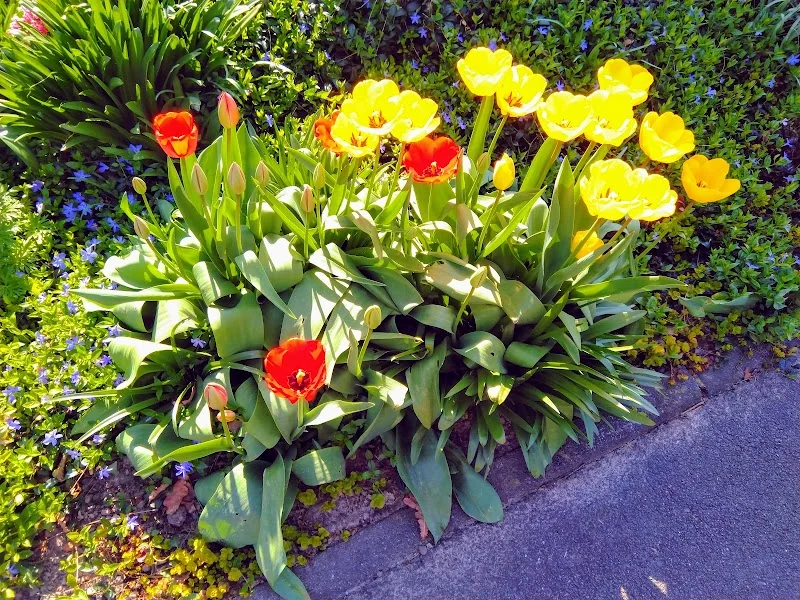
Harpen, Bochum Nord
Harpen, 44 Bochum Nord, Germany
Harpen | Harpener Hellweg & Harpener Teiche
Harpen is not a loud show venue and not a classic event location, but a district that stands out due to its mix of history, local recreation, and everyday infrastructure. Those looking for Harpen Bochum quickly find themselves at St. Vinzentius Church, at the Harpener Teiche behind the Ruhrpark, at Harpener Hellweg, and at the large shopping location Ruhrpark. Additionally, there are bike paths, neighborhood festivals, and short distances that make Harpen interesting for many inquiries related to living, orientation, and leisure. The district appears unexciting at first glance, but at its core has remarkable depth: old building substance, established traffic axes, green waterfront areas, and a strong shopping environment. This mix explains why search terms like Harpen Bochum, Harpener Teiche, or Harpener Hellweg are so closely associated with the place. ([bochum.de](https://www.bochum.de/Kultur-in-Bochum/Religionen))
Harpen exemplifies a northern Bochum where urban development, leisure, and memory remain visibly side by side. The Ruhrpark attracts people from the entire region, the Harpener Teiche form a quiet counterpoint, and St. Vinzentius Church refers to a history that begins long before the modern shopping and traffic axes. The Lothringentrasse and the sporting uses at Harpener Heide also show that the district consists not only of residential streets but of various levels of movement, supply, and encounter. Therefore, it is worthwhile to take a closer look at the themes that frequently appear in search queries: nature and paths, traffic and town center, church and history, shopping and supply, village festival and neighborhood life, as well as the bike connections in northern Bochum. ([bochum.de](https://www.bochum.de/radrunden?utm_source=openai))
Harpener Teiche: Nature, Mining History, and Local Recreation
The Harpener Teiche are among the most prominent landscape features in northern Bochum. The city of Bochum describes them as a place where one goes behind the Ruhrpark on Werner Street towards Harpener Teiche, and where a former mining settling pond has become a local recreation area. The water appears turquoise in places because mineral-rich pit water from the former Robert Müser mine flows in. At the same time, the city points out that the high chloride content can also lead to odor formation. This mix of technical past and almost southern-looking water color makes the Harpener Teiche so special: they are not an artificially staged park lake but a body of water whose character has directly emerged from the industrial history of the Ruhr area. For people searching for Harpener Teiche, Harpen Bochum, or Harpener Bach, this is one of the most important anchor points in the district. ([bochum.de](https://www.bochum.de/Pressemeldungen/Zuhause-ist-auch-schoen-Sommerreihe-2020/Zuhause-ist-auch-schoen-Ein-bisschen-Suedseefeeling-an-Bochumer-Teichen))
When visiting the ponds, one experiences not only a view of water and shores but also a small history lesson about the formation of the Ruhr area. According to the city of Bochum, the Harpener Teiche are a habitat for numerous species of animals, including mallards, great crested grebes, and swans. Another important reference is the Harpener Bach: along the brook and later the Oelbach, the footpath continues to Ümminger See. This spatial connection makes it clear that the Harpener Teiche are not isolated but part of a larger green network that connects several bodies of water in eastern and northern Bochum. The Parkway EmscherRuhr also connects the Harpener Teiche to Ümminger See, Kemnader See, and the Ölbach mouth ponds. This creates a recreational and cycling area suitable for walks, short breaks, and longer tours alike. ([bochum.de](https://www.bochum.de/Pressemeldungen/Zuhause-ist-auch-schoen-Sommerreihe-2020/Zuhause-ist-auch-schoen-Ein-bisschen-Suedseefeeling-an-Bochumer-Teichen))
The historical dimension is also visible at this location. The Bochum pond landscape has its roots in mining, and the Harpener Teiche are part of this narrative. The city of Bochum describes the water as a former settling pond of mining and points out that many ponds and lakes in Bochum are now local recreation areas. This results in a double appeal: on one hand, the ponds remind of the industrial past; on the other hand, they provide a quiet counterpoint to the heavily trafficked axes of the north. Those who stay here find not only a photo point but a landscape that explains why Bochum is often described as a city between work, change, and green remnants. Harpener Teiche, Harpener Bach, and Ümminger See together form a small but very typical Bochum ensemble. ([bochum.de](https://www.bochum.de/Pressemeldungen/Zuhause-ist-auch-schoen-Sommerreihe-2020/Zuhause-ist-auch-schoen-Ein-bisschen-Suedseefeeling-an-Bochumer-Teichen))
Harpener Hellweg: Town Center, Traffic, and Urban Development
The Harpener Hellweg is much more than just a thoroughfare for Harpen. In the Bochum-Nord traffic concept, the city describes it as a narrow street space in the town center characterized by mixed ground floor uses, a full-range store, and other sensitive public facilities. Mentioned are, among others, the Maischützenschule and other uses that generate an increased need for pedestrian crossings. This constellation results in a classic local situation: there is housing, supply, school, church, and traffic in a small space, and therein lies the urban tension. Those searching for Harpener Hellweg Bochum often seek not only an address but also an assessment of the location, traffic management, and quality of stay. This makes the Harpener Hellweg one of the central SEO terms for the district. ([bochum.de](https://www.bochum.de/C125830C0042AB74/vwContentByKey/W2CUT7YL932BOCMDE/%24FILE/2_Verkehrskonzept_Bochum_Nord_Bericht.pdf))
The traffic concept therefore recommends a series of measures to strengthen the town center and reduce the street's separating effect. These include limiting the maximum speed to 30 km/h, guiding bike traffic on the roadway, and removing the median strip. A section of about 900 meters between Auf dem Anger and Baldurstraße is mentioned. The argument of the concept is clear: more safety when crossing, less separation, more noise protection, and a better urban space for the people in the neighborhood. This is important for Harpen because the Harpener Hellweg does not lie at the edge of the district but shapes its town center. This also explains why search terms related to parking, access, street scene, and town center occur so frequently. ([bochum.de](https://www.bochum.de/C125830C0042AB74/vwContentByKey/W2CUT7YL932BOCMDE/%24FILE/2_Verkehrskonzept_Bochum_Nord_Bericht.pdf))
Additionally, the axis continues to change. A recent press release from the city of Bochum refers to the new construction of the Bochum police headquarters and a new commercial area on Harpener Hellweg. This means that the street space is not only being evaluated but also further developed structurally. Such projects show that Harpen is not a static place but a district where old axes, new uses, and traffic adjustments come together. For visitors and residents, this means: the Harpener Hellweg is a point of orientation, a development space, and an important connection at the same time. Those looking at search queries for Harpener Hellweg Bochum or Harpen Bochum thus recognize a place where urban planning becomes very concrete. ([bochum.de](https://www.bochum.de/Pressemeldungen/9-Februar-2026/Notwendige-Baumfaellungen-im-Vorgriff-auf-Kanal--und-Strassenbauarbeiten?utm_source=openai))
St. Vinzentius Church: Oldest Building, Identity, and History
The St. Vinzentius Church is the historical heart of Harpen and one of the most important buildings in the entire Bochum area. The city of Bochum emphasizes on its page about religions in Bochum that the stone core of the building was created around the year 1000, making the church older than the Stiepeler village church. In a city with comparatively few very old monuments, it thus holds a special significance. The architecture and interior design convey, according to the city, an impression of the great church architecture of Westphalian ancestors. For this reason, the church appears in search queries not only as a religious place but as a cultural-historical reference point. Those searching for St. Vinzentius Church Harpen, Harpen Bochum, or Kirchharpen almost automatically come across this building. ([bochum.de](https://www.bochum.de/Kultur-in-Bochum/Religionen))
Particularly exciting is the archaeological and structural confirmation of its age. Between 1975 and 1978, the church was renovated; during this process, remnants of a choir room foundation in herringbone pattern and further traces of an early construction phase were uncovered. A found silver coin from the period between 997 and 1012 additionally confirmed the dating. Such details make the church interesting not only for architecture fans but also for anyone interested in the early settlement traces in the Ruhr area. That the house of worship is considered the oldest building in Bochum is therefore not just a marketing effect but a historically supported statement. The patron saint Vinzentius also refers to a long-standing Christian tradition that continues to shape Harpen today. ([bochum.de](https://www.bochum.de/Kultur-in-Bochum/Religionen))
For neighborhood life, St. Vinzentius Church is also a place of orientation. The village festival Harpen is centered around it, many paths in the neighborhood lead past it, and its location makes it clear that Harpen derives its identity not only from traffic and retail but from a grown center. The connection of church, festival site, and historical memory is central to the district. Precisely because Harpen does not present itself as a major tourist attraction, the church has a special effect: it visibly stands for continuity in a district that has constantly changed around it. Those wanting to understand Harpen should take this place as a starting point. ([bochum.de](https://www.bochum.de/Kultur-in-Bochum/Religionen))
Ruhrpark: Shopping Center, Supply, and Urban Reach
The Ruhrpark is one of the strongest search and attraction points in the vicinity of Harpen. According to the city of Bochum, it was one of the largest shopping centers in Germany upon its opening in 1964. At that time, it covered a total area of 120,000 square meters, more than 30 stores, and 2,500 parking spaces. In 1969, the area was expanded to 235,000 square meters, and in 1974 finally to 280,000 square meters. After the third expansion in 1987, the Ruhrpark had well over 6,500 parking spaces and almost 70 retail outlets. Today, the city of Bochum reports more than 130 stores and over 30 restaurants. For Harpen, this is therefore more than just a neighboring center: the Ruhrpark significantly shapes traffic, perception, and everyday use of the district. ([bochum.de](https://www.bochum.de/Pressemeldungen/15-Oktober-2024/Schaufenster-Stadtgeschichte--Wegweiser-des-Ruhrparks-1987-))
The urban classification is also important. In a Bochum specialist concept, the Ruhrpark is explicitly referred to as one of the largest shopping centers in Germany located in the Harpen district. At the same time, it is emphasized that it plays a central role as a retail location and is also important for surrounding residential neighborhoods as a local supplier. The car traffic connection is considered excellent, while the connection for cyclists is described as improvable. This mix explains why search queries like Ruhrpark Harpen or Harpen Bochum are so frequently associated with shopping and traffic topics. The location is not only large but also regionally effective: people from the entire Bochum area and beyond associate Harpen with the Ruhrpark. ([bochum.de](https://www.bochum.de/C125830C0042AB74/vwContentByKey/W2CRP9GE130BOCMDE/%24File/2_KSK_Bochum_Endbericht_Langfassung.pdf))
For the perception of the district, it is also crucial that the Ruhrpark forms an orientation mark beyond mere consumption. The city of Bochum points out that the Ruhrpark was already advertised in the 1980s for its central location and good highway access. This explains the high recognizability of the place to this day. Those describing Harpen as a district should therefore not treat the Ruhrpark as a minor matter but as one of the reasons why Harpen is perceived so strongly in northern Bochum. It connects supra-regional reach with everyday supply and makes the district relevant for both visitors and residents. ([bochum.de](https://www.bochum.de/Pressemeldungen/15-Oktober-2024/Schaufenster-Stadtgeschichte--Wegweiser-des-Ruhrparks-1987-))
Village Festival Harpen: Neighborhood Tradition, Fair, and Local Identity
The village festival Harpen is an important anchor of identity for the district and one of the reasons why there is so much search interest in Harpener Dorffest 2026. Bochum Tourism describes the festival as a popular mix of fair and neighborhood festival with a long tradition. In 2025, it took place from August 15 to 18; around 30 rides, game stalls, and snack stands were in operation daily. The action area extended from St. Vinzentius Church over Kattenstraße to Lütkendorpweg. This route already shows how closely the festival, church, and town center are connected in Harpen. The festival is therefore not just entertainment but a visible form of neighborhood life. ([bochum-tourismus.de](https://www.bochum-tourismus.de/was-ist-los/veranstaltungskalender/veranstaltung/dorffest-harpen-1.html?utm_source=openai))
Particularly characteristic is that the village festival aims to represent the district's rich history. According to Bochum Tourism, a farmer's theater recalls the historical granting of market rights for a livestock and flea market in Harpen. This is where the cultural-historical added value lies: the festival connects to an old local memory space and turns history into a public event. The Harpener Kirmes is organized jointly by Bochum Marketing, the Harpen support association e. V., and the Bochum-Nord district council. This cooperation shows that the festival is firmly rooted in the district and is not imported from outside. Those searching for Harpen, village festival, fair, or events in northern Bochum thus find a very clear local tradition here. ([bochum-tourismus.de](https://www.bochum-tourismus.de/was-ist-los/veranstaltungskalender/veranstaltung/dorffest-harpen-1.html?utm_source=openai))
Moreover, the village festival is significant for the present because it visibly makes Harpen a social meeting point. The mix of fair, free admission, stage program, and historical reference creates an atmosphere that is attractive for both families and older residents. The festival presents Harpen as a community space where public squares, church, streets, and clubs interact. For search queries related to Harpener Dorffest 2026, Harpen event, or Harpen Bochum, one thing is particularly relevant: the district has a recurring major event that radiates far beyond the narrow town center into the entire northern Bochum. ([bochum-tourismus.de](https://www.bochum-tourismus.de/was-ist-los/veranstaltungskalender/veranstaltung/dorffest-harpen-1.html?utm_source=openai))
Lothringentrasse, Harpener Heide, and Mobility in Northern Bochum
Those who want to understand Harpen not just as a residential or shopping place but as a movement space cannot overlook the Lothringentrasse. The city of Bochum describes it as a connection between Harpen and Gerthe. Since the street In der Grume has been closed to motor vehicle traffic, the route runs largely away from motorized traffic. Via Amtmann-Ibing-Straße, the Gerther center is directly connected to the railway line, and around the Lothringen dump, there are several connection points with the Parkway EmscherRuhr, which can be reached via Castrop-Rauxel. Additionally, the Emscher Park bike path can be accessed from the Lothringen dump from Dortmund. For search queries like Lothringentrasse or bike paths Harpen, this is one of the most important indicators of the recreational value of the district. ([bochum.de](https://www.bochum.de/radrunden?utm_source=openai))
The Lothringentrasse is also relevant because it integrates Harpen into a larger network for everyday and recreational cycling. The city of Bochum emphasizes that Springorum and Lothringentrasse connect the extreme southwest and the extreme northeast of the city and are to be further linked by the Ruhr rapid bike path. Harpen is thus part of an urban cycling concept that not only improves individual paths but connects entire neighborhoods. Those living, working, or just passing through Harpen benefit from the fact that the district is not isolated but embedded in a larger mobility network. This makes the search terms Harpener Hellweg, Harpen Bochum, and Lothringentrasse relevant from a practical perspective. ([bochum.de](https://www.bochum.de/radrunden?utm_source=openai))
Another component of the local infrastructure is located at Harpener Heide. On the city's page about gymnasiums and sports halls, municipal sports halls are mentioned there, including a roller sports hall and areas for judo and martial arts. This shows that Harpen is shaped not only by streets, ponds, and shopping but also by sports and movement. Especially in a district where many search queries target specific street names or house numbers, this connection is important: Harpener Heide stands for a functionally used area with sports offerings, while the Lothringentrasse strengthens recreational traffic in green spaces. Together, these places create an image of Harpen as a district that is well connected in everyday life and also offers space for movement. ([bochum.de](https://www.bochum.de/Referat-fuer-Sport-und-Bewegung/Turnhallen-und-Sporthallen?utm_source=openai))
Sources:
- City of Bochum – Religions in Bochum
- City of Bochum – Harpener Teiche and Bochumer Teiche
- City of Bochum – Cycling Routes and Lothringentrasse
- City of Bochum – Ruhrpark and its Development
- Bochum Tourism – Village Festival Harpen
- City of Bochum – Traffic Concept Bochum-Nord
- City of Bochum – Climate Protection Concept for Climate-Friendly Traffic
- City of Bochum – Gymnasiums and Sports Halls
Show moreShow less
Harpen | Harpener Hellweg & Harpener Teiche
Harpen is not a loud show venue and not a classic event location, but a district that stands out due to its mix of history, local recreation, and everyday infrastructure. Those looking for Harpen Bochum quickly find themselves at St. Vinzentius Church, at the Harpener Teiche behind the Ruhrpark, at Harpener Hellweg, and at the large shopping location Ruhrpark. Additionally, there are bike paths, neighborhood festivals, and short distances that make Harpen interesting for many inquiries related to living, orientation, and leisure. The district appears unexciting at first glance, but at its core has remarkable depth: old building substance, established traffic axes, green waterfront areas, and a strong shopping environment. This mix explains why search terms like Harpen Bochum, Harpener Teiche, or Harpener Hellweg are so closely associated with the place. ([bochum.de](https://www.bochum.de/Kultur-in-Bochum/Religionen))
Harpen exemplifies a northern Bochum where urban development, leisure, and memory remain visibly side by side. The Ruhrpark attracts people from the entire region, the Harpener Teiche form a quiet counterpoint, and St. Vinzentius Church refers to a history that begins long before the modern shopping and traffic axes. The Lothringentrasse and the sporting uses at Harpener Heide also show that the district consists not only of residential streets but of various levels of movement, supply, and encounter. Therefore, it is worthwhile to take a closer look at the themes that frequently appear in search queries: nature and paths, traffic and town center, church and history, shopping and supply, village festival and neighborhood life, as well as the bike connections in northern Bochum. ([bochum.de](https://www.bochum.de/radrunden?utm_source=openai))
Harpener Teiche: Nature, Mining History, and Local Recreation
The Harpener Teiche are among the most prominent landscape features in northern Bochum. The city of Bochum describes them as a place where one goes behind the Ruhrpark on Werner Street towards Harpener Teiche, and where a former mining settling pond has become a local recreation area. The water appears turquoise in places because mineral-rich pit water from the former Robert Müser mine flows in. At the same time, the city points out that the high chloride content can also lead to odor formation. This mix of technical past and almost southern-looking water color makes the Harpener Teiche so special: they are not an artificially staged park lake but a body of water whose character has directly emerged from the industrial history of the Ruhr area. For people searching for Harpener Teiche, Harpen Bochum, or Harpener Bach, this is one of the most important anchor points in the district. ([bochum.de](https://www.bochum.de/Pressemeldungen/Zuhause-ist-auch-schoen-Sommerreihe-2020/Zuhause-ist-auch-schoen-Ein-bisschen-Suedseefeeling-an-Bochumer-Teichen))
When visiting the ponds, one experiences not only a view of water and shores but also a small history lesson about the formation of the Ruhr area. According to the city of Bochum, the Harpener Teiche are a habitat for numerous species of animals, including mallards, great crested grebes, and swans. Another important reference is the Harpener Bach: along the brook and later the Oelbach, the footpath continues to Ümminger See. This spatial connection makes it clear that the Harpener Teiche are not isolated but part of a larger green network that connects several bodies of water in eastern and northern Bochum. The Parkway EmscherRuhr also connects the Harpener Teiche to Ümminger See, Kemnader See, and the Ölbach mouth ponds. This creates a recreational and cycling area suitable for walks, short breaks, and longer tours alike. ([bochum.de](https://www.bochum.de/Pressemeldungen/Zuhause-ist-auch-schoen-Sommerreihe-2020/Zuhause-ist-auch-schoen-Ein-bisschen-Suedseefeeling-an-Bochumer-Teichen))
The historical dimension is also visible at this location. The Bochum pond landscape has its roots in mining, and the Harpener Teiche are part of this narrative. The city of Bochum describes the water as a former settling pond of mining and points out that many ponds and lakes in Bochum are now local recreation areas. This results in a double appeal: on one hand, the ponds remind of the industrial past; on the other hand, they provide a quiet counterpoint to the heavily trafficked axes of the north. Those who stay here find not only a photo point but a landscape that explains why Bochum is often described as a city between work, change, and green remnants. Harpener Teiche, Harpener Bach, and Ümminger See together form a small but very typical Bochum ensemble. ([bochum.de](https://www.bochum.de/Pressemeldungen/Zuhause-ist-auch-schoen-Sommerreihe-2020/Zuhause-ist-auch-schoen-Ein-bisschen-Suedseefeeling-an-Bochumer-Teichen))
Harpener Hellweg: Town Center, Traffic, and Urban Development
The Harpener Hellweg is much more than just a thoroughfare for Harpen. In the Bochum-Nord traffic concept, the city describes it as a narrow street space in the town center characterized by mixed ground floor uses, a full-range store, and other sensitive public facilities. Mentioned are, among others, the Maischützenschule and other uses that generate an increased need for pedestrian crossings. This constellation results in a classic local situation: there is housing, supply, school, church, and traffic in a small space, and therein lies the urban tension. Those searching for Harpener Hellweg Bochum often seek not only an address but also an assessment of the location, traffic management, and quality of stay. This makes the Harpener Hellweg one of the central SEO terms for the district. ([bochum.de](https://www.bochum.de/C125830C0042AB74/vwContentByKey/W2CUT7YL932BOCMDE/%24FILE/2_Verkehrskonzept_Bochum_Nord_Bericht.pdf))
The traffic concept therefore recommends a series of measures to strengthen the town center and reduce the street's separating effect. These include limiting the maximum speed to 30 km/h, guiding bike traffic on the roadway, and removing the median strip. A section of about 900 meters between Auf dem Anger and Baldurstraße is mentioned. The argument of the concept is clear: more safety when crossing, less separation, more noise protection, and a better urban space for the people in the neighborhood. This is important for Harpen because the Harpener Hellweg does not lie at the edge of the district but shapes its town center. This also explains why search terms related to parking, access, street scene, and town center occur so frequently. ([bochum.de](https://www.bochum.de/C125830C0042AB74/vwContentByKey/W2CUT7YL932BOCMDE/%24FILE/2_Verkehrskonzept_Bochum_Nord_Bericht.pdf))
Additionally, the axis continues to change. A recent press release from the city of Bochum refers to the new construction of the Bochum police headquarters and a new commercial area on Harpener Hellweg. This means that the street space is not only being evaluated but also further developed structurally. Such projects show that Harpen is not a static place but a district where old axes, new uses, and traffic adjustments come together. For visitors and residents, this means: the Harpener Hellweg is a point of orientation, a development space, and an important connection at the same time. Those looking at search queries for Harpener Hellweg Bochum or Harpen Bochum thus recognize a place where urban planning becomes very concrete. ([bochum.de](https://www.bochum.de/Pressemeldungen/9-Februar-2026/Notwendige-Baumfaellungen-im-Vorgriff-auf-Kanal--und-Strassenbauarbeiten?utm_source=openai))
St. Vinzentius Church: Oldest Building, Identity, and History
The St. Vinzentius Church is the historical heart of Harpen and one of the most important buildings in the entire Bochum area. The city of Bochum emphasizes on its page about religions in Bochum that the stone core of the building was created around the year 1000, making the church older than the Stiepeler village church. In a city with comparatively few very old monuments, it thus holds a special significance. The architecture and interior design convey, according to the city, an impression of the great church architecture of Westphalian ancestors. For this reason, the church appears in search queries not only as a religious place but as a cultural-historical reference point. Those searching for St. Vinzentius Church Harpen, Harpen Bochum, or Kirchharpen almost automatically come across this building. ([bochum.de](https://www.bochum.de/Kultur-in-Bochum/Religionen))
Particularly exciting is the archaeological and structural confirmation of its age. Between 1975 and 1978, the church was renovated; during this process, remnants of a choir room foundation in herringbone pattern and further traces of an early construction phase were uncovered. A found silver coin from the period between 997 and 1012 additionally confirmed the dating. Such details make the church interesting not only for architecture fans but also for anyone interested in the early settlement traces in the Ruhr area. That the house of worship is considered the oldest building in Bochum is therefore not just a marketing effect but a historically supported statement. The patron saint Vinzentius also refers to a long-standing Christian tradition that continues to shape Harpen today. ([bochum.de](https://www.bochum.de/Kultur-in-Bochum/Religionen))
For neighborhood life, St. Vinzentius Church is also a place of orientation. The village festival Harpen is centered around it, many paths in the neighborhood lead past it, and its location makes it clear that Harpen derives its identity not only from traffic and retail but from a grown center. The connection of church, festival site, and historical memory is central to the district. Precisely because Harpen does not present itself as a major tourist attraction, the church has a special effect: it visibly stands for continuity in a district that has constantly changed around it. Those wanting to understand Harpen should take this place as a starting point. ([bochum.de](https://www.bochum.de/Kultur-in-Bochum/Religionen))
Ruhrpark: Shopping Center, Supply, and Urban Reach
The Ruhrpark is one of the strongest search and attraction points in the vicinity of Harpen. According to the city of Bochum, it was one of the largest shopping centers in Germany upon its opening in 1964. At that time, it covered a total area of 120,000 square meters, more than 30 stores, and 2,500 parking spaces. In 1969, the area was expanded to 235,000 square meters, and in 1974 finally to 280,000 square meters. After the third expansion in 1987, the Ruhrpark had well over 6,500 parking spaces and almost 70 retail outlets. Today, the city of Bochum reports more than 130 stores and over 30 restaurants. For Harpen, this is therefore more than just a neighboring center: the Ruhrpark significantly shapes traffic, perception, and everyday use of the district. ([bochum.de](https://www.bochum.de/Pressemeldungen/15-Oktober-2024/Schaufenster-Stadtgeschichte--Wegweiser-des-Ruhrparks-1987-))
The urban classification is also important. In a Bochum specialist concept, the Ruhrpark is explicitly referred to as one of the largest shopping centers in Germany located in the Harpen district. At the same time, it is emphasized that it plays a central role as a retail location and is also important for surrounding residential neighborhoods as a local supplier. The car traffic connection is considered excellent, while the connection for cyclists is described as improvable. This mix explains why search queries like Ruhrpark Harpen or Harpen Bochum are so frequently associated with shopping and traffic topics. The location is not only large but also regionally effective: people from the entire Bochum area and beyond associate Harpen with the Ruhrpark. ([bochum.de](https://www.bochum.de/C125830C0042AB74/vwContentByKey/W2CRP9GE130BOCMDE/%24File/2_KSK_Bochum_Endbericht_Langfassung.pdf))
For the perception of the district, it is also crucial that the Ruhrpark forms an orientation mark beyond mere consumption. The city of Bochum points out that the Ruhrpark was already advertised in the 1980s for its central location and good highway access. This explains the high recognizability of the place to this day. Those describing Harpen as a district should therefore not treat the Ruhrpark as a minor matter but as one of the reasons why Harpen is perceived so strongly in northern Bochum. It connects supra-regional reach with everyday supply and makes the district relevant for both visitors and residents. ([bochum.de](https://www.bochum.de/Pressemeldungen/15-Oktober-2024/Schaufenster-Stadtgeschichte--Wegweiser-des-Ruhrparks-1987-))
Village Festival Harpen: Neighborhood Tradition, Fair, and Local Identity
The village festival Harpen is an important anchor of identity for the district and one of the reasons why there is so much search interest in Harpener Dorffest 2026. Bochum Tourism describes the festival as a popular mix of fair and neighborhood festival with a long tradition. In 2025, it took place from August 15 to 18; around 30 rides, game stalls, and snack stands were in operation daily. The action area extended from St. Vinzentius Church over Kattenstraße to Lütkendorpweg. This route already shows how closely the festival, church, and town center are connected in Harpen. The festival is therefore not just entertainment but a visible form of neighborhood life. ([bochum-tourismus.de](https://www.bochum-tourismus.de/was-ist-los/veranstaltungskalender/veranstaltung/dorffest-harpen-1.html?utm_source=openai))
Particularly characteristic is that the village festival aims to represent the district's rich history. According to Bochum Tourism, a farmer's theater recalls the historical granting of market rights for a livestock and flea market in Harpen. This is where the cultural-historical added value lies: the festival connects to an old local memory space and turns history into a public event. The Harpener Kirmes is organized jointly by Bochum Marketing, the Harpen support association e. V., and the Bochum-Nord district council. This cooperation shows that the festival is firmly rooted in the district and is not imported from outside. Those searching for Harpen, village festival, fair, or events in northern Bochum thus find a very clear local tradition here. ([bochum-tourismus.de](https://www.bochum-tourismus.de/was-ist-los/veranstaltungskalender/veranstaltung/dorffest-harpen-1.html?utm_source=openai))
Moreover, the village festival is significant for the present because it visibly makes Harpen a social meeting point. The mix of fair, free admission, stage program, and historical reference creates an atmosphere that is attractive for both families and older residents. The festival presents Harpen as a community space where public squares, church, streets, and clubs interact. For search queries related to Harpener Dorffest 2026, Harpen event, or Harpen Bochum, one thing is particularly relevant: the district has a recurring major event that radiates far beyond the narrow town center into the entire northern Bochum. ([bochum-tourismus.de](https://www.bochum-tourismus.de/was-ist-los/veranstaltungskalender/veranstaltung/dorffest-harpen-1.html?utm_source=openai))
Lothringentrasse, Harpener Heide, and Mobility in Northern Bochum
Those who want to understand Harpen not just as a residential or shopping place but as a movement space cannot overlook the Lothringentrasse. The city of Bochum describes it as a connection between Harpen and Gerthe. Since the street In der Grume has been closed to motor vehicle traffic, the route runs largely away from motorized traffic. Via Amtmann-Ibing-Straße, the Gerther center is directly connected to the railway line, and around the Lothringen dump, there are several connection points with the Parkway EmscherRuhr, which can be reached via Castrop-Rauxel. Additionally, the Emscher Park bike path can be accessed from the Lothringen dump from Dortmund. For search queries like Lothringentrasse or bike paths Harpen, this is one of the most important indicators of the recreational value of the district. ([bochum.de](https://www.bochum.de/radrunden?utm_source=openai))
The Lothringentrasse is also relevant because it integrates Harpen into a larger network for everyday and recreational cycling. The city of Bochum emphasizes that Springorum and Lothringentrasse connect the extreme southwest and the extreme northeast of the city and are to be further linked by the Ruhr rapid bike path. Harpen is thus part of an urban cycling concept that not only improves individual paths but connects entire neighborhoods. Those living, working, or just passing through Harpen benefit from the fact that the district is not isolated but embedded in a larger mobility network. This makes the search terms Harpener Hellweg, Harpen Bochum, and Lothringentrasse relevant from a practical perspective. ([bochum.de](https://www.bochum.de/radrunden?utm_source=openai))
Another component of the local infrastructure is located at Harpener Heide. On the city's page about gymnasiums and sports halls, municipal sports halls are mentioned there, including a roller sports hall and areas for judo and martial arts. This shows that Harpen is shaped not only by streets, ponds, and shopping but also by sports and movement. Especially in a district where many search queries target specific street names or house numbers, this connection is important: Harpener Heide stands for a functionally used area with sports offerings, while the Lothringentrasse strengthens recreational traffic in green spaces. Together, these places create an image of Harpen as a district that is well connected in everyday life and also offers space for movement. ([bochum.de](https://www.bochum.de/Referat-fuer-Sport-und-Bewegung/Turnhallen-und-Sporthallen?utm_source=openai))
Sources:
- City of Bochum – Religions in Bochum
- City of Bochum – Harpener Teiche and Bochumer Teiche
- City of Bochum – Cycling Routes and Lothringentrasse
- City of Bochum – Ruhrpark and its Development
- Bochum Tourism – Village Festival Harpen
- City of Bochum – Traffic Concept Bochum-Nord
- City of Bochum – Climate Protection Concept for Climate-Friendly Traffic
- City of Bochum – Gymnasiums and Sports Halls
Harpen | Harpener Hellweg & Harpener Teiche
Harpen is not a loud show venue and not a classic event location, but a district that stands out due to its mix of history, local recreation, and everyday infrastructure. Those looking for Harpen Bochum quickly find themselves at St. Vinzentius Church, at the Harpener Teiche behind the Ruhrpark, at Harpener Hellweg, and at the large shopping location Ruhrpark. Additionally, there are bike paths, neighborhood festivals, and short distances that make Harpen interesting for many inquiries related to living, orientation, and leisure. The district appears unexciting at first glance, but at its core has remarkable depth: old building substance, established traffic axes, green waterfront areas, and a strong shopping environment. This mix explains why search terms like Harpen Bochum, Harpener Teiche, or Harpener Hellweg are so closely associated with the place. ([bochum.de](https://www.bochum.de/Kultur-in-Bochum/Religionen))
Harpen exemplifies a northern Bochum where urban development, leisure, and memory remain visibly side by side. The Ruhrpark attracts people from the entire region, the Harpener Teiche form a quiet counterpoint, and St. Vinzentius Church refers to a history that begins long before the modern shopping and traffic axes. The Lothringentrasse and the sporting uses at Harpener Heide also show that the district consists not only of residential streets but of various levels of movement, supply, and encounter. Therefore, it is worthwhile to take a closer look at the themes that frequently appear in search queries: nature and paths, traffic and town center, church and history, shopping and supply, village festival and neighborhood life, as well as the bike connections in northern Bochum. ([bochum.de](https://www.bochum.de/radrunden?utm_source=openai))
Harpener Teiche: Nature, Mining History, and Local Recreation
The Harpener Teiche are among the most prominent landscape features in northern Bochum. The city of Bochum describes them as a place where one goes behind the Ruhrpark on Werner Street towards Harpener Teiche, and where a former mining settling pond has become a local recreation area. The water appears turquoise in places because mineral-rich pit water from the former Robert Müser mine flows in. At the same time, the city points out that the high chloride content can also lead to odor formation. This mix of technical past and almost southern-looking water color makes the Harpener Teiche so special: they are not an artificially staged park lake but a body of water whose character has directly emerged from the industrial history of the Ruhr area. For people searching for Harpener Teiche, Harpen Bochum, or Harpener Bach, this is one of the most important anchor points in the district. ([bochum.de](https://www.bochum.de/Pressemeldungen/Zuhause-ist-auch-schoen-Sommerreihe-2020/Zuhause-ist-auch-schoen-Ein-bisschen-Suedseefeeling-an-Bochumer-Teichen))
When visiting the ponds, one experiences not only a view of water and shores but also a small history lesson about the formation of the Ruhr area. According to the city of Bochum, the Harpener Teiche are a habitat for numerous species of animals, including mallards, great crested grebes, and swans. Another important reference is the Harpener Bach: along the brook and later the Oelbach, the footpath continues to Ümminger See. This spatial connection makes it clear that the Harpener Teiche are not isolated but part of a larger green network that connects several bodies of water in eastern and northern Bochum. The Parkway EmscherRuhr also connects the Harpener Teiche to Ümminger See, Kemnader See, and the Ölbach mouth ponds. This creates a recreational and cycling area suitable for walks, short breaks, and longer tours alike. ([bochum.de](https://www.bochum.de/Pressemeldungen/Zuhause-ist-auch-schoen-Sommerreihe-2020/Zuhause-ist-auch-schoen-Ein-bisschen-Suedseefeeling-an-Bochumer-Teichen))
The historical dimension is also visible at this location. The Bochum pond landscape has its roots in mining, and the Harpener Teiche are part of this narrative. The city of Bochum describes the water as a former settling pond of mining and points out that many ponds and lakes in Bochum are now local recreation areas. This results in a double appeal: on one hand, the ponds remind of the industrial past; on the other hand, they provide a quiet counterpoint to the heavily trafficked axes of the north. Those who stay here find not only a photo point but a landscape that explains why Bochum is often described as a city between work, change, and green remnants. Harpener Teiche, Harpener Bach, and Ümminger See together form a small but very typical Bochum ensemble. ([bochum.de](https://www.bochum.de/Pressemeldungen/Zuhause-ist-auch-schoen-Sommerreihe-2020/Zuhause-ist-auch-schoen-Ein-bisschen-Suedseefeeling-an-Bochumer-Teichen))
Harpener Hellweg: Town Center, Traffic, and Urban Development
The Harpener Hellweg is much more than just a thoroughfare for Harpen. In the Bochum-Nord traffic concept, the city describes it as a narrow street space in the town center characterized by mixed ground floor uses, a full-range store, and other sensitive public facilities. Mentioned are, among others, the Maischützenschule and other uses that generate an increased need for pedestrian crossings. This constellation results in a classic local situation: there is housing, supply, school, church, and traffic in a small space, and therein lies the urban tension. Those searching for Harpener Hellweg Bochum often seek not only an address but also an assessment of the location, traffic management, and quality of stay. This makes the Harpener Hellweg one of the central SEO terms for the district. ([bochum.de](https://www.bochum.de/C125830C0042AB74/vwContentByKey/W2CUT7YL932BOCMDE/%24FILE/2_Verkehrskonzept_Bochum_Nord_Bericht.pdf))
The traffic concept therefore recommends a series of measures to strengthen the town center and reduce the street's separating effect. These include limiting the maximum speed to 30 km/h, guiding bike traffic on the roadway, and removing the median strip. A section of about 900 meters between Auf dem Anger and Baldurstraße is mentioned. The argument of the concept is clear: more safety when crossing, less separation, more noise protection, and a better urban space for the people in the neighborhood. This is important for Harpen because the Harpener Hellweg does not lie at the edge of the district but shapes its town center. This also explains why search terms related to parking, access, street scene, and town center occur so frequently. ([bochum.de](https://www.bochum.de/C125830C0042AB74/vwContentByKey/W2CUT7YL932BOCMDE/%24FILE/2_Verkehrskonzept_Bochum_Nord_Bericht.pdf))
Additionally, the axis continues to change. A recent press release from the city of Bochum refers to the new construction of the Bochum police headquarters and a new commercial area on Harpener Hellweg. This means that the street space is not only being evaluated but also further developed structurally. Such projects show that Harpen is not a static place but a district where old axes, new uses, and traffic adjustments come together. For visitors and residents, this means: the Harpener Hellweg is a point of orientation, a development space, and an important connection at the same time. Those looking at search queries for Harpener Hellweg Bochum or Harpen Bochum thus recognize a place where urban planning becomes very concrete. ([bochum.de](https://www.bochum.de/Pressemeldungen/9-Februar-2026/Notwendige-Baumfaellungen-im-Vorgriff-auf-Kanal--und-Strassenbauarbeiten?utm_source=openai))
St. Vinzentius Church: Oldest Building, Identity, and History
The St. Vinzentius Church is the historical heart of Harpen and one of the most important buildings in the entire Bochum area. The city of Bochum emphasizes on its page about religions in Bochum that the stone core of the building was created around the year 1000, making the church older than the Stiepeler village church. In a city with comparatively few very old monuments, it thus holds a special significance. The architecture and interior design convey, according to the city, an impression of the great church architecture of Westphalian ancestors. For this reason, the church appears in search queries not only as a religious place but as a cultural-historical reference point. Those searching for St. Vinzentius Church Harpen, Harpen Bochum, or Kirchharpen almost automatically come across this building. ([bochum.de](https://www.bochum.de/Kultur-in-Bochum/Religionen))
Particularly exciting is the archaeological and structural confirmation of its age. Between 1975 and 1978, the church was renovated; during this process, remnants of a choir room foundation in herringbone pattern and further traces of an early construction phase were uncovered. A found silver coin from the period between 997 and 1012 additionally confirmed the dating. Such details make the church interesting not only for architecture fans but also for anyone interested in the early settlement traces in the Ruhr area. That the house of worship is considered the oldest building in Bochum is therefore not just a marketing effect but a historically supported statement. The patron saint Vinzentius also refers to a long-standing Christian tradition that continues to shape Harpen today. ([bochum.de](https://www.bochum.de/Kultur-in-Bochum/Religionen))
For neighborhood life, St. Vinzentius Church is also a place of orientation. The village festival Harpen is centered around it, many paths in the neighborhood lead past it, and its location makes it clear that Harpen derives its identity not only from traffic and retail but from a grown center. The connection of church, festival site, and historical memory is central to the district. Precisely because Harpen does not present itself as a major tourist attraction, the church has a special effect: it visibly stands for continuity in a district that has constantly changed around it. Those wanting to understand Harpen should take this place as a starting point. ([bochum.de](https://www.bochum.de/Kultur-in-Bochum/Religionen))
Ruhrpark: Shopping Center, Supply, and Urban Reach
The Ruhrpark is one of the strongest search and attraction points in the vicinity of Harpen. According to the city of Bochum, it was one of the largest shopping centers in Germany upon its opening in 1964. At that time, it covered a total area of 120,000 square meters, more than 30 stores, and 2,500 parking spaces. In 1969, the area was expanded to 235,000 square meters, and in 1974 finally to 280,000 square meters. After the third expansion in 1987, the Ruhrpark had well over 6,500 parking spaces and almost 70 retail outlets. Today, the city of Bochum reports more than 130 stores and over 30 restaurants. For Harpen, this is therefore more than just a neighboring center: the Ruhrpark significantly shapes traffic, perception, and everyday use of the district. ([bochum.de](https://www.bochum.de/Pressemeldungen/15-Oktober-2024/Schaufenster-Stadtgeschichte--Wegweiser-des-Ruhrparks-1987-))
The urban classification is also important. In a Bochum specialist concept, the Ruhrpark is explicitly referred to as one of the largest shopping centers in Germany located in the Harpen district. At the same time, it is emphasized that it plays a central role as a retail location and is also important for surrounding residential neighborhoods as a local supplier. The car traffic connection is considered excellent, while the connection for cyclists is described as improvable. This mix explains why search queries like Ruhrpark Harpen or Harpen Bochum are so frequently associated with shopping and traffic topics. The location is not only large but also regionally effective: people from the entire Bochum area and beyond associate Harpen with the Ruhrpark. ([bochum.de](https://www.bochum.de/C125830C0042AB74/vwContentByKey/W2CRP9GE130BOCMDE/%24File/2_KSK_Bochum_Endbericht_Langfassung.pdf))
For the perception of the district, it is also crucial that the Ruhrpark forms an orientation mark beyond mere consumption. The city of Bochum points out that the Ruhrpark was already advertised in the 1980s for its central location and good highway access. This explains the high recognizability of the place to this day. Those describing Harpen as a district should therefore not treat the Ruhrpark as a minor matter but as one of the reasons why Harpen is perceived so strongly in northern Bochum. It connects supra-regional reach with everyday supply and makes the district relevant for both visitors and residents. ([bochum.de](https://www.bochum.de/Pressemeldungen/15-Oktober-2024/Schaufenster-Stadtgeschichte--Wegweiser-des-Ruhrparks-1987-))
Village Festival Harpen: Neighborhood Tradition, Fair, and Local Identity
The village festival Harpen is an important anchor of identity for the district and one of the reasons why there is so much search interest in Harpener Dorffest 2026. Bochum Tourism describes the festival as a popular mix of fair and neighborhood festival with a long tradition. In 2025, it took place from August 15 to 18; around 30 rides, game stalls, and snack stands were in operation daily. The action area extended from St. Vinzentius Church over Kattenstraße to Lütkendorpweg. This route already shows how closely the festival, church, and town center are connected in Harpen. The festival is therefore not just entertainment but a visible form of neighborhood life. ([bochum-tourismus.de](https://www.bochum-tourismus.de/was-ist-los/veranstaltungskalender/veranstaltung/dorffest-harpen-1.html?utm_source=openai))
Particularly characteristic is that the village festival aims to represent the district's rich history. According to Bochum Tourism, a farmer's theater recalls the historical granting of market rights for a livestock and flea market in Harpen. This is where the cultural-historical added value lies: the festival connects to an old local memory space and turns history into a public event. The Harpener Kirmes is organized jointly by Bochum Marketing, the Harpen support association e. V., and the Bochum-Nord district council. This cooperation shows that the festival is firmly rooted in the district and is not imported from outside. Those searching for Harpen, village festival, fair, or events in northern Bochum thus find a very clear local tradition here. ([bochum-tourismus.de](https://www.bochum-tourismus.de/was-ist-los/veranstaltungskalender/veranstaltung/dorffest-harpen-1.html?utm_source=openai))
Moreover, the village festival is significant for the present because it visibly makes Harpen a social meeting point. The mix of fair, free admission, stage program, and historical reference creates an atmosphere that is attractive for both families and older residents. The festival presents Harpen as a community space where public squares, church, streets, and clubs interact. For search queries related to Harpener Dorffest 2026, Harpen event, or Harpen Bochum, one thing is particularly relevant: the district has a recurring major event that radiates far beyond the narrow town center into the entire northern Bochum. ([bochum-tourismus.de](https://www.bochum-tourismus.de/was-ist-los/veranstaltungskalender/veranstaltung/dorffest-harpen-1.html?utm_source=openai))
Lothringentrasse, Harpener Heide, and Mobility in Northern Bochum
Those who want to understand Harpen not just as a residential or shopping place but as a movement space cannot overlook the Lothringentrasse. The city of Bochum describes it as a connection between Harpen and Gerthe. Since the street In der Grume has been closed to motor vehicle traffic, the route runs largely away from motorized traffic. Via Amtmann-Ibing-Straße, the Gerther center is directly connected to the railway line, and around the Lothringen dump, there are several connection points with the Parkway EmscherRuhr, which can be reached via Castrop-Rauxel. Additionally, the Emscher Park bike path can be accessed from the Lothringen dump from Dortmund. For search queries like Lothringentrasse or bike paths Harpen, this is one of the most important indicators of the recreational value of the district. ([bochum.de](https://www.bochum.de/radrunden?utm_source=openai))
The Lothringentrasse is also relevant because it integrates Harpen into a larger network for everyday and recreational cycling. The city of Bochum emphasizes that Springorum and Lothringentrasse connect the extreme southwest and the extreme northeast of the city and are to be further linked by the Ruhr rapid bike path. Harpen is thus part of an urban cycling concept that not only improves individual paths but connects entire neighborhoods. Those living, working, or just passing through Harpen benefit from the fact that the district is not isolated but embedded in a larger mobility network. This makes the search terms Harpener Hellweg, Harpen Bochum, and Lothringentrasse relevant from a practical perspective. ([bochum.de](https://www.bochum.de/radrunden?utm_source=openai))
Another component of the local infrastructure is located at Harpener Heide. On the city's page about gymnasiums and sports halls, municipal sports halls are mentioned there, including a roller sports hall and areas for judo and martial arts. This shows that Harpen is shaped not only by streets, ponds, and shopping but also by sports and movement. Especially in a district where many search queries target specific street names or house numbers, this connection is important: Harpener Heide stands for a functionally used area with sports offerings, while the Lothringentrasse strengthens recreational traffic in green spaces. Together, these places create an image of Harpen as a district that is well connected in everyday life and also offers space for movement. ([bochum.de](https://www.bochum.de/Referat-fuer-Sport-und-Bewegung/Turnhallen-und-Sporthallen?utm_source=openai))
Sources:
- City of Bochum – Religions in Bochum
- City of Bochum – Harpener Teiche and Bochumer Teiche
- City of Bochum – Cycling Routes and Lothringentrasse
- City of Bochum – Ruhrpark and its Development
- Bochum Tourism – Village Festival Harpen
- City of Bochum – Traffic Concept Bochum-Nord
- City of Bochum – Climate Protection Concept for Climate-Friendly Traffic
- City of Bochum – Gymnasiums and Sports Halls
Upcoming Events
No events found
Frequently Asked Questions
Reviews
No reviews found