
Bochum
Lahariplatz, 44803 Bochum, Deutschland
Lahariplatz | Bochum-Laer & Parking
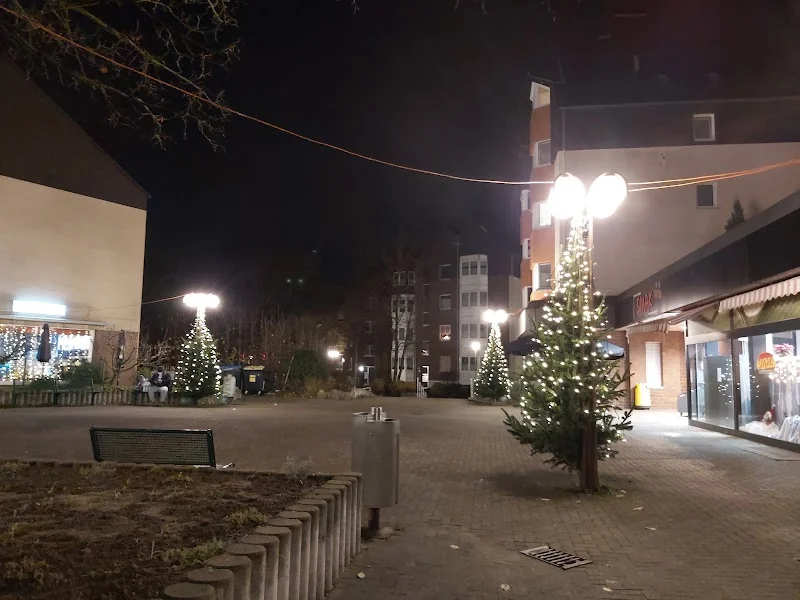
The Lahariplatz is the central square in the Bochum district of Laer and is one of the places where everyday life, local supply, and neighborhood identity directly meet. The open space concept describes the square as an area of about 6,850 square meters located between Werner Hellweg in the north and Wittener Straße in the southwest. It is surrounded by four- to five-story residential buildings with retail and service offerings on the ground floor. This explains the special role of the square: it is not an anonymous passageway, but the spatial and social center of a neighborhood that is changing as part of urban renewal. ([bochum.de](https://www.bochum.de/C125830C0042AB74/vwContentByKey/W2D4KC6W896BOCMDE/%24FILE/Freiraumkonzept_Laer_2019_web.pdf?utm_source=openai))
The city of Bochum has included the development of Laer in a comprehensive urban renewal program since 2018. This is not just about streets and green spaces, but about how to transform a traffic-dominated area back into a clearly recognizable center. For the Lahariplatz, this means: more openness, better connections, improved quality of stay, and a clearer link to Wittener Straße, the Laer-Mitte tram stop, and the new development area MARK 51°7. Thus, the square is gradually becoming an urban focal point with a neighborhood character. ([bochum.de](https://www.bochum.de/stadterneuerung-laer))
Location, Size, and Role in the Neighborhood
To understand the Lahariplatz, one must view it as part of a developed neighborhood center. The open space concept refers to it as the central square in Laer. It also describes that the square has long appeared rather introverted due to its surrounding, relatively closed development, and the spatial references to the former Fronleichnamskirche in the south and the community center north of Suntumer Straße were not sufficiently formed. This finding makes it clear why the redesign is so important: the square should no longer just function but also provide orientation and create identity. ([bochum.de](https://www.bochum.de/C125830C0042AB74/vwContentByKey/W2D4KC6W896BOCMDE/%24FILE/Freiraumkonzept_Laer_2019_web.pdf?utm_source=openai))
The city of Bochum emphasizes on its urban renewal page that the Lahariplatz plays a central role in the active life of Laer. On the one hand, it is the retail focus of the district, and on the other hand, the square is a central meeting point and event location. This function is also the aim of urban development: the square should be perceived again as the center of Laer and fulfill the claim of an open, urban, and multifunctional public space. This is important for a neighborhood where housing, local supply, and social infrastructure are spatially close together. ([bochum.de](https://www.bochum.de/stadterneuerung-laer))
The size of the square is also crucial for its impact. With around 6,850 square meters, the Lahariplatz offers enough space to accommodate various uses today and in the future: staying, events, pathways, short breaks, shopping, and neighborhood encounters. The mobility concept also points out that longer stays in Laer currently mainly take place at the Lahariplatz. This underscores that the square is not just an address on the city map but a real anchor point in the public life of the neighborhood. ([bochum.de](https://www.bochum.de/C125830C0042AB74/vwContentByKey/W2D4KC6W896BOCMDE/%24FILE/Freiraumkonzept_Laer_2019_web.pdf?utm_source=openai))
Access to Lahariplatz and Connection to Laer-Mitte
Access to Lahariplatz is closely linked to Wittener Straße and the new urban connection to the Laer-Mitte stop. The city of Bochum describes that at the junction between Laer and MARK 51°7, a ground-level square and pathway relationship is being created, replacing the former pedestrian bridge. This connection opens up the Laer-Mitte tram stop and connects the innovation district. For visitors, this means: the path to the square should become clearer, more direct, and more accessible in the future. ([bochum.de](https://www.bochum.de/stadterneuerung-laer))
Particularly important is the new orientation of the access to Wittener Straße. The mobility concept states that the access to Lahariplatz should be reorganized and the center opened up to Wittener Straße. This will connect the square more strongly with the urban traffic and pedestrian network. At the same time, a further important connection is being created on the south side with the neighborhood axis Alte Wittener Straße, which opens the square towards the rest of the district. Thus, the Lahariplatz is not conceived as an isolated area but as a hub between housing, local supply, rail, and new urban components. ([bochum.de](https://www.bochum.de/C125830C0042AB74/vwContentByKey/W2CUT723675BOCMDE/%24File/2_Mobilitaetskonzept_fuer_Bochum-Laer.pdf))
For pedestrians and cyclists, the planned and already implemented connections are particularly relevant. The city mentions bike parking facilities in public spaces as well as a proposed car-sharing offer at this important public transport point. Additionally, the connection axis between the former Fronleichnamskirche and MARK 51°7 will be equipped with seating, green structures, and small play areas. This makes the paths around the Lahariplatz not only functional but also friendlier and more comfortable. ([bochum.de](https://www.bochum.de/stadterneuerung-laer))
Parking at Lahariplatz: What is Planned and Available Today
When it comes to parking, the Lahariplatz is a classic neighborhood center with limited space and noticeable pressure on the area. The mobility concept for Bochum-Laer explicitly states that parking spaces are already lacking in the area of Lahariplatz. At the same time, the concept mentions larger parking areas in other parts of Laer, such as on Gorch-Fock-Straße and in the area of Seippelstraße, Grimmestraße, and Claus-Groth-Straße. This means: those driving to the square should not expect a large parking lot directly at the center but should keep in mind the available parking spaces in the vicinity and the future reorganization of traffic. ([bochum.de](https://www.bochum.de/C125830C0042AB74/vwContentByKey/W2CUT723675BOCMDE/%24File/2_Mobilitaetskonzept_fuer_Bochum-Laer.pdf))
The urban planning documents also clearly show that the square does not aim for more car access but rather for a different distribution of traffic flows. The city of Bochum describes that access to the planned new retail building will be directed from the south to the street Am Kreuzacker, and traffic will be diverted there into a parking garage. In the same context, the Lahariplatz is seen as an area that should be relieved of private car traffic. The goal is therefore not to have as much traffic at the square as possible, but to create an order that better integrates staying, shopping, and pathways. ([bochum.de](https://www.bochum.de/stadterneuerung-laer?utm_source=openai))
In the broader Laer district, the topic of parking is also viewed in a differentiated manner. The mobility concept mentions a relatively high occupancy of many public parking spaces in the neighborhood and simultaneously points out incorrectly parked vehicles that obstruct sidewalks and sightlines. For the Lahariplatz, the important message is that parking in Laer is not just a matter of the number of parking spaces but also of the proper arrangement and safety for pedestrian traffic. Therefore, those visiting the square should expect a developed neighborhood center, not a car-oriented access road. ([bochum.de](https://www.bochum.de/C125830C0042AB74/vwContentByKey/W2CUT723675BOCMDE/%24File/2_Mobilitaetskonzept_fuer_Bochum-Laer.pdf))
Redesign, Greening, and New Quality of Stay
The redesign of the Lahariplatz is part of the ongoing urban renewal process in Laer since 2018. The city of Bochum clearly states that the previous design of the square no longer meets today's demands for an open, urban, and multifunctional public space. Therefore, the area is being newly planned so that it is perceived again as the center of Laer. The official line is clear: the square should not only function technically but also act as a well-readable, inviting, and neighborhood-defining place. ([bochum.de](https://www.bochum.de/stadterneuerung-laer))
In the open space concept and the mobility concept, very concrete qualities are mentioned. These include sufficient seating, new bike parking facilities, improvements in lighting and orientation, and an enhancement of the access points. The study also describes fear-inducing areas at the Lahariplatz and tunnel-like entrances as barriers for pedestrians. This is important because good quality of stay does not begin with benches but with clarity, safety, sufficient light, and a design that invites people to stay. ([bochum.de](https://www.bochum.de/C125830C0042AB74/vwContentByKey/W2CUT723675BOCMDE/%24File/2_Mobilitaetskonzept_fuer_Bochum-Laer.pdf))
At the same time, the topic of climate resilience is gaining importance throughout the district. The design area Laer is treated within the framework of the KRiS funding program as an area where sealing, rainwater use, and greening are promoted. Climate gardens, basin trench systems, and tree trenches are mentioned for the adjacent areas and axes. The large construction project on Wittener Straße also follows this principle: a multifunctional band, green strips with planting areas, new pedestrian and cycling paths, and 60 new trees are being created there. The Lahariplatz is thus part of a larger green urban transformation that aims to reduce heat and better absorb water. ([bochum.de](https://www.bochum.de/Tiefbauamt/Dienstleistungen-und-Infos/Foerderprogramm-Regenwasser/Gestaltungsraum-Laer))
For visitors, this means concretely: the Lahariplatz is expected to develop into a more pleasant, open, and better-structured neighborhood space in the coming years. The new pathways, increased greenery, more seating, and clearer separation of pedestrian, cycling, and vehicular traffic should together ensure that the square is experienced more strongly as a center again. This transformation does not happen abruptly but in several steps, embedded in the redesign of Wittener Straße, Alte Wittener Straße, and the connection axis to MARK 51°7. ([bochum.de](https://www.bochum.de/stadterneuerung-laer))
Events, Citizen Week East, and Local Supply
The Lahariplatz is not only a planning object but is already a place for public life in the neighborhood. The city of Bochum refers to it as a central meeting point and event location in Laer. This role becomes particularly visible during the Citizen Week East, a traditional neighborhood-related event series that operates under the motto From Citizens for Citizens. For 2024, the opening of the Citizen Week has been explicitly announced to take place at Lahariplatz in Laer. This makes it clear: the square is a symbolic place for local participation and neighborhood activity. ([bochum.de](https://www.bochum.de/stadterneuerung-laer))
The use of the square is versatile. The official documents mention events, actions, workshops, information stands, and smaller performances as typical formats that can take place in the East district. The Lahariplatz provides the appropriate framework for this because it is located in the center of the quarter and is surrounded by everyday facilities. At the same time, the city shows that it does not view the place merely as an event space but as a publicly usable area that connects shopping, staying, and communication. ([bochum.de](https://www.bochum.de/Pressemeldungen/22-Januar-2024/45.-Buergerwoche-Ost-im-Juni-Jetzt-anmelden-und-mitmachen))
The local supply function is also crucial for the character of the square. According to the city of Bochum, this is where the retail focus of the district lies. The mobility concept confirms that longer stays in the public space around Lahariplatz mainly occur there and that additional seating and new qualities of stay are important. In connection with the planned strengthening of retail spaces around the square, it becomes clear that Lahariplatz should continue to be the heart of local supply. ([bochum.de](https://www.bochum.de/stadterneuerung-laer))
Additionally, there is social infrastructure in the immediate vicinity. The city refers to the primary school with a large outdoor area and the new establishment of a social neighborhood center in the former Fronleichnamskirche on Alte Wittener Straße. Thus, around Lahariplatz, there is a spatial network of school, commerce, encounters, and a future stronger community life. This mixture makes the place so important for the neighborhood: those who shop here, meet, or attend an event experience Laer as a developed center and not just as a transit area. ([bochum.de](https://www.bochum.de/stadterneuerung-laer))
MARK 51°7, Wittener Straße, and the Future of the Center
The future of Lahariplatz is closely linked to the major changes in Bochum-Laer. The city sees the district in close connection with MARK 51°7 and the newly emerging residential area Havkenscheider Höhe. At the same time, Wittener Straße is being rebuilt as one of the most important connection axes in the Bochum road network. For Lahariplatz, this means that it is not viewed in isolation but as part of a larger urban system that reorganizes housing, work, traffic, and staying. ([bochum.de](https://www.bochum.de/stadterneuerung-laer))
This is particularly evident in the planned and partially already implemented new pathways. The ground-level connection between the former Fronleichnamskirche, Wittener Straße, the Laer-Mitte stop, and the development area MARK 51°7 is intended to better structure the district. In addition, the redesign of Alte Wittener Straße, new climate gardens, stay zones, and an enhancement of the street space on Wittener Straße with green strips and trees are being created. Lahariplatz is located exactly within this framework and benefits from the fact that the adjacent areas will be more clearly related to each other in the future. ([bochum.de](https://www.bochum.de/Tiefbauamt/Dienstleistungen-und-Infos/Foerderprogramm-Regenwasser/Gestaltungsraum-Laer))
Politically, the square remains a topic. In current communications to the district council East, the restructuring of Lahariplatz is explicitly mentioned. This shows that its further development is not complete but remains in the focus of the city. For visitors, this is good news because it indicates a lively development rather than a finished, static state. Lahariplatz is thus becoming a place where one can not only shop or attend events today but where the neighborhood center of Laer is gradually taking on new shape. ([bochum.de](https://www.bochum.de/Pressemeldungen/15-Januar-2026/Ausschuesse-und-Bezirksvertretungen-tagen?utm_source=openai))
Therefore, those visiting Lahariplatz today experience a place between present and future. It is already a meeting point, local supply center, and event location. At the same time, it is part of a large transformation that promises more greenery, better pathways, clearer spaces, and a stronger center. This mixture of function, history, and development makes Lahariplatz so relevant for Bochum-Laer. It is not just an address in the east of the city but a place with strong local significance and noticeable change. ([bochum.de](https://www.bochum.de/stadterneuerung-laer))
Sources:
- City of Bochum - Urban Renewal Laer ([bochum.de](https://www.bochum.de/stadterneuerung-laer))
- City of Bochum - Mobility Concept Bochum-Laer ([bochum.de](https://www.bochum.de/C125830C0042AB74/vwContentByKey/W2CUT723675BOCMDE/%24File/2_Mobilitaetskonzept_fuer_Bochum-Laer.pdf))
- City of Bochum - Open Space Concept Laer 2019 ([bochum.de](https://www.bochum.de/C125830C0042AB74/vwContentByKey/W2D4KC6W896BOCMDE/%24FILE/Freiraumkonzept_Laer_2019_web.pdf?utm_source=openai))
- City of Bochum - 45th Citizen Week East in June ([bochum.de](https://www.bochum.de/Pressemeldungen/22-Januar-2024/45.-Buergerwoche-Ost-im-Juni-Jetzt-anmelden-und-mitmachen))
- City of Bochum - Groundbreaking for the Reconstruction of Wittener Straße in Laer ([bochum.de](https://www.bochum.de/Pressemeldungen/4-August-2025/Spatenstich-fuer-den-Umbau-der-Wittener-Strasse-in-Laer))
- City of Bochum - Design Area Laer ([bochum.de](https://www.bochum.de/Tiefbauamt/Dienstleistungen-und-Infos/Foerderprogramm-Regenwasser/Gestaltungsraum-Laer))
Show moreShow less
Lahariplatz | Bochum-Laer & Parking
The Lahariplatz is the central square in the Bochum district of Laer and is one of the places where everyday life, local supply, and neighborhood identity directly meet. The open space concept describes the square as an area of about 6,850 square meters located between Werner Hellweg in the north and Wittener Straße in the southwest. It is surrounded by four- to five-story residential buildings with retail and service offerings on the ground floor. This explains the special role of the square: it is not an anonymous passageway, but the spatial and social center of a neighborhood that is changing as part of urban renewal. ([bochum.de](https://www.bochum.de/C125830C0042AB74/vwContentByKey/W2D4KC6W896BOCMDE/%24FILE/Freiraumkonzept_Laer_2019_web.pdf?utm_source=openai))
The city of Bochum has included the development of Laer in a comprehensive urban renewal program since 2018. This is not just about streets and green spaces, but about how to transform a traffic-dominated area back into a clearly recognizable center. For the Lahariplatz, this means: more openness, better connections, improved quality of stay, and a clearer link to Wittener Straße, the Laer-Mitte tram stop, and the new development area MARK 51°7. Thus, the square is gradually becoming an urban focal point with a neighborhood character. ([bochum.de](https://www.bochum.de/stadterneuerung-laer))
Location, Size, and Role in the Neighborhood
To understand the Lahariplatz, one must view it as part of a developed neighborhood center. The open space concept refers to it as the central square in Laer. It also describes that the square has long appeared rather introverted due to its surrounding, relatively closed development, and the spatial references to the former Fronleichnamskirche in the south and the community center north of Suntumer Straße were not sufficiently formed. This finding makes it clear why the redesign is so important: the square should no longer just function but also provide orientation and create identity. ([bochum.de](https://www.bochum.de/C125830C0042AB74/vwContentByKey/W2D4KC6W896BOCMDE/%24FILE/Freiraumkonzept_Laer_2019_web.pdf?utm_source=openai))
The city of Bochum emphasizes on its urban renewal page that the Lahariplatz plays a central role in the active life of Laer. On the one hand, it is the retail focus of the district, and on the other hand, the square is a central meeting point and event location. This function is also the aim of urban development: the square should be perceived again as the center of Laer and fulfill the claim of an open, urban, and multifunctional public space. This is important for a neighborhood where housing, local supply, and social infrastructure are spatially close together. ([bochum.de](https://www.bochum.de/stadterneuerung-laer))
The size of the square is also crucial for its impact. With around 6,850 square meters, the Lahariplatz offers enough space to accommodate various uses today and in the future: staying, events, pathways, short breaks, shopping, and neighborhood encounters. The mobility concept also points out that longer stays in Laer currently mainly take place at the Lahariplatz. This underscores that the square is not just an address on the city map but a real anchor point in the public life of the neighborhood. ([bochum.de](https://www.bochum.de/C125830C0042AB74/vwContentByKey/W2D4KC6W896BOCMDE/%24FILE/Freiraumkonzept_Laer_2019_web.pdf?utm_source=openai))
Access to Lahariplatz and Connection to Laer-Mitte
Access to Lahariplatz is closely linked to Wittener Straße and the new urban connection to the Laer-Mitte stop. The city of Bochum describes that at the junction between Laer and MARK 51°7, a ground-level square and pathway relationship is being created, replacing the former pedestrian bridge. This connection opens up the Laer-Mitte tram stop and connects the innovation district. For visitors, this means: the path to the square should become clearer, more direct, and more accessible in the future. ([bochum.de](https://www.bochum.de/stadterneuerung-laer))
Particularly important is the new orientation of the access to Wittener Straße. The mobility concept states that the access to Lahariplatz should be reorganized and the center opened up to Wittener Straße. This will connect the square more strongly with the urban traffic and pedestrian network. At the same time, a further important connection is being created on the south side with the neighborhood axis Alte Wittener Straße, which opens the square towards the rest of the district. Thus, the Lahariplatz is not conceived as an isolated area but as a hub between housing, local supply, rail, and new urban components. ([bochum.de](https://www.bochum.de/C125830C0042AB74/vwContentByKey/W2CUT723675BOCMDE/%24File/2_Mobilitaetskonzept_fuer_Bochum-Laer.pdf))
For pedestrians and cyclists, the planned and already implemented connections are particularly relevant. The city mentions bike parking facilities in public spaces as well as a proposed car-sharing offer at this important public transport point. Additionally, the connection axis between the former Fronleichnamskirche and MARK 51°7 will be equipped with seating, green structures, and small play areas. This makes the paths around the Lahariplatz not only functional but also friendlier and more comfortable. ([bochum.de](https://www.bochum.de/stadterneuerung-laer))
Parking at Lahariplatz: What is Planned and Available Today
When it comes to parking, the Lahariplatz is a classic neighborhood center with limited space and noticeable pressure on the area. The mobility concept for Bochum-Laer explicitly states that parking spaces are already lacking in the area of Lahariplatz. At the same time, the concept mentions larger parking areas in other parts of Laer, such as on Gorch-Fock-Straße and in the area of Seippelstraße, Grimmestraße, and Claus-Groth-Straße. This means: those driving to the square should not expect a large parking lot directly at the center but should keep in mind the available parking spaces in the vicinity and the future reorganization of traffic. ([bochum.de](https://www.bochum.de/C125830C0042AB74/vwContentByKey/W2CUT723675BOCMDE/%24File/2_Mobilitaetskonzept_fuer_Bochum-Laer.pdf))
The urban planning documents also clearly show that the square does not aim for more car access but rather for a different distribution of traffic flows. The city of Bochum describes that access to the planned new retail building will be directed from the south to the street Am Kreuzacker, and traffic will be diverted there into a parking garage. In the same context, the Lahariplatz is seen as an area that should be relieved of private car traffic. The goal is therefore not to have as much traffic at the square as possible, but to create an order that better integrates staying, shopping, and pathways. ([bochum.de](https://www.bochum.de/stadterneuerung-laer?utm_source=openai))
In the broader Laer district, the topic of parking is also viewed in a differentiated manner. The mobility concept mentions a relatively high occupancy of many public parking spaces in the neighborhood and simultaneously points out incorrectly parked vehicles that obstruct sidewalks and sightlines. For the Lahariplatz, the important message is that parking in Laer is not just a matter of the number of parking spaces but also of the proper arrangement and safety for pedestrian traffic. Therefore, those visiting the square should expect a developed neighborhood center, not a car-oriented access road. ([bochum.de](https://www.bochum.de/C125830C0042AB74/vwContentByKey/W2CUT723675BOCMDE/%24File/2_Mobilitaetskonzept_fuer_Bochum-Laer.pdf))
Redesign, Greening, and New Quality of Stay
The redesign of the Lahariplatz is part of the ongoing urban renewal process in Laer since 2018. The city of Bochum clearly states that the previous design of the square no longer meets today's demands for an open, urban, and multifunctional public space. Therefore, the area is being newly planned so that it is perceived again as the center of Laer. The official line is clear: the square should not only function technically but also act as a well-readable, inviting, and neighborhood-defining place. ([bochum.de](https://www.bochum.de/stadterneuerung-laer))
In the open space concept and the mobility concept, very concrete qualities are mentioned. These include sufficient seating, new bike parking facilities, improvements in lighting and orientation, and an enhancement of the access points. The study also describes fear-inducing areas at the Lahariplatz and tunnel-like entrances as barriers for pedestrians. This is important because good quality of stay does not begin with benches but with clarity, safety, sufficient light, and a design that invites people to stay. ([bochum.de](https://www.bochum.de/C125830C0042AB74/vwContentByKey/W2CUT723675BOCMDE/%24File/2_Mobilitaetskonzept_fuer_Bochum-Laer.pdf))
At the same time, the topic of climate resilience is gaining importance throughout the district. The design area Laer is treated within the framework of the KRiS funding program as an area where sealing, rainwater use, and greening are promoted. Climate gardens, basin trench systems, and tree trenches are mentioned for the adjacent areas and axes. The large construction project on Wittener Straße also follows this principle: a multifunctional band, green strips with planting areas, new pedestrian and cycling paths, and 60 new trees are being created there. The Lahariplatz is thus part of a larger green urban transformation that aims to reduce heat and better absorb water. ([bochum.de](https://www.bochum.de/Tiefbauamt/Dienstleistungen-und-Infos/Foerderprogramm-Regenwasser/Gestaltungsraum-Laer))
For visitors, this means concretely: the Lahariplatz is expected to develop into a more pleasant, open, and better-structured neighborhood space in the coming years. The new pathways, increased greenery, more seating, and clearer separation of pedestrian, cycling, and vehicular traffic should together ensure that the square is experienced more strongly as a center again. This transformation does not happen abruptly but in several steps, embedded in the redesign of Wittener Straße, Alte Wittener Straße, and the connection axis to MARK 51°7. ([bochum.de](https://www.bochum.de/stadterneuerung-laer))
Events, Citizen Week East, and Local Supply
The Lahariplatz is not only a planning object but is already a place for public life in the neighborhood. The city of Bochum refers to it as a central meeting point and event location in Laer. This role becomes particularly visible during the Citizen Week East, a traditional neighborhood-related event series that operates under the motto From Citizens for Citizens. For 2024, the opening of the Citizen Week has been explicitly announced to take place at Lahariplatz in Laer. This makes it clear: the square is a symbolic place for local participation and neighborhood activity. ([bochum.de](https://www.bochum.de/stadterneuerung-laer))
The use of the square is versatile. The official documents mention events, actions, workshops, information stands, and smaller performances as typical formats that can take place in the East district. The Lahariplatz provides the appropriate framework for this because it is located in the center of the quarter and is surrounded by everyday facilities. At the same time, the city shows that it does not view the place merely as an event space but as a publicly usable area that connects shopping, staying, and communication. ([bochum.de](https://www.bochum.de/Pressemeldungen/22-Januar-2024/45.-Buergerwoche-Ost-im-Juni-Jetzt-anmelden-und-mitmachen))
The local supply function is also crucial for the character of the square. According to the city of Bochum, this is where the retail focus of the district lies. The mobility concept confirms that longer stays in the public space around Lahariplatz mainly occur there and that additional seating and new qualities of stay are important. In connection with the planned strengthening of retail spaces around the square, it becomes clear that Lahariplatz should continue to be the heart of local supply. ([bochum.de](https://www.bochum.de/stadterneuerung-laer))
Additionally, there is social infrastructure in the immediate vicinity. The city refers to the primary school with a large outdoor area and the new establishment of a social neighborhood center in the former Fronleichnamskirche on Alte Wittener Straße. Thus, around Lahariplatz, there is a spatial network of school, commerce, encounters, and a future stronger community life. This mixture makes the place so important for the neighborhood: those who shop here, meet, or attend an event experience Laer as a developed center and not just as a transit area. ([bochum.de](https://www.bochum.de/stadterneuerung-laer))
MARK 51°7, Wittener Straße, and the Future of the Center
The future of Lahariplatz is closely linked to the major changes in Bochum-Laer. The city sees the district in close connection with MARK 51°7 and the newly emerging residential area Havkenscheider Höhe. At the same time, Wittener Straße is being rebuilt as one of the most important connection axes in the Bochum road network. For Lahariplatz, this means that it is not viewed in isolation but as part of a larger urban system that reorganizes housing, work, traffic, and staying. ([bochum.de](https://www.bochum.de/stadterneuerung-laer))
This is particularly evident in the planned and partially already implemented new pathways. The ground-level connection between the former Fronleichnamskirche, Wittener Straße, the Laer-Mitte stop, and the development area MARK 51°7 is intended to better structure the district. In addition, the redesign of Alte Wittener Straße, new climate gardens, stay zones, and an enhancement of the street space on Wittener Straße with green strips and trees are being created. Lahariplatz is located exactly within this framework and benefits from the fact that the adjacent areas will be more clearly related to each other in the future. ([bochum.de](https://www.bochum.de/Tiefbauamt/Dienstleistungen-und-Infos/Foerderprogramm-Regenwasser/Gestaltungsraum-Laer))
Politically, the square remains a topic. In current communications to the district council East, the restructuring of Lahariplatz is explicitly mentioned. This shows that its further development is not complete but remains in the focus of the city. For visitors, this is good news because it indicates a lively development rather than a finished, static state. Lahariplatz is thus becoming a place where one can not only shop or attend events today but where the neighborhood center of Laer is gradually taking on new shape. ([bochum.de](https://www.bochum.de/Pressemeldungen/15-Januar-2026/Ausschuesse-und-Bezirksvertretungen-tagen?utm_source=openai))
Therefore, those visiting Lahariplatz today experience a place between present and future. It is already a meeting point, local supply center, and event location. At the same time, it is part of a large transformation that promises more greenery, better pathways, clearer spaces, and a stronger center. This mixture of function, history, and development makes Lahariplatz so relevant for Bochum-Laer. It is not just an address in the east of the city but a place with strong local significance and noticeable change. ([bochum.de](https://www.bochum.de/stadterneuerung-laer))
Sources:
- City of Bochum - Urban Renewal Laer ([bochum.de](https://www.bochum.de/stadterneuerung-laer))
- City of Bochum - Mobility Concept Bochum-Laer ([bochum.de](https://www.bochum.de/C125830C0042AB74/vwContentByKey/W2CUT723675BOCMDE/%24File/2_Mobilitaetskonzept_fuer_Bochum-Laer.pdf))
- City of Bochum - Open Space Concept Laer 2019 ([bochum.de](https://www.bochum.de/C125830C0042AB74/vwContentByKey/W2D4KC6W896BOCMDE/%24FILE/Freiraumkonzept_Laer_2019_web.pdf?utm_source=openai))
- City of Bochum - 45th Citizen Week East in June ([bochum.de](https://www.bochum.de/Pressemeldungen/22-Januar-2024/45.-Buergerwoche-Ost-im-Juni-Jetzt-anmelden-und-mitmachen))
- City of Bochum - Groundbreaking for the Reconstruction of Wittener Straße in Laer ([bochum.de](https://www.bochum.de/Pressemeldungen/4-August-2025/Spatenstich-fuer-den-Umbau-der-Wittener-Strasse-in-Laer))
- City of Bochum - Design Area Laer ([bochum.de](https://www.bochum.de/Tiefbauamt/Dienstleistungen-und-Infos/Foerderprogramm-Regenwasser/Gestaltungsraum-Laer))
Lahariplatz | Bochum-Laer & Parking
The Lahariplatz is the central square in the Bochum district of Laer and is one of the places where everyday life, local supply, and neighborhood identity directly meet. The open space concept describes the square as an area of about 6,850 square meters located between Werner Hellweg in the north and Wittener Straße in the southwest. It is surrounded by four- to five-story residential buildings with retail and service offerings on the ground floor. This explains the special role of the square: it is not an anonymous passageway, but the spatial and social center of a neighborhood that is changing as part of urban renewal. ([bochum.de](https://www.bochum.de/C125830C0042AB74/vwContentByKey/W2D4KC6W896BOCMDE/%24FILE/Freiraumkonzept_Laer_2019_web.pdf?utm_source=openai))
The city of Bochum has included the development of Laer in a comprehensive urban renewal program since 2018. This is not just about streets and green spaces, but about how to transform a traffic-dominated area back into a clearly recognizable center. For the Lahariplatz, this means: more openness, better connections, improved quality of stay, and a clearer link to Wittener Straße, the Laer-Mitte tram stop, and the new development area MARK 51°7. Thus, the square is gradually becoming an urban focal point with a neighborhood character. ([bochum.de](https://www.bochum.de/stadterneuerung-laer))
Location, Size, and Role in the Neighborhood
To understand the Lahariplatz, one must view it as part of a developed neighborhood center. The open space concept refers to it as the central square in Laer. It also describes that the square has long appeared rather introverted due to its surrounding, relatively closed development, and the spatial references to the former Fronleichnamskirche in the south and the community center north of Suntumer Straße were not sufficiently formed. This finding makes it clear why the redesign is so important: the square should no longer just function but also provide orientation and create identity. ([bochum.de](https://www.bochum.de/C125830C0042AB74/vwContentByKey/W2D4KC6W896BOCMDE/%24FILE/Freiraumkonzept_Laer_2019_web.pdf?utm_source=openai))
The city of Bochum emphasizes on its urban renewal page that the Lahariplatz plays a central role in the active life of Laer. On the one hand, it is the retail focus of the district, and on the other hand, the square is a central meeting point and event location. This function is also the aim of urban development: the square should be perceived again as the center of Laer and fulfill the claim of an open, urban, and multifunctional public space. This is important for a neighborhood where housing, local supply, and social infrastructure are spatially close together. ([bochum.de](https://www.bochum.de/stadterneuerung-laer))
The size of the square is also crucial for its impact. With around 6,850 square meters, the Lahariplatz offers enough space to accommodate various uses today and in the future: staying, events, pathways, short breaks, shopping, and neighborhood encounters. The mobility concept also points out that longer stays in Laer currently mainly take place at the Lahariplatz. This underscores that the square is not just an address on the city map but a real anchor point in the public life of the neighborhood. ([bochum.de](https://www.bochum.de/C125830C0042AB74/vwContentByKey/W2D4KC6W896BOCMDE/%24FILE/Freiraumkonzept_Laer_2019_web.pdf?utm_source=openai))
Access to Lahariplatz and Connection to Laer-Mitte
Access to Lahariplatz is closely linked to Wittener Straße and the new urban connection to the Laer-Mitte stop. The city of Bochum describes that at the junction between Laer and MARK 51°7, a ground-level square and pathway relationship is being created, replacing the former pedestrian bridge. This connection opens up the Laer-Mitte tram stop and connects the innovation district. For visitors, this means: the path to the square should become clearer, more direct, and more accessible in the future. ([bochum.de](https://www.bochum.de/stadterneuerung-laer))
Particularly important is the new orientation of the access to Wittener Straße. The mobility concept states that the access to Lahariplatz should be reorganized and the center opened up to Wittener Straße. This will connect the square more strongly with the urban traffic and pedestrian network. At the same time, a further important connection is being created on the south side with the neighborhood axis Alte Wittener Straße, which opens the square towards the rest of the district. Thus, the Lahariplatz is not conceived as an isolated area but as a hub between housing, local supply, rail, and new urban components. ([bochum.de](https://www.bochum.de/C125830C0042AB74/vwContentByKey/W2CUT723675BOCMDE/%24File/2_Mobilitaetskonzept_fuer_Bochum-Laer.pdf))
For pedestrians and cyclists, the planned and already implemented connections are particularly relevant. The city mentions bike parking facilities in public spaces as well as a proposed car-sharing offer at this important public transport point. Additionally, the connection axis between the former Fronleichnamskirche and MARK 51°7 will be equipped with seating, green structures, and small play areas. This makes the paths around the Lahariplatz not only functional but also friendlier and more comfortable. ([bochum.de](https://www.bochum.de/stadterneuerung-laer))
Parking at Lahariplatz: What is Planned and Available Today
When it comes to parking, the Lahariplatz is a classic neighborhood center with limited space and noticeable pressure on the area. The mobility concept for Bochum-Laer explicitly states that parking spaces are already lacking in the area of Lahariplatz. At the same time, the concept mentions larger parking areas in other parts of Laer, such as on Gorch-Fock-Straße and in the area of Seippelstraße, Grimmestraße, and Claus-Groth-Straße. This means: those driving to the square should not expect a large parking lot directly at the center but should keep in mind the available parking spaces in the vicinity and the future reorganization of traffic. ([bochum.de](https://www.bochum.de/C125830C0042AB74/vwContentByKey/W2CUT723675BOCMDE/%24File/2_Mobilitaetskonzept_fuer_Bochum-Laer.pdf))
The urban planning documents also clearly show that the square does not aim for more car access but rather for a different distribution of traffic flows. The city of Bochum describes that access to the planned new retail building will be directed from the south to the street Am Kreuzacker, and traffic will be diverted there into a parking garage. In the same context, the Lahariplatz is seen as an area that should be relieved of private car traffic. The goal is therefore not to have as much traffic at the square as possible, but to create an order that better integrates staying, shopping, and pathways. ([bochum.de](https://www.bochum.de/stadterneuerung-laer?utm_source=openai))
In the broader Laer district, the topic of parking is also viewed in a differentiated manner. The mobility concept mentions a relatively high occupancy of many public parking spaces in the neighborhood and simultaneously points out incorrectly parked vehicles that obstruct sidewalks and sightlines. For the Lahariplatz, the important message is that parking in Laer is not just a matter of the number of parking spaces but also of the proper arrangement and safety for pedestrian traffic. Therefore, those visiting the square should expect a developed neighborhood center, not a car-oriented access road. ([bochum.de](https://www.bochum.de/C125830C0042AB74/vwContentByKey/W2CUT723675BOCMDE/%24File/2_Mobilitaetskonzept_fuer_Bochum-Laer.pdf))
Redesign, Greening, and New Quality of Stay
The redesign of the Lahariplatz is part of the ongoing urban renewal process in Laer since 2018. The city of Bochum clearly states that the previous design of the square no longer meets today's demands for an open, urban, and multifunctional public space. Therefore, the area is being newly planned so that it is perceived again as the center of Laer. The official line is clear: the square should not only function technically but also act as a well-readable, inviting, and neighborhood-defining place. ([bochum.de](https://www.bochum.de/stadterneuerung-laer))
In the open space concept and the mobility concept, very concrete qualities are mentioned. These include sufficient seating, new bike parking facilities, improvements in lighting and orientation, and an enhancement of the access points. The study also describes fear-inducing areas at the Lahariplatz and tunnel-like entrances as barriers for pedestrians. This is important because good quality of stay does not begin with benches but with clarity, safety, sufficient light, and a design that invites people to stay. ([bochum.de](https://www.bochum.de/C125830C0042AB74/vwContentByKey/W2CUT723675BOCMDE/%24File/2_Mobilitaetskonzept_fuer_Bochum-Laer.pdf))
At the same time, the topic of climate resilience is gaining importance throughout the district. The design area Laer is treated within the framework of the KRiS funding program as an area where sealing, rainwater use, and greening are promoted. Climate gardens, basin trench systems, and tree trenches are mentioned for the adjacent areas and axes. The large construction project on Wittener Straße also follows this principle: a multifunctional band, green strips with planting areas, new pedestrian and cycling paths, and 60 new trees are being created there. The Lahariplatz is thus part of a larger green urban transformation that aims to reduce heat and better absorb water. ([bochum.de](https://www.bochum.de/Tiefbauamt/Dienstleistungen-und-Infos/Foerderprogramm-Regenwasser/Gestaltungsraum-Laer))
For visitors, this means concretely: the Lahariplatz is expected to develop into a more pleasant, open, and better-structured neighborhood space in the coming years. The new pathways, increased greenery, more seating, and clearer separation of pedestrian, cycling, and vehicular traffic should together ensure that the square is experienced more strongly as a center again. This transformation does not happen abruptly but in several steps, embedded in the redesign of Wittener Straße, Alte Wittener Straße, and the connection axis to MARK 51°7. ([bochum.de](https://www.bochum.de/stadterneuerung-laer))
Events, Citizen Week East, and Local Supply
The Lahariplatz is not only a planning object but is already a place for public life in the neighborhood. The city of Bochum refers to it as a central meeting point and event location in Laer. This role becomes particularly visible during the Citizen Week East, a traditional neighborhood-related event series that operates under the motto From Citizens for Citizens. For 2024, the opening of the Citizen Week has been explicitly announced to take place at Lahariplatz in Laer. This makes it clear: the square is a symbolic place for local participation and neighborhood activity. ([bochum.de](https://www.bochum.de/stadterneuerung-laer))
The use of the square is versatile. The official documents mention events, actions, workshops, information stands, and smaller performances as typical formats that can take place in the East district. The Lahariplatz provides the appropriate framework for this because it is located in the center of the quarter and is surrounded by everyday facilities. At the same time, the city shows that it does not view the place merely as an event space but as a publicly usable area that connects shopping, staying, and communication. ([bochum.de](https://www.bochum.de/Pressemeldungen/22-Januar-2024/45.-Buergerwoche-Ost-im-Juni-Jetzt-anmelden-und-mitmachen))
The local supply function is also crucial for the character of the square. According to the city of Bochum, this is where the retail focus of the district lies. The mobility concept confirms that longer stays in the public space around Lahariplatz mainly occur there and that additional seating and new qualities of stay are important. In connection with the planned strengthening of retail spaces around the square, it becomes clear that Lahariplatz should continue to be the heart of local supply. ([bochum.de](https://www.bochum.de/stadterneuerung-laer))
Additionally, there is social infrastructure in the immediate vicinity. The city refers to the primary school with a large outdoor area and the new establishment of a social neighborhood center in the former Fronleichnamskirche on Alte Wittener Straße. Thus, around Lahariplatz, there is a spatial network of school, commerce, encounters, and a future stronger community life. This mixture makes the place so important for the neighborhood: those who shop here, meet, or attend an event experience Laer as a developed center and not just as a transit area. ([bochum.de](https://www.bochum.de/stadterneuerung-laer))
MARK 51°7, Wittener Straße, and the Future of the Center
The future of Lahariplatz is closely linked to the major changes in Bochum-Laer. The city sees the district in close connection with MARK 51°7 and the newly emerging residential area Havkenscheider Höhe. At the same time, Wittener Straße is being rebuilt as one of the most important connection axes in the Bochum road network. For Lahariplatz, this means that it is not viewed in isolation but as part of a larger urban system that reorganizes housing, work, traffic, and staying. ([bochum.de](https://www.bochum.de/stadterneuerung-laer))
This is particularly evident in the planned and partially already implemented new pathways. The ground-level connection between the former Fronleichnamskirche, Wittener Straße, the Laer-Mitte stop, and the development area MARK 51°7 is intended to better structure the district. In addition, the redesign of Alte Wittener Straße, new climate gardens, stay zones, and an enhancement of the street space on Wittener Straße with green strips and trees are being created. Lahariplatz is located exactly within this framework and benefits from the fact that the adjacent areas will be more clearly related to each other in the future. ([bochum.de](https://www.bochum.de/Tiefbauamt/Dienstleistungen-und-Infos/Foerderprogramm-Regenwasser/Gestaltungsraum-Laer))
Politically, the square remains a topic. In current communications to the district council East, the restructuring of Lahariplatz is explicitly mentioned. This shows that its further development is not complete but remains in the focus of the city. For visitors, this is good news because it indicates a lively development rather than a finished, static state. Lahariplatz is thus becoming a place where one can not only shop or attend events today but where the neighborhood center of Laer is gradually taking on new shape. ([bochum.de](https://www.bochum.de/Pressemeldungen/15-Januar-2026/Ausschuesse-und-Bezirksvertretungen-tagen?utm_source=openai))
Therefore, those visiting Lahariplatz today experience a place between present and future. It is already a meeting point, local supply center, and event location. At the same time, it is part of a large transformation that promises more greenery, better pathways, clearer spaces, and a stronger center. This mixture of function, history, and development makes Lahariplatz so relevant for Bochum-Laer. It is not just an address in the east of the city but a place with strong local significance and noticeable change. ([bochum.de](https://www.bochum.de/stadterneuerung-laer))
Sources:
- City of Bochum - Urban Renewal Laer ([bochum.de](https://www.bochum.de/stadterneuerung-laer))
- City of Bochum - Mobility Concept Bochum-Laer ([bochum.de](https://www.bochum.de/C125830C0042AB74/vwContentByKey/W2CUT723675BOCMDE/%24File/2_Mobilitaetskonzept_fuer_Bochum-Laer.pdf))
- City of Bochum - Open Space Concept Laer 2019 ([bochum.de](https://www.bochum.de/C125830C0042AB74/vwContentByKey/W2D4KC6W896BOCMDE/%24FILE/Freiraumkonzept_Laer_2019_web.pdf?utm_source=openai))
- City of Bochum - 45th Citizen Week East in June ([bochum.de](https://www.bochum.de/Pressemeldungen/22-Januar-2024/45.-Buergerwoche-Ost-im-Juni-Jetzt-anmelden-und-mitmachen))
- City of Bochum - Groundbreaking for the Reconstruction of Wittener Straße in Laer ([bochum.de](https://www.bochum.de/Pressemeldungen/4-August-2025/Spatenstich-fuer-den-Umbau-der-Wittener-Strasse-in-Laer))
- City of Bochum - Design Area Laer ([bochum.de](https://www.bochum.de/Tiefbauamt/Dienstleistungen-und-Infos/Foerderprogramm-Regenwasser/Gestaltungsraum-Laer))
Upcoming Events
No events found
Frequently Asked Questions
Reviews
No reviews found