
Oberhausen
Lothringer Str. 60, 46045 Oberhausen, Deutschland
Let's do it together! | Inclusive Cultural Life Oberhausen
“Let's do it together!” is more than just a project name in Oberhausen. Behind the title is a model project that aims to organize art and culture in a way that allows people with and without disabilities to participate more easily, meet each other, and contribute their own ideas. The city of Oberhausen describes the initiative as a collaborative effort between the cultural office, the equality department, and the Caritas Association Oberhausen. The goal is to create a cultural environment that does not accept barriers but gradually dismantles them. The project sees itself as a practical attempt to make culture in Oberhausen accessible to significantly more people, not only by improving offerings but also by changing attitudes and collaboration in the city. ([inklusive-kultur.org](https://inklusive-kultur.org/?utm_source=openai))
Particularly important is the idea of the network. The official project page emphasizes that people who experience culture, create culture, or make culture possible are working together for an inclusive future. This does not refer to just a single place, but rather a way of working: cultural institutions, socio-cultural centers, independent cultural actors, welfare organizations, and self-advocates should learn from each other, identify barriers, and develop solutions together. The project envisions a future where art and culture are for everyone, and Oberhausen becomes inclusive. This combination of ambition, collaboration, and concrete everyday practice makes the location interesting for users seeking inclusive cultural work, participation, and a barrier-free point of contact in Oberhausen. ([inklusive-kultur.org](https://inklusive-kultur.org/?utm_source=openai))
What is “Let's do it together!” and why is the project important?
The project was launched in 2023 as a model municipality for inclusive cultural life and is designed to last several years from the outset. The city of Oberhausen stated during the funding announcement that people with and without disabilities should have easier access to art and culture. For this purpose, Oberhausen was established as a model municipality to practically test how inclusive culture can function in a large city. This is more than a symbolic title: it means that formats, spaces, communication, and networks are consciously designed to consider different needs from the very beginning. For inquiries related to inclusive culture, accessibility, cultural participation, and Oberhausen, this approach is particularly relevant. ([oberhausen.de](https://www.oberhausen.de/de/index/kultur-bildung/news/2023/oberhausen_wird_modellkommune_fuer_ein_inklusives_kulturleben.php?utm_source=openai))
The official language of the project is clear and inviting. The website states that the cultural life in Oberhausen should be made accessible to more people in the city. At the same time, the network is working to identify and dismantle barriers in art and culture. This ranges from spatial hurdles to communication channels to organizational processes and the question of how cultural offerings can be genuinely open. Inclusive culture here means not only “making accessible” but also “co-creating.” Especially for a city like Oberhausen, which works with many different cultural places, social organizations, and initiatives, this understanding is particularly valuable. It shows that participation is not seen as an add-on but as a core task. ([inklusive-kultur.org](https://inklusive-kultur.org/netzwerk/?utm_source=openai))
The timeline is also important: the model project is planned until 2027. This creates enough space to build networks, develop routines, and test new standards in practice. The city of Oberhausen and the involved organizations want to create not only individual events but also structures that can endure. This long-term perspective distinguishes the project from a short-term campaign and makes it an exciting example of sustainable cultural development. Those searching for “inclusive cultural life Oberhausen,” “accessibility culture,” or “inclusive cultural work” will find not only an offering here but also a structural approach. ([oberhausen.de](https://www.oberhausen.de/de/index/kultur-bildung/news/2023/oberhausen_wird_modellkommune_fuer_ein_inklusives_kulturleben.php?utm_source=openai))
Lothringer Straße 60: Address, Accessibility, and Directions
The specific address is crucial for many users, and here the project provides clear information. The office of “Let's do it together!” is located at Lothringer Straße 60, 46045 Oberhausen. According to the contact page, it is on the ground floor, designed to be barrier-free, and has a wheelchair-accessible toilet on the 1st floor, which is accessible by elevator. These details are particularly important as they show that accessibility is not just a buzzword but is concretely considered in everyday life. Anyone looking for an inclusive place gets a good impression of how access is organized even before their visit. ([inklusive-kultur.org](https://inklusive-kultur.org/kontakt/?utm_source=openai))
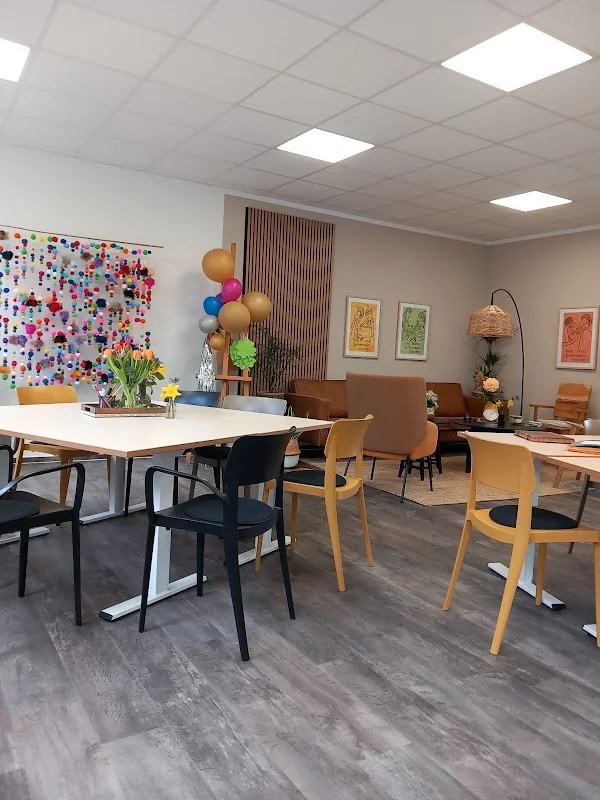
Additionally, the location is closely connected with Caritas Oberhausen. The Caritas office is also located at Lothringer Straße 60, and the project spaces are situated below this office according to the city of Oberhausen. In 2024, the office of the model project was opened there and described as a versatile space for exchange, training, and creative work. The fact that the spaces are designed to be visible from the outside and focus on barrier-free use underscores the function of the place as both a meeting space and a workplace. For visitors, this is helpful because the location is not just an address but a clearly described point of contact within the urban structure. ([oberhausen.de](https://www.oberhausen.de/de/index/kultur-bildung/news/2024/03_maerz/netzwerk_fuer_inklusives_kulturleben_in_oberhausen_feiert_bueroeroeffnung.php?utm_source=openai))
The connection to public transport is also documented. The contact page lists the bus stops Anne-Frank-Realschule and Marktstraße as the nearest stops. This is particularly relevant for the practical planning of a visit, as it means that extensive research is not needed to find out how to reach the location. Those searching for “Directions Lothringer Straße 60 Oberhausen,” “Marktstraße bus stop,” or “Anne-Frank-Realschule bus stop” will find the most important information directly from the project. Overall, the location appears to be consciously close to everyday life: centrally located enough to be accessible, and simultaneously designed to enable genuine use by people with different needs. ([inklusive-kultur.org](https://inklusive-kultur.org/kontakt/?utm_source=openai))
The barrier-free nature of the office is also noteworthy because the project itself works closely with the theme of participation. A barrier-free space is not only a practical advantage in this context but also part of the message. If a project aims to improve cultural access, this must also be visible at its own location. That is precisely the case here: ground floor, elevator, wheelchair-accessible toilet, and clearly marked bus stops give the ambition a concrete form. Anyone wanting to describe the location or use it for SEO around barrier-free cultural places can categorize these features as reliable facts. ([inklusive-kultur.org](https://inklusive-kultur.org/kontakt/?utm_source=openai))
Network, Participation, and Inclusive Cultural Work
A central component of the project is the network itself. The official page explains that it brings together people with and without disabilities who experience culture, create culture, or make culture possible. This includes cultural institutions, socio-cultural centers, independent welfare organizations, self-advocates, and independent cultural actors from Oberhausen. This mix is important because inclusion in culture cannot be solved by a single entity alone. Only when different perspectives come together can real barriers be identified. The network is therefore described not as a loose contact list but as a learning and working community that meets regularly and develops joint solutions. ([inklusive-kultur.org](https://inklusive-kultur.org/netzwerk/?utm_source=openai))
The project places great importance on exchange. The official texts speak of network meetings at different locations where participants get to know each other, learn from one another, and discuss barriers in art and culture. This work is supported by experts in accessibility and experts in inclusive culture. This professional support ensures that well-intentioned ideas can be translated into concrete steps. In practice, this means jointly examining and adjusting access, language, spaces, processes, and event formats so that more people can participate. Those searching for “inclusive cultural work,” “cultural participation Oberhausen,” or “Network Culture Oberhausen” will find here a very clear example of how cooperation in cultural policy can be envisioned. ([inklusive-kultur.org](https://inklusive-kultur.org/netzwerk/?utm_source=openai))
Also exciting is the attitude conveyed on the project page. It does not speak of a completed result but of a future where art and culture should be accessible to all. This fits well with a network approach that does not collect short-term individual successes but builds long-term relationships. Inclusive cultural work is always also relationship work: it is about trust, mutual understanding, and taking different experiences seriously. The collaboration of people from culture, social work, and self-advocacy is therefore an important quality factor and a strong SEO topic for anyone interested in inclusion in urban society. ([inklusive-kultur.org](https://inklusive-kultur.org/netzwerk/?utm_source=openai))
The content direction is clearly focused on participation. The project aims not only to dismantle barriers but also to open new ways of thinking about culture together. According to the official description, this includes exchanging ideas about barriers, getting to know actors, and jointly developing solutions. When considering the project communication as a whole, it becomes clear: a place is emerging where the question of access becomes a question of co-design. This makes the project interesting for cultural institutions, social organizations, and visitors alike. ([inklusive-kultur.org](https://inklusive-kultur.org/netzwerk/?utm_source=openai))
Organizations, Funding, and Project Structure
Organizationally, the project is clearly anchored. According to the city of Oberhausen, the sponsors are the Caritas Association Oberhausen together with the cultural office and the equality department of the city of Oberhausen. This constellation is sensible because it combines cultural expertise, municipal governance, and social practice. For inclusive culture, it requires not only a cultural location but also municipal responsibility and socio-spatial experience. This collaboration makes the project robust and explains why the initiatives are closely tied to administrative and network structures. ([oberhausen.de](https://www.oberhausen.de/de/index/kultur-bildung/news/2023/oberhausen_wird_modellkommune_fuer_ein_inklusives_kulturleben.php?utm_source=openai))
The model project is funded according to the city under the program “Inclusion on Site.” The funding comes from Aktion Mensch and the Ministry of Labor, Health, and Social Affairs of North Rhine-Westphalia. The funding announcement in 2023 also stated that a total of one million euros are available and that the duration is five years. This is a remarkable scale for a cultural and inclusion project because it allows not only individual events but also structures, networks, and qualifications to be built. For local cultural development, this means planning security, and for the target groups, it means continuity. ([oberhausen.de](https://www.oberhausen.de/de/index/kultur-bildung/news/2023/oberhausen_wird_modellkommune_fuer_ein_inklusives_kulturleben.php?utm_source=openai))
The spatial development of the project has also been documented. Since October 2023, work has been done on the premises below the Caritas office to create a versatile space for exchange, training, and creative work. On March 14, 2024, the office was officially opened. The city described the spaces as designed to be as barrier-free as possible and visibly arranged, including large-format image films by the artist Kerstin Recker. This is a good example of how functionality and aesthetic presence can go hand in hand. Therefore, anyone searching for a barrier-free cultural and networking space in Oberhausen will receive not only abstract information but also a concretely described workspace. ([oberhausen.de](https://www.oberhausen.de/de/index/kultur-bildung/news/2024/03_maerz/netzwerk_fuer_inklusives_kulturleben_in_oberhausen_feiert_bueroeroeffnung.php?utm_source=openai))
The structure of collaboration is also openly traceable. The contact page states that the responsible parties have a shared office where they develop new ideas, accompany the network, and implement initiatives together. This transparency is important as it facilitates the assignment of responsibilities and provides interested parties with a real point of contact. Especially for projects with many partners, it is a plus when not only a vision is formulated but also a clear working structure exists. The project thus demonstrates how municipal inclusion work can be organizationally anchored. ([inklusive-kultur.org](https://inklusive-kultur.org/kontakt/?utm_source=openai))
Formats, Forum 2026, and Outlook until 2027
The project includes not only internal meetings but also public or semi-public formats that carry the exchange outward. The homepage announces a forum titled “Let's do it together | A Forum.” It will take place on March 27 and 28, 2026, at the LVR Industrial Museum Zinc Factory/Centre Altenberg at Hansastraße 20 in Oberhausen. The content will focus on how inclusive network work succeeds and what follows from it. This brings the topic from the project office into a larger professional and urban public. For people searching for “Forum inclusive cultural life Oberhausen” or current dates, this is a particularly relevant date. ([inklusive-kultur.org](https://inklusive-kultur.org/?utm_source=openai))
The city of Oberhausen reported after the forum that around 150 participants from culture, social work, politics, and civil society came together on March 27 and 28, 2026. This shows that the project has already developed a supra-regional appeal and is not only perceived locally. The event report highlights that the model municipality has impressively shown how an inclusive cultural life can emerge that reaches people with and without disabilities alike. This is an important added value of the project: it does not remain with its own infrastructure but generates impulses that are interesting for other cities and institutions. ([oberhausen.de](https://www.oberhausen.de/de/index/kultur-bildung/news/2026/03_maerz/kultur_anders_sehen_hoeren_fuehlen.php?utm_source=openai))
The project work itself is designed for the long term. The duration until 2027 gives the network the chance to gather experiential knowledge, improve processes, and anchor inclusive practice in Oberhausen. This is also sensible because dismantling barriers is not a one-time action but a continuous process. Spaces, language, access, collaborations, and offerings must be reviewed repeatedly. The open structure of the project with an office, network meetings, and public forums is well-suited for this. It transforms an abstract inclusion goal into concrete urban development. ([oberhausen.de](https://www.oberhausen.de/de/index/kultur-bildung/news/2023/oberhausen_wird_modellkommune_fuer_ein_inklusives_kulturleben.php?utm_source=openai))
Visible successes also include recognition by the cultural policy future award KULTURGESTALTEN, which the project received in 2024. The city of Oberhausen reported that the award is a great joy and recognizes the project for its inclusive approach. Such awards are not only symbolically important but also strengthen the perception of the project as a model for cultural policy innovation. Together with the barrier-free office, the clear network approach, regular meetings, and the forum in 2026, a picture emerges of a project that will shape Oberhausen in the long term. Those searching for a location or a project related to inclusive culture, accessibility, and cultural participation will find a robust and future-oriented point of contact here. ([oberhausen.de](https://www.oberhausen.de/de/index/kultur-bildung/news/2024/11_november/inklusives_kultur-projekt_mit_zukunftspreis_ausgezeichnet.php?utm_source=openai))
Sources:
- Inclusive Cultural Life Oberhausen - Homepage
- Inclusive Cultural Life Oberhausen - Contact and Accessibility
- City of Oberhausen - Office Opening of the Network, 18.03.2024
- City of Oberhausen - Forum on 30.03.2026
- City of Oberhausen - Future Award KULTURGESTALTEN, 21.11.2024
- Caritas Oberhausen - Location Lothringer Straße 60
Show moreShow less
Let's do it together! | Inclusive Cultural Life Oberhausen
“Let's do it together!” is more than just a project name in Oberhausen. Behind the title is a model project that aims to organize art and culture in a way that allows people with and without disabilities to participate more easily, meet each other, and contribute their own ideas. The city of Oberhausen describes the initiative as a collaborative effort between the cultural office, the equality department, and the Caritas Association Oberhausen. The goal is to create a cultural environment that does not accept barriers but gradually dismantles them. The project sees itself as a practical attempt to make culture in Oberhausen accessible to significantly more people, not only by improving offerings but also by changing attitudes and collaboration in the city. ([inklusive-kultur.org](https://inklusive-kultur.org/?utm_source=openai))
Particularly important is the idea of the network. The official project page emphasizes that people who experience culture, create culture, or make culture possible are working together for an inclusive future. This does not refer to just a single place, but rather a way of working: cultural institutions, socio-cultural centers, independent cultural actors, welfare organizations, and self-advocates should learn from each other, identify barriers, and develop solutions together. The project envisions a future where art and culture are for everyone, and Oberhausen becomes inclusive. This combination of ambition, collaboration, and concrete everyday practice makes the location interesting for users seeking inclusive cultural work, participation, and a barrier-free point of contact in Oberhausen. ([inklusive-kultur.org](https://inklusive-kultur.org/?utm_source=openai))
What is “Let's do it together!” and why is the project important?
The project was launched in 2023 as a model municipality for inclusive cultural life and is designed to last several years from the outset. The city of Oberhausen stated during the funding announcement that people with and without disabilities should have easier access to art and culture. For this purpose, Oberhausen was established as a model municipality to practically test how inclusive culture can function in a large city. This is more than a symbolic title: it means that formats, spaces, communication, and networks are consciously designed to consider different needs from the very beginning. For inquiries related to inclusive culture, accessibility, cultural participation, and Oberhausen, this approach is particularly relevant. ([oberhausen.de](https://www.oberhausen.de/de/index/kultur-bildung/news/2023/oberhausen_wird_modellkommune_fuer_ein_inklusives_kulturleben.php?utm_source=openai))
The official language of the project is clear and inviting. The website states that the cultural life in Oberhausen should be made accessible to more people in the city. At the same time, the network is working to identify and dismantle barriers in art and culture. This ranges from spatial hurdles to communication channels to organizational processes and the question of how cultural offerings can be genuinely open. Inclusive culture here means not only “making accessible” but also “co-creating.” Especially for a city like Oberhausen, which works with many different cultural places, social organizations, and initiatives, this understanding is particularly valuable. It shows that participation is not seen as an add-on but as a core task. ([inklusive-kultur.org](https://inklusive-kultur.org/netzwerk/?utm_source=openai))
The timeline is also important: the model project is planned until 2027. This creates enough space to build networks, develop routines, and test new standards in practice. The city of Oberhausen and the involved organizations want to create not only individual events but also structures that can endure. This long-term perspective distinguishes the project from a short-term campaign and makes it an exciting example of sustainable cultural development. Those searching for “inclusive cultural life Oberhausen,” “accessibility culture,” or “inclusive cultural work” will find not only an offering here but also a structural approach. ([oberhausen.de](https://www.oberhausen.de/de/index/kultur-bildung/news/2023/oberhausen_wird_modellkommune_fuer_ein_inklusives_kulturleben.php?utm_source=openai))
Lothringer Straße 60: Address, Accessibility, and Directions
The specific address is crucial for many users, and here the project provides clear information. The office of “Let's do it together!” is located at Lothringer Straße 60, 46045 Oberhausen. According to the contact page, it is on the ground floor, designed to be barrier-free, and has a wheelchair-accessible toilet on the 1st floor, which is accessible by elevator. These details are particularly important as they show that accessibility is not just a buzzword but is concretely considered in everyday life. Anyone looking for an inclusive place gets a good impression of how access is organized even before their visit. ([inklusive-kultur.org](https://inklusive-kultur.org/kontakt/?utm_source=openai))
Additionally, the location is closely connected with Caritas Oberhausen. The Caritas office is also located at Lothringer Straße 60, and the project spaces are situated below this office according to the city of Oberhausen. In 2024, the office of the model project was opened there and described as a versatile space for exchange, training, and creative work. The fact that the spaces are designed to be visible from the outside and focus on barrier-free use underscores the function of the place as both a meeting space and a workplace. For visitors, this is helpful because the location is not just an address but a clearly described point of contact within the urban structure. ([oberhausen.de](https://www.oberhausen.de/de/index/kultur-bildung/news/2024/03_maerz/netzwerk_fuer_inklusives_kulturleben_in_oberhausen_feiert_bueroeroeffnung.php?utm_source=openai))
The connection to public transport is also documented. The contact page lists the bus stops Anne-Frank-Realschule and Marktstraße as the nearest stops. This is particularly relevant for the practical planning of a visit, as it means that extensive research is not needed to find out how to reach the location. Those searching for “Directions Lothringer Straße 60 Oberhausen,” “Marktstraße bus stop,” or “Anne-Frank-Realschule bus stop” will find the most important information directly from the project. Overall, the location appears to be consciously close to everyday life: centrally located enough to be accessible, and simultaneously designed to enable genuine use by people with different needs. ([inklusive-kultur.org](https://inklusive-kultur.org/kontakt/?utm_source=openai))
The barrier-free nature of the office is also noteworthy because the project itself works closely with the theme of participation. A barrier-free space is not only a practical advantage in this context but also part of the message. If a project aims to improve cultural access, this must also be visible at its own location. That is precisely the case here: ground floor, elevator, wheelchair-accessible toilet, and clearly marked bus stops give the ambition a concrete form. Anyone wanting to describe the location or use it for SEO around barrier-free cultural places can categorize these features as reliable facts. ([inklusive-kultur.org](https://inklusive-kultur.org/kontakt/?utm_source=openai))
Network, Participation, and Inclusive Cultural Work
A central component of the project is the network itself. The official page explains that it brings together people with and without disabilities who experience culture, create culture, or make culture possible. This includes cultural institutions, socio-cultural centers, independent welfare organizations, self-advocates, and independent cultural actors from Oberhausen. This mix is important because inclusion in culture cannot be solved by a single entity alone. Only when different perspectives come together can real barriers be identified. The network is therefore described not as a loose contact list but as a learning and working community that meets regularly and develops joint solutions. ([inklusive-kultur.org](https://inklusive-kultur.org/netzwerk/?utm_source=openai))
The project places great importance on exchange. The official texts speak of network meetings at different locations where participants get to know each other, learn from one another, and discuss barriers in art and culture. This work is supported by experts in accessibility and experts in inclusive culture. This professional support ensures that well-intentioned ideas can be translated into concrete steps. In practice, this means jointly examining and adjusting access, language, spaces, processes, and event formats so that more people can participate. Those searching for “inclusive cultural work,” “cultural participation Oberhausen,” or “Network Culture Oberhausen” will find here a very clear example of how cooperation in cultural policy can be envisioned. ([inklusive-kultur.org](https://inklusive-kultur.org/netzwerk/?utm_source=openai))
Also exciting is the attitude conveyed on the project page. It does not speak of a completed result but of a future where art and culture should be accessible to all. This fits well with a network approach that does not collect short-term individual successes but builds long-term relationships. Inclusive cultural work is always also relationship work: it is about trust, mutual understanding, and taking different experiences seriously. The collaboration of people from culture, social work, and self-advocacy is therefore an important quality factor and a strong SEO topic for anyone interested in inclusion in urban society. ([inklusive-kultur.org](https://inklusive-kultur.org/netzwerk/?utm_source=openai))
The content direction is clearly focused on participation. The project aims not only to dismantle barriers but also to open new ways of thinking about culture together. According to the official description, this includes exchanging ideas about barriers, getting to know actors, and jointly developing solutions. When considering the project communication as a whole, it becomes clear: a place is emerging where the question of access becomes a question of co-design. This makes the project interesting for cultural institutions, social organizations, and visitors alike. ([inklusive-kultur.org](https://inklusive-kultur.org/netzwerk/?utm_source=openai))
Organizations, Funding, and Project Structure
Organizationally, the project is clearly anchored. According to the city of Oberhausen, the sponsors are the Caritas Association Oberhausen together with the cultural office and the equality department of the city of Oberhausen. This constellation is sensible because it combines cultural expertise, municipal governance, and social practice. For inclusive culture, it requires not only a cultural location but also municipal responsibility and socio-spatial experience. This collaboration makes the project robust and explains why the initiatives are closely tied to administrative and network structures. ([oberhausen.de](https://www.oberhausen.de/de/index/kultur-bildung/news/2023/oberhausen_wird_modellkommune_fuer_ein_inklusives_kulturleben.php?utm_source=openai))
The model project is funded according to the city under the program “Inclusion on Site.” The funding comes from Aktion Mensch and the Ministry of Labor, Health, and Social Affairs of North Rhine-Westphalia. The funding announcement in 2023 also stated that a total of one million euros are available and that the duration is five years. This is a remarkable scale for a cultural and inclusion project because it allows not only individual events but also structures, networks, and qualifications to be built. For local cultural development, this means planning security, and for the target groups, it means continuity. ([oberhausen.de](https://www.oberhausen.de/de/index/kultur-bildung/news/2023/oberhausen_wird_modellkommune_fuer_ein_inklusives_kulturleben.php?utm_source=openai))
The spatial development of the project has also been documented. Since October 2023, work has been done on the premises below the Caritas office to create a versatile space for exchange, training, and creative work. On March 14, 2024, the office was officially opened. The city described the spaces as designed to be as barrier-free as possible and visibly arranged, including large-format image films by the artist Kerstin Recker. This is a good example of how functionality and aesthetic presence can go hand in hand. Therefore, anyone searching for a barrier-free cultural and networking space in Oberhausen will receive not only abstract information but also a concretely described workspace. ([oberhausen.de](https://www.oberhausen.de/de/index/kultur-bildung/news/2024/03_maerz/netzwerk_fuer_inklusives_kulturleben_in_oberhausen_feiert_bueroeroeffnung.php?utm_source=openai))
The structure of collaboration is also openly traceable. The contact page states that the responsible parties have a shared office where they develop new ideas, accompany the network, and implement initiatives together. This transparency is important as it facilitates the assignment of responsibilities and provides interested parties with a real point of contact. Especially for projects with many partners, it is a plus when not only a vision is formulated but also a clear working structure exists. The project thus demonstrates how municipal inclusion work can be organizationally anchored. ([inklusive-kultur.org](https://inklusive-kultur.org/kontakt/?utm_source=openai))
Formats, Forum 2026, and Outlook until 2027
The project includes not only internal meetings but also public or semi-public formats that carry the exchange outward. The homepage announces a forum titled “Let's do it together | A Forum.” It will take place on March 27 and 28, 2026, at the LVR Industrial Museum Zinc Factory/Centre Altenberg at Hansastraße 20 in Oberhausen. The content will focus on how inclusive network work succeeds and what follows from it. This brings the topic from the project office into a larger professional and urban public. For people searching for “Forum inclusive cultural life Oberhausen” or current dates, this is a particularly relevant date. ([inklusive-kultur.org](https://inklusive-kultur.org/?utm_source=openai))
The city of Oberhausen reported after the forum that around 150 participants from culture, social work, politics, and civil society came together on March 27 and 28, 2026. This shows that the project has already developed a supra-regional appeal and is not only perceived locally. The event report highlights that the model municipality has impressively shown how an inclusive cultural life can emerge that reaches people with and without disabilities alike. This is an important added value of the project: it does not remain with its own infrastructure but generates impulses that are interesting for other cities and institutions. ([oberhausen.de](https://www.oberhausen.de/de/index/kultur-bildung/news/2026/03_maerz/kultur_anders_sehen_hoeren_fuehlen.php?utm_source=openai))
The project work itself is designed for the long term. The duration until 2027 gives the network the chance to gather experiential knowledge, improve processes, and anchor inclusive practice in Oberhausen. This is also sensible because dismantling barriers is not a one-time action but a continuous process. Spaces, language, access, collaborations, and offerings must be reviewed repeatedly. The open structure of the project with an office, network meetings, and public forums is well-suited for this. It transforms an abstract inclusion goal into concrete urban development. ([oberhausen.de](https://www.oberhausen.de/de/index/kultur-bildung/news/2023/oberhausen_wird_modellkommune_fuer_ein_inklusives_kulturleben.php?utm_source=openai))
Visible successes also include recognition by the cultural policy future award KULTURGESTALTEN, which the project received in 2024. The city of Oberhausen reported that the award is a great joy and recognizes the project for its inclusive approach. Such awards are not only symbolically important but also strengthen the perception of the project as a model for cultural policy innovation. Together with the barrier-free office, the clear network approach, regular meetings, and the forum in 2026, a picture emerges of a project that will shape Oberhausen in the long term. Those searching for a location or a project related to inclusive culture, accessibility, and cultural participation will find a robust and future-oriented point of contact here. ([oberhausen.de](https://www.oberhausen.de/de/index/kultur-bildung/news/2024/11_november/inklusives_kultur-projekt_mit_zukunftspreis_ausgezeichnet.php?utm_source=openai))
Sources:
- Inclusive Cultural Life Oberhausen - Homepage
- Inclusive Cultural Life Oberhausen - Contact and Accessibility
- City of Oberhausen - Office Opening of the Network, 18.03.2024
- City of Oberhausen - Forum on 30.03.2026
- City of Oberhausen - Future Award KULTURGESTALTEN, 21.11.2024
- Caritas Oberhausen - Location Lothringer Straße 60
Let's do it together! | Inclusive Cultural Life Oberhausen
“Let's do it together!” is more than just a project name in Oberhausen. Behind the title is a model project that aims to organize art and culture in a way that allows people with and without disabilities to participate more easily, meet each other, and contribute their own ideas. The city of Oberhausen describes the initiative as a collaborative effort between the cultural office, the equality department, and the Caritas Association Oberhausen. The goal is to create a cultural environment that does not accept barriers but gradually dismantles them. The project sees itself as a practical attempt to make culture in Oberhausen accessible to significantly more people, not only by improving offerings but also by changing attitudes and collaboration in the city. ([inklusive-kultur.org](https://inklusive-kultur.org/?utm_source=openai))
Particularly important is the idea of the network. The official project page emphasizes that people who experience culture, create culture, or make culture possible are working together for an inclusive future. This does not refer to just a single place, but rather a way of working: cultural institutions, socio-cultural centers, independent cultural actors, welfare organizations, and self-advocates should learn from each other, identify barriers, and develop solutions together. The project envisions a future where art and culture are for everyone, and Oberhausen becomes inclusive. This combination of ambition, collaboration, and concrete everyday practice makes the location interesting for users seeking inclusive cultural work, participation, and a barrier-free point of contact in Oberhausen. ([inklusive-kultur.org](https://inklusive-kultur.org/?utm_source=openai))
What is “Let's do it together!” and why is the project important?
The project was launched in 2023 as a model municipality for inclusive cultural life and is designed to last several years from the outset. The city of Oberhausen stated during the funding announcement that people with and without disabilities should have easier access to art and culture. For this purpose, Oberhausen was established as a model municipality to practically test how inclusive culture can function in a large city. This is more than a symbolic title: it means that formats, spaces, communication, and networks are consciously designed to consider different needs from the very beginning. For inquiries related to inclusive culture, accessibility, cultural participation, and Oberhausen, this approach is particularly relevant. ([oberhausen.de](https://www.oberhausen.de/de/index/kultur-bildung/news/2023/oberhausen_wird_modellkommune_fuer_ein_inklusives_kulturleben.php?utm_source=openai))
The official language of the project is clear and inviting. The website states that the cultural life in Oberhausen should be made accessible to more people in the city. At the same time, the network is working to identify and dismantle barriers in art and culture. This ranges from spatial hurdles to communication channels to organizational processes and the question of how cultural offerings can be genuinely open. Inclusive culture here means not only “making accessible” but also “co-creating.” Especially for a city like Oberhausen, which works with many different cultural places, social organizations, and initiatives, this understanding is particularly valuable. It shows that participation is not seen as an add-on but as a core task. ([inklusive-kultur.org](https://inklusive-kultur.org/netzwerk/?utm_source=openai))
The timeline is also important: the model project is planned until 2027. This creates enough space to build networks, develop routines, and test new standards in practice. The city of Oberhausen and the involved organizations want to create not only individual events but also structures that can endure. This long-term perspective distinguishes the project from a short-term campaign and makes it an exciting example of sustainable cultural development. Those searching for “inclusive cultural life Oberhausen,” “accessibility culture,” or “inclusive cultural work” will find not only an offering here but also a structural approach. ([oberhausen.de](https://www.oberhausen.de/de/index/kultur-bildung/news/2023/oberhausen_wird_modellkommune_fuer_ein_inklusives_kulturleben.php?utm_source=openai))
Lothringer Straße 60: Address, Accessibility, and Directions
The specific address is crucial for many users, and here the project provides clear information. The office of “Let's do it together!” is located at Lothringer Straße 60, 46045 Oberhausen. According to the contact page, it is on the ground floor, designed to be barrier-free, and has a wheelchair-accessible toilet on the 1st floor, which is accessible by elevator. These details are particularly important as they show that accessibility is not just a buzzword but is concretely considered in everyday life. Anyone looking for an inclusive place gets a good impression of how access is organized even before their visit. ([inklusive-kultur.org](https://inklusive-kultur.org/kontakt/?utm_source=openai))
Additionally, the location is closely connected with Caritas Oberhausen. The Caritas office is also located at Lothringer Straße 60, and the project spaces are situated below this office according to the city of Oberhausen. In 2024, the office of the model project was opened there and described as a versatile space for exchange, training, and creative work. The fact that the spaces are designed to be visible from the outside and focus on barrier-free use underscores the function of the place as both a meeting space and a workplace. For visitors, this is helpful because the location is not just an address but a clearly described point of contact within the urban structure. ([oberhausen.de](https://www.oberhausen.de/de/index/kultur-bildung/news/2024/03_maerz/netzwerk_fuer_inklusives_kulturleben_in_oberhausen_feiert_bueroeroeffnung.php?utm_source=openai))
The connection to public transport is also documented. The contact page lists the bus stops Anne-Frank-Realschule and Marktstraße as the nearest stops. This is particularly relevant for the practical planning of a visit, as it means that extensive research is not needed to find out how to reach the location. Those searching for “Directions Lothringer Straße 60 Oberhausen,” “Marktstraße bus stop,” or “Anne-Frank-Realschule bus stop” will find the most important information directly from the project. Overall, the location appears to be consciously close to everyday life: centrally located enough to be accessible, and simultaneously designed to enable genuine use by people with different needs. ([inklusive-kultur.org](https://inklusive-kultur.org/kontakt/?utm_source=openai))
The barrier-free nature of the office is also noteworthy because the project itself works closely with the theme of participation. A barrier-free space is not only a practical advantage in this context but also part of the message. If a project aims to improve cultural access, this must also be visible at its own location. That is precisely the case here: ground floor, elevator, wheelchair-accessible toilet, and clearly marked bus stops give the ambition a concrete form. Anyone wanting to describe the location or use it for SEO around barrier-free cultural places can categorize these features as reliable facts. ([inklusive-kultur.org](https://inklusive-kultur.org/kontakt/?utm_source=openai))
Network, Participation, and Inclusive Cultural Work
A central component of the project is the network itself. The official page explains that it brings together people with and without disabilities who experience culture, create culture, or make culture possible. This includes cultural institutions, socio-cultural centers, independent welfare organizations, self-advocates, and independent cultural actors from Oberhausen. This mix is important because inclusion in culture cannot be solved by a single entity alone. Only when different perspectives come together can real barriers be identified. The network is therefore described not as a loose contact list but as a learning and working community that meets regularly and develops joint solutions. ([inklusive-kultur.org](https://inklusive-kultur.org/netzwerk/?utm_source=openai))
The project places great importance on exchange. The official texts speak of network meetings at different locations where participants get to know each other, learn from one another, and discuss barriers in art and culture. This work is supported by experts in accessibility and experts in inclusive culture. This professional support ensures that well-intentioned ideas can be translated into concrete steps. In practice, this means jointly examining and adjusting access, language, spaces, processes, and event formats so that more people can participate. Those searching for “inclusive cultural work,” “cultural participation Oberhausen,” or “Network Culture Oberhausen” will find here a very clear example of how cooperation in cultural policy can be envisioned. ([inklusive-kultur.org](https://inklusive-kultur.org/netzwerk/?utm_source=openai))
Also exciting is the attitude conveyed on the project page. It does not speak of a completed result but of a future where art and culture should be accessible to all. This fits well with a network approach that does not collect short-term individual successes but builds long-term relationships. Inclusive cultural work is always also relationship work: it is about trust, mutual understanding, and taking different experiences seriously. The collaboration of people from culture, social work, and self-advocacy is therefore an important quality factor and a strong SEO topic for anyone interested in inclusion in urban society. ([inklusive-kultur.org](https://inklusive-kultur.org/netzwerk/?utm_source=openai))
The content direction is clearly focused on participation. The project aims not only to dismantle barriers but also to open new ways of thinking about culture together. According to the official description, this includes exchanging ideas about barriers, getting to know actors, and jointly developing solutions. When considering the project communication as a whole, it becomes clear: a place is emerging where the question of access becomes a question of co-design. This makes the project interesting for cultural institutions, social organizations, and visitors alike. ([inklusive-kultur.org](https://inklusive-kultur.org/netzwerk/?utm_source=openai))
Organizations, Funding, and Project Structure
Organizationally, the project is clearly anchored. According to the city of Oberhausen, the sponsors are the Caritas Association Oberhausen together with the cultural office and the equality department of the city of Oberhausen. This constellation is sensible because it combines cultural expertise, municipal governance, and social practice. For inclusive culture, it requires not only a cultural location but also municipal responsibility and socio-spatial experience. This collaboration makes the project robust and explains why the initiatives are closely tied to administrative and network structures. ([oberhausen.de](https://www.oberhausen.de/de/index/kultur-bildung/news/2023/oberhausen_wird_modellkommune_fuer_ein_inklusives_kulturleben.php?utm_source=openai))
The model project is funded according to the city under the program “Inclusion on Site.” The funding comes from Aktion Mensch and the Ministry of Labor, Health, and Social Affairs of North Rhine-Westphalia. The funding announcement in 2023 also stated that a total of one million euros are available and that the duration is five years. This is a remarkable scale for a cultural and inclusion project because it allows not only individual events but also structures, networks, and qualifications to be built. For local cultural development, this means planning security, and for the target groups, it means continuity. ([oberhausen.de](https://www.oberhausen.de/de/index/kultur-bildung/news/2023/oberhausen_wird_modellkommune_fuer_ein_inklusives_kulturleben.php?utm_source=openai))
The spatial development of the project has also been documented. Since October 2023, work has been done on the premises below the Caritas office to create a versatile space for exchange, training, and creative work. On March 14, 2024, the office was officially opened. The city described the spaces as designed to be as barrier-free as possible and visibly arranged, including large-format image films by the artist Kerstin Recker. This is a good example of how functionality and aesthetic presence can go hand in hand. Therefore, anyone searching for a barrier-free cultural and networking space in Oberhausen will receive not only abstract information but also a concretely described workspace. ([oberhausen.de](https://www.oberhausen.de/de/index/kultur-bildung/news/2024/03_maerz/netzwerk_fuer_inklusives_kulturleben_in_oberhausen_feiert_bueroeroeffnung.php?utm_source=openai))
The structure of collaboration is also openly traceable. The contact page states that the responsible parties have a shared office where they develop new ideas, accompany the network, and implement initiatives together. This transparency is important as it facilitates the assignment of responsibilities and provides interested parties with a real point of contact. Especially for projects with many partners, it is a plus when not only a vision is formulated but also a clear working structure exists. The project thus demonstrates how municipal inclusion work can be organizationally anchored. ([inklusive-kultur.org](https://inklusive-kultur.org/kontakt/?utm_source=openai))
Formats, Forum 2026, and Outlook until 2027
The project includes not only internal meetings but also public or semi-public formats that carry the exchange outward. The homepage announces a forum titled “Let's do it together | A Forum.” It will take place on March 27 and 28, 2026, at the LVR Industrial Museum Zinc Factory/Centre Altenberg at Hansastraße 20 in Oberhausen. The content will focus on how inclusive network work succeeds and what follows from it. This brings the topic from the project office into a larger professional and urban public. For people searching for “Forum inclusive cultural life Oberhausen” or current dates, this is a particularly relevant date. ([inklusive-kultur.org](https://inklusive-kultur.org/?utm_source=openai))
The city of Oberhausen reported after the forum that around 150 participants from culture, social work, politics, and civil society came together on March 27 and 28, 2026. This shows that the project has already developed a supra-regional appeal and is not only perceived locally. The event report highlights that the model municipality has impressively shown how an inclusive cultural life can emerge that reaches people with and without disabilities alike. This is an important added value of the project: it does not remain with its own infrastructure but generates impulses that are interesting for other cities and institutions. ([oberhausen.de](https://www.oberhausen.de/de/index/kultur-bildung/news/2026/03_maerz/kultur_anders_sehen_hoeren_fuehlen.php?utm_source=openai))
The project work itself is designed for the long term. The duration until 2027 gives the network the chance to gather experiential knowledge, improve processes, and anchor inclusive practice in Oberhausen. This is also sensible because dismantling barriers is not a one-time action but a continuous process. Spaces, language, access, collaborations, and offerings must be reviewed repeatedly. The open structure of the project with an office, network meetings, and public forums is well-suited for this. It transforms an abstract inclusion goal into concrete urban development. ([oberhausen.de](https://www.oberhausen.de/de/index/kultur-bildung/news/2023/oberhausen_wird_modellkommune_fuer_ein_inklusives_kulturleben.php?utm_source=openai))
Visible successes also include recognition by the cultural policy future award KULTURGESTALTEN, which the project received in 2024. The city of Oberhausen reported that the award is a great joy and recognizes the project for its inclusive approach. Such awards are not only symbolically important but also strengthen the perception of the project as a model for cultural policy innovation. Together with the barrier-free office, the clear network approach, regular meetings, and the forum in 2026, a picture emerges of a project that will shape Oberhausen in the long term. Those searching for a location or a project related to inclusive culture, accessibility, and cultural participation will find a robust and future-oriented point of contact here. ([oberhausen.de](https://www.oberhausen.de/de/index/kultur-bildung/news/2024/11_november/inklusives_kultur-projekt_mit_zukunftspreis_ausgezeichnet.php?utm_source=openai))
Sources:
- Inclusive Cultural Life Oberhausen - Homepage
- Inclusive Cultural Life Oberhausen - Contact and Accessibility
- City of Oberhausen - Office Opening of the Network, 18.03.2024
- City of Oberhausen - Forum on 30.03.2026
- City of Oberhausen - Future Award KULTURGESTALTEN, 21.11.2024
- Caritas Oberhausen - Location Lothringer Straße 60
Upcoming Events
Frequently Asked Questions
Reviews
No reviews found