
Bochum
Günnigfelder Str. 251, 44793 Bochum, Deutschland
LWL Museum Zeche Hannover | Zeche Knirps & Directions
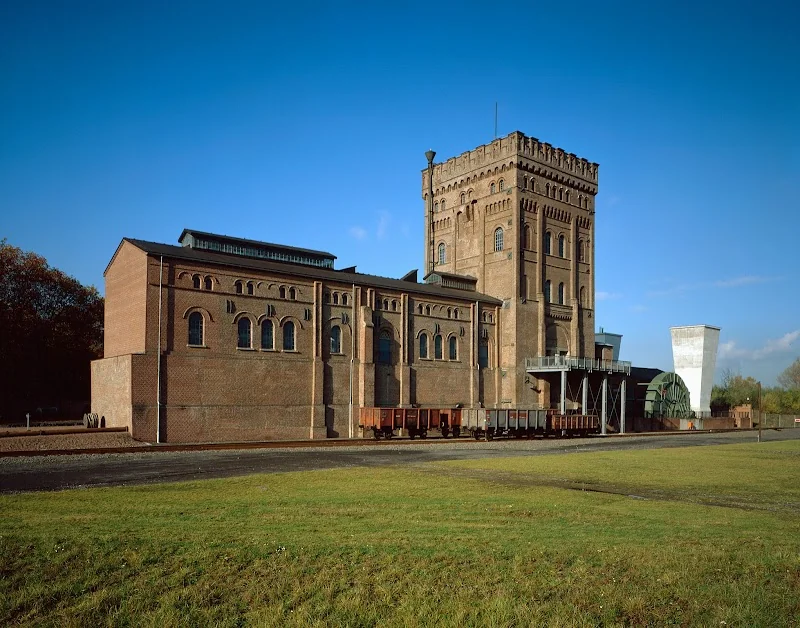
The Zeche Hannover is one of the most prominent industrial monuments in the Ruhr area and at the same time a museum that not only documents industrial culture but also makes it immediately tangible. The site in Bochum is part of the network of eight LWL museums for industrial culture and combines historical architecture, mining history, and family-friendly offerings for a visit with unusually broad scope. Those who see the facility for the first time quickly think of a castle, as the powerful Malakow tower still shapes the image today. In fact, hard coal was mined here from 1857 to 1973, and in the machine hall, the historical steam hoisting machine from 1893 turns during demonstrations, which is considered the oldest example at the original location in the Ruhr area. For families, the Zeche Knirps is particularly interesting, as children can explore the mining world themselves within a playful concept. Additionally, there are free admissions, seasonal opening hours, changing exhibitions, and a program that ranges from guided tours to evening events. Thus, the Zeche Hannover becomes a place where history, leisure, and education come together very organically. ([zeche-hannover.lwl.org](https://zeche-hannover.lwl.org/))
Zeche Knirps: Children's Mine, Free Play, and Family Outing
The Zeche Knirps is one of the main reasons why the Zeche Hannover is so attractive for families. The children's mine is open during the season from late March to October on weekends and holidays, Saturdays from 2 PM to 6 PM, and Sundays and holidays from 11 AM to 6 PM. Under museum educational supervision, children can play freely and experience how a mine works. The concept is intentionally designed to be illustrative: There is an underground and above-ground area, a conveyor belt, mine carts, a hoisting machine, and other elements that replicate the operational process of a real mine. Particularly exciting is that at the Zeche Knirps, gravel is mined instead of coal. The technology for this was developed in 1876 in Hannover and is still used worldwide in mining according to museum information. This connects the play area with child-friendly experiences and real innovation history. Admission is free, making the place an attractive destination, especially for families looking for a high-quality yet uncomplicated weekend goal. ([zeche-hannover.lwl.org](https://zeche-hannover.lwl.org/de/zeche-knirps/))
Those coming with children will find not only activities on the grounds but also a very well-communicated access to the history of the Ruhr area. The Zeche Knirps does not turn mining into an abstract narrative but into a tangible experience with sounds, movement, and spatial orientation. This is also interesting for older children, as they can not only watch but also try things out for themselves. However, for children's birthdays, it is important to note that celebrations on the museum grounds and in the children's mine are only possible as part of a booked program. The museum supports this with advice in the booking office. For families planning their visit, this is an important note, as the offering is generous but clearly organized. Additionally, the seasonal structure ensures that free play times and supervised times are well coordinated with each other. In practice, this means: Those who come on a weekend between spring and autumn can very well combine the museum visit with the Zeche Knirps and have a day that is equally playful, educational, and very well embedded in the overall context of industrial history. ([zeche-hannover.lwl.org](https://zeche-hannover.lwl.org/de/zeche-knirps/))
Directions, Parking, and Location on Günnigfelder Straße
The address of the museum is clear and easy to remember: Günnigfelder Straße 251, 44793 Bochum. For driving directions, the museum provides two classic routes. Coming from the A40, the way leads via the Bochum-Hamme exit, further along Dorstener Straße, Riemker Straße, Magdeburger Straße, Edmund-Weber-Straße, Hordeler Straße, and finally Günnigfelder Straße to the museum parking lot. From the A43, the Herne-Eickel exit is recommended, then it goes via Holsterhauserstraße and B226 also towards the museum parking lot. It is also important for people with limited mobility that the Easy Language page mentions two disabled parking spaces directly at the museum. This makes the journey pragmatic, as one can get very close to the site without a long walk. The surrounding area is also well described: The Zeche Hannover is located at junction 47 in Bochum-Hordel in the radrevier.ruhr and near the Erzbahntrasse. This makes the facility interesting not only for drivers but also for cyclists and combined tours. ([zeche-hannover.lwl.org](https://zeche-hannover.lwl.org/de/besuch/allgemeine-informationen/))
The museum is also easily accessible by public transport. The Hannoverstraße stop is served by bus line 368, which operates between Wanne-Eickel Hbf, Ruhrpark, and Bochum Hbf. From there, a footpath leads over Hannoverstraße and Grubenweg to the mine site; officially, it is about 300 meters. An alternative is the Röhlinghauser Straße stop of bus line 390 with a footpath of about 400 meters along Günnigfelder Straße. Thus, the museum can also be planned without a car, which is particularly pleasant for day trips, school groups, and spontaneous visits. Additionally, the website refers to current timetables from the transport association, allowing for good coordination of the route with public transport connections. Those who prefer to come by bike benefit from the connection to the radrevier.ruhr. Overall, the location shows: The Zeche Hannover is not isolated but in a well-developed part of the Ruhr area where historical industrial culture and today's mobility fit together quite comfortably. ([zeche-hannover.lwl.org](https://zeche-hannover.lwl.org/de/besuch/allgemeine-informationen/))
History of the Zeche Hannover: From Foundation to Industrial Monument
The history of the Zeche Hannover begins in 1857 on a field at the edge of the farming community of Hordel. It was named after the residence of its founder Carl Hostmann in the then Kingdom of Hannover. Even the early architecture was unusually representative, as the powerful hoisting towers gave the mine an almost fortress-like character. In 1872, the Essen industrialist Alfred Krupp bought the mine to supply his cast steel factory with high-quality coal. In the following decades, the facility was massively expanded, including the shaft system Hannover III in Günnigfeld, a power plant, a new coking plant, and the hoisting shaft V. By 1908, the mine had developed into a large mine. This development is exemplary of the industrial rise of the Ruhr area, where raw material extraction, energy supply, and steel production were closely interconnected. At the same time, the Zeche Hannover shows how closely mining and urban development were linked in the region, as a single shaft system became a whole industrial environment with settlements, transport routes, and social infrastructure. ([zeche-hannover.lwl.org](https://zeche-hannover.lwl.org/de/geschichte/))
Particularly important is the Zeche Hannover also as a development center for hoisting technology. In 1877, mine director Friedrich Koepe first used a driving wheel instead of a rope drum. This principle was significantly more suitable for deep mining, as it better managed the extraction from ever greater depths than the classic winding of the hoisting rope. In Hannover, the rope was no longer wound onto a drum but was led as a loop over the driving wheel, allowing one hoisting cage to ascend while the other descended. By the turn of the century, the Koepe system developed into the standard for deep mining worldwide. For the museum, this remains a crucial narrative, as it explains why the Zeche Hannover is regarded not only as a place of work but also as a place of innovation. The machine hall, the Malakow tower, and the restored components are therefore not just a backdrop but testimonies of technological development. The historical significance is not told abstractly in the museum but conveyed through original locations, original technology, and the spatial proximity of the preserved buildings. ([zeche-hannover.lwl.org](https://zeche-hannover.lwl.org/de/geschichte/))
The history also includes the people who lived around the mine. Initially, workers came from Westphalia, Hesse, and the Rhineland, later also migrants from West and East Prussia, Silesia, Posen, and Masuria. After the expansion to a large mine, Krupp had the Dahlhauser Heide colony built from 1907. The architect Robert Schmohl designed the factory settlement as a garden city with a central park. The 339 semi-detached houses were modeled after Westphalian farmhouses and featured large gardens so that families often from rural areas could grow vegetables and keep small animals. In the 1960s, more people came from Greece, Italy, Yugoslavia, Turkey, and Morocco. Thus, the Zeche Hannover tells not only industrial but also migration and everyday history. After the mining crisis that began in 1958, Shaft II was expanded in 1967 to become the central hoisting shaft for all Bochum mines, and in 1969 the mine became part of the newly founded Ruhrkohle AG. In 1973, the last Bochum mine was shut down, and in 1979 the operational buildings were demolished. The Malakow tower with the machine hall and the mine ventilation building remained; in 1981, the LWL took over the ensemble, restored it, and made it accessible to visitors in 1995. This very path from a workplace to a monument makes the special charm of the museum. ([zeche-hannover.lwl.org](https://zeche-hannover.lwl.org/de/geschichte/))
Steam Hoisting Machine, Guided Tours, and Current Event Program
The historical steam hoisting machine is one of the great highlights of the Zeche Hannover. In the machine hall, its driving wheel still turns during demonstrations, and this very image makes the place so impressive. The exhibit dates back to 1893 and is described on the website as the oldest example that can be experienced at the original location in the Ruhr area. For visitors, this means: Technology history is not at a standstill here but in motion. Particularly enlightening are the experience tours aimed at adults and families with children. They last two hours, are limited to a maximum of 25 participants, and cost 65 euros. The content connects the ascent to the Malakow tower with the demonstration of the hoisting machine and the narration of the difficult beginnings in the 1850s to the current museum operation. Those interested in industrial processes will thus not receive a dry tour but a very lively access to mining, technology, and monument preservation. ([zeche-hannover.lwl.org](https://zeche-hannover.lwl.org/))
Even outside of the standard tours, the program is remarkably diverse. The current events page shows exhibitions such as the Path of Coal and Urban Wilderness, which open up different perspectives on landscape, city, and perception. Additionally, there are regular experience tours with demonstrations of the historical steam hoisting machine, nature safaris for families, photo excursions, and thematic tours such as Living on the Hoisting Wheel or Heavy Heritage. This mix is particularly relevant for SEO, as it shows that search queries for events, programs, or even specific event titles have real content. The museum is not just a place for quietly observing technology but also a space for changing formats. In the photo motifs of the current special exhibitions, photographs play an important role, and the theme of nature in the urban space is also visibly addressed. So, those looking for a program in Bochum will find both family offerings and cultural-historical formats and thematic tours here. ([zeche-hannover.lwl.org](https://zeche-hannover.lwl.org/de/veranstaltungen/))
Particularly striking is the range of evening and special formats. The events page features formats such as ExtraSchicht, where music, comedy, and cabaret take place in front of the historical Malakow tower, and the industrial monument is illuminated. The format NachtSchnittchen also shows that the Zeche Hannover goes far beyond classic museum routines culturally. Such events are interesting for visitors who want to experience the site from a different perspective: at twilight, with a stage program, with a special atmosphere, and in a mix of entertainment and monument. Additionally, the museum offers its tours not only for individual guests but also for groups. For example, there is the tour Living on the Hoisting Wheel through the former colonies or Coal, Coke, Consumer Institution as a tour through industrialization and settlement development. This makes it clear that the Zeche Hannover is not just a building ensemble but a place of learning and experience where historical connections are conveyed across multiple levels. ([zeche-hannover.lwl.org](https://zeche-hannover.lwl.org/de/veranstaltungen/))
Photos, Reviews, and Practical Tips for the Visit
Those looking for photos or reviews of the Zeche Hannover usually want to quickly assess whether the trip is worth it. The rating situation with 4.6 stars from 643 reviews is already a clear indication that many visitors perceive the place positively. Especially the mix of the monumentally impressive Malakow tower, historical machine hall, open spaces, and the children's mine provides strong motifs for pictures and social media. The museum itself explicitly welcomes photos on site and even mentions the hashtags industrial culture and zechehannover. Therefore, there are good opportunities for private recordings, while commercial recordings must be approved in advance. This is practical because one can document the visit and simultaneously capture the special atmosphere of the site. Particularly the interplay of industrial architecture, green spaces, and technical details makes the Zeche Hannover very attractive for photography. Those who connect suitable search terms with photos will not only find images but also clues for their own visit planning. ([zeche-hannover.lwl.org](https://zeche-hannover.lwl.org/de/besuch/allgemeine-informationen/))
For visitor comfort, there are also several practical points that can easily be overlooked. Dogs are allowed on the outdoor area on a leash, but not in the buildings and not at the Zeche Knirps. The museum shop offers literature from the Ruhr area, souvenirs, and products from the LWL museums; it is open Wednesday to Saturday from 2 PM to 6 PM and on Sundays and holidays from 11 AM to 6 PM. Additionally, the museum offers drinks and snacks during opening hours on weekends and holidays. In good weather, one can sit outside in the beer garden, and in bad weather in the ventilation building; own food and drinks may also be brought along, and tables and benches for a picnic are available in the open spaces. Thus, the Zeche Hannover is not just a museum visit but also a place for relaxed breaks, which is particularly pleasant with children or during longer stays. The practical infrastructure is therefore deliberately designed for a longer stay. ([zeche-hannover.lwl.org](https://zeche-hannover.lwl.org/de/besuch/allgemeine-informationen/))
The site is also well calculable for day planning. The 2026 season runs from March 21 to October 25, and during this time, admission is free. It is open Wednesday to Saturday in the afternoon and on Sundays and holidays already in the morning. So, if you are planning a weekend trip, you can easily combine the visit with a tour, the Zeche Knirps, or a walk through the surroundings. Due to the location near the Erzbahntrasse and the connection to bus, car, and bicycle, the Zeche Hannover is suitable for both spontaneous visits and consciously planned cultural appointments. This is exactly what makes the attraction: The place is not only historically significant but also very usable today. When combining the search for reviews, photos, directions, parking, and opening hours, a clear picture emerges of a museum that is technically, family-friendly, and atmospherically well positioned. ([zeche-hannover.lwl.org](https://zeche-hannover.lwl.org/de/besuch/allgemeine-informationen/?utm_source=openai))
Sources:
Mehr anzeigenWeniger anzeigen
LWL Museum Zeche Hannover | Zeche Knirps & Directions
The Zeche Hannover is one of the most prominent industrial monuments in the Ruhr area and at the same time a museum that not only documents industrial culture but also makes it immediately tangible. The site in Bochum is part of the network of eight LWL museums for industrial culture and combines historical architecture, mining history, and family-friendly offerings for a visit with unusually broad scope. Those who see the facility for the first time quickly think of a castle, as the powerful Malakow tower still shapes the image today. In fact, hard coal was mined here from 1857 to 1973, and in the machine hall, the historical steam hoisting machine from 1893 turns during demonstrations, which is considered the oldest example at the original location in the Ruhr area. For families, the Zeche Knirps is particularly interesting, as children can explore the mining world themselves within a playful concept. Additionally, there are free admissions, seasonal opening hours, changing exhibitions, and a program that ranges from guided tours to evening events. Thus, the Zeche Hannover becomes a place where history, leisure, and education come together very organically. ([zeche-hannover.lwl.org](https://zeche-hannover.lwl.org/))
Zeche Knirps: Children's Mine, Free Play, and Family Outing
The Zeche Knirps is one of the main reasons why the Zeche Hannover is so attractive for families. The children's mine is open during the season from late March to October on weekends and holidays, Saturdays from 2 PM to 6 PM, and Sundays and holidays from 11 AM to 6 PM. Under museum educational supervision, children can play freely and experience how a mine works. The concept is intentionally designed to be illustrative: There is an underground and above-ground area, a conveyor belt, mine carts, a hoisting machine, and other elements that replicate the operational process of a real mine. Particularly exciting is that at the Zeche Knirps, gravel is mined instead of coal. The technology for this was developed in 1876 in Hannover and is still used worldwide in mining according to museum information. This connects the play area with child-friendly experiences and real innovation history. Admission is free, making the place an attractive destination, especially for families looking for a high-quality yet uncomplicated weekend goal. ([zeche-hannover.lwl.org](https://zeche-hannover.lwl.org/de/zeche-knirps/))
Those coming with children will find not only activities on the grounds but also a very well-communicated access to the history of the Ruhr area. The Zeche Knirps does not turn mining into an abstract narrative but into a tangible experience with sounds, movement, and spatial orientation. This is also interesting for older children, as they can not only watch but also try things out for themselves. However, for children's birthdays, it is important to note that celebrations on the museum grounds and in the children's mine are only possible as part of a booked program. The museum supports this with advice in the booking office. For families planning their visit, this is an important note, as the offering is generous but clearly organized. Additionally, the seasonal structure ensures that free play times and supervised times are well coordinated with each other. In practice, this means: Those who come on a weekend between spring and autumn can very well combine the museum visit with the Zeche Knirps and have a day that is equally playful, educational, and very well embedded in the overall context of industrial history. ([zeche-hannover.lwl.org](https://zeche-hannover.lwl.org/de/zeche-knirps/))
Directions, Parking, and Location on Günnigfelder Straße
The address of the museum is clear and easy to remember: Günnigfelder Straße 251, 44793 Bochum. For driving directions, the museum provides two classic routes. Coming from the A40, the way leads via the Bochum-Hamme exit, further along Dorstener Straße, Riemker Straße, Magdeburger Straße, Edmund-Weber-Straße, Hordeler Straße, and finally Günnigfelder Straße to the museum parking lot. From the A43, the Herne-Eickel exit is recommended, then it goes via Holsterhauserstraße and B226 also towards the museum parking lot. It is also important for people with limited mobility that the Easy Language page mentions two disabled parking spaces directly at the museum. This makes the journey pragmatic, as one can get very close to the site without a long walk. The surrounding area is also well described: The Zeche Hannover is located at junction 47 in Bochum-Hordel in the radrevier.ruhr and near the Erzbahntrasse. This makes the facility interesting not only for drivers but also for cyclists and combined tours. ([zeche-hannover.lwl.org](https://zeche-hannover.lwl.org/de/besuch/allgemeine-informationen/))
The museum is also easily accessible by public transport. The Hannoverstraße stop is served by bus line 368, which operates between Wanne-Eickel Hbf, Ruhrpark, and Bochum Hbf. From there, a footpath leads over Hannoverstraße and Grubenweg to the mine site; officially, it is about 300 meters. An alternative is the Röhlinghauser Straße stop of bus line 390 with a footpath of about 400 meters along Günnigfelder Straße. Thus, the museum can also be planned without a car, which is particularly pleasant for day trips, school groups, and spontaneous visits. Additionally, the website refers to current timetables from the transport association, allowing for good coordination of the route with public transport connections. Those who prefer to come by bike benefit from the connection to the radrevier.ruhr. Overall, the location shows: The Zeche Hannover is not isolated but in a well-developed part of the Ruhr area where historical industrial culture and today's mobility fit together quite comfortably. ([zeche-hannover.lwl.org](https://zeche-hannover.lwl.org/de/besuch/allgemeine-informationen/))
History of the Zeche Hannover: From Foundation to Industrial Monument
The history of the Zeche Hannover begins in 1857 on a field at the edge of the farming community of Hordel. It was named after the residence of its founder Carl Hostmann in the then Kingdom of Hannover. Even the early architecture was unusually representative, as the powerful hoisting towers gave the mine an almost fortress-like character. In 1872, the Essen industrialist Alfred Krupp bought the mine to supply his cast steel factory with high-quality coal. In the following decades, the facility was massively expanded, including the shaft system Hannover III in Günnigfeld, a power plant, a new coking plant, and the hoisting shaft V. By 1908, the mine had developed into a large mine. This development is exemplary of the industrial rise of the Ruhr area, where raw material extraction, energy supply, and steel production were closely interconnected. At the same time, the Zeche Hannover shows how closely mining and urban development were linked in the region, as a single shaft system became a whole industrial environment with settlements, transport routes, and social infrastructure. ([zeche-hannover.lwl.org](https://zeche-hannover.lwl.org/de/geschichte/))
Particularly important is the Zeche Hannover also as a development center for hoisting technology. In 1877, mine director Friedrich Koepe first used a driving wheel instead of a rope drum. This principle was significantly more suitable for deep mining, as it better managed the extraction from ever greater depths than the classic winding of the hoisting rope. In Hannover, the rope was no longer wound onto a drum but was led as a loop over the driving wheel, allowing one hoisting cage to ascend while the other descended. By the turn of the century, the Koepe system developed into the standard for deep mining worldwide. For the museum, this remains a crucial narrative, as it explains why the Zeche Hannover is regarded not only as a place of work but also as a place of innovation. The machine hall, the Malakow tower, and the restored components are therefore not just a backdrop but testimonies of technological development. The historical significance is not told abstractly in the museum but conveyed through original locations, original technology, and the spatial proximity of the preserved buildings. ([zeche-hannover.lwl.org](https://zeche-hannover.lwl.org/de/geschichte/))
The history also includes the people who lived around the mine. Initially, workers came from Westphalia, Hesse, and the Rhineland, later also migrants from West and East Prussia, Silesia, Posen, and Masuria. After the expansion to a large mine, Krupp had the Dahlhauser Heide colony built from 1907. The architect Robert Schmohl designed the factory settlement as a garden city with a central park. The 339 semi-detached houses were modeled after Westphalian farmhouses and featured large gardens so that families often from rural areas could grow vegetables and keep small animals. In the 1960s, more people came from Greece, Italy, Yugoslavia, Turkey, and Morocco. Thus, the Zeche Hannover tells not only industrial but also migration and everyday history. After the mining crisis that began in 1958, Shaft II was expanded in 1967 to become the central hoisting shaft for all Bochum mines, and in 1969 the mine became part of the newly founded Ruhrkohle AG. In 1973, the last Bochum mine was shut down, and in 1979 the operational buildings were demolished. The Malakow tower with the machine hall and the mine ventilation building remained; in 1981, the LWL took over the ensemble, restored it, and made it accessible to visitors in 1995. This very path from a workplace to a monument makes the special charm of the museum. ([zeche-hannover.lwl.org](https://zeche-hannover.lwl.org/de/geschichte/))
Steam Hoisting Machine, Guided Tours, and Current Event Program
The historical steam hoisting machine is one of the great highlights of the Zeche Hannover. In the machine hall, its driving wheel still turns during demonstrations, and this very image makes the place so impressive. The exhibit dates back to 1893 and is described on the website as the oldest example that can be experienced at the original location in the Ruhr area. For visitors, this means: Technology history is not at a standstill here but in motion. Particularly enlightening are the experience tours aimed at adults and families with children. They last two hours, are limited to a maximum of 25 participants, and cost 65 euros. The content connects the ascent to the Malakow tower with the demonstration of the hoisting machine and the narration of the difficult beginnings in the 1850s to the current museum operation. Those interested in industrial processes will thus not receive a dry tour but a very lively access to mining, technology, and monument preservation. ([zeche-hannover.lwl.org](https://zeche-hannover.lwl.org/))
Even outside of the standard tours, the program is remarkably diverse. The current events page shows exhibitions such as the Path of Coal and Urban Wilderness, which open up different perspectives on landscape, city, and perception. Additionally, there are regular experience tours with demonstrations of the historical steam hoisting machine, nature safaris for families, photo excursions, and thematic tours such as Living on the Hoisting Wheel or Heavy Heritage. This mix is particularly relevant for SEO, as it shows that search queries for events, programs, or even specific event titles have real content. The museum is not just a place for quietly observing technology but also a space for changing formats. In the photo motifs of the current special exhibitions, photographs play an important role, and the theme of nature in the urban space is also visibly addressed. So, those looking for a program in Bochum will find both family offerings and cultural-historical formats and thematic tours here. ([zeche-hannover.lwl.org](https://zeche-hannover.lwl.org/de/veranstaltungen/))
Particularly striking is the range of evening and special formats. The events page features formats such as ExtraSchicht, where music, comedy, and cabaret take place in front of the historical Malakow tower, and the industrial monument is illuminated. The format NachtSchnittchen also shows that the Zeche Hannover goes far beyond classic museum routines culturally. Such events are interesting for visitors who want to experience the site from a different perspective: at twilight, with a stage program, with a special atmosphere, and in a mix of entertainment and monument. Additionally, the museum offers its tours not only for individual guests but also for groups. For example, there is the tour Living on the Hoisting Wheel through the former colonies or Coal, Coke, Consumer Institution as a tour through industrialization and settlement development. This makes it clear that the Zeche Hannover is not just a building ensemble but a place of learning and experience where historical connections are conveyed across multiple levels. ([zeche-hannover.lwl.org](https://zeche-hannover.lwl.org/de/veranstaltungen/))
Photos, Reviews, and Practical Tips for the Visit
Those looking for photos or reviews of the Zeche Hannover usually want to quickly assess whether the trip is worth it. The rating situation with 4.6 stars from 643 reviews is already a clear indication that many visitors perceive the place positively. Especially the mix of the monumentally impressive Malakow tower, historical machine hall, open spaces, and the children's mine provides strong motifs for pictures and social media. The museum itself explicitly welcomes photos on site and even mentions the hashtags industrial culture and zechehannover. Therefore, there are good opportunities for private recordings, while commercial recordings must be approved in advance. This is practical because one can document the visit and simultaneously capture the special atmosphere of the site. Particularly the interplay of industrial architecture, green spaces, and technical details makes the Zeche Hannover very attractive for photography. Those who connect suitable search terms with photos will not only find images but also clues for their own visit planning. ([zeche-hannover.lwl.org](https://zeche-hannover.lwl.org/de/besuch/allgemeine-informationen/))
For visitor comfort, there are also several practical points that can easily be overlooked. Dogs are allowed on the outdoor area on a leash, but not in the buildings and not at the Zeche Knirps. The museum shop offers literature from the Ruhr area, souvenirs, and products from the LWL museums; it is open Wednesday to Saturday from 2 PM to 6 PM and on Sundays and holidays from 11 AM to 6 PM. Additionally, the museum offers drinks and snacks during opening hours on weekends and holidays. In good weather, one can sit outside in the beer garden, and in bad weather in the ventilation building; own food and drinks may also be brought along, and tables and benches for a picnic are available in the open spaces. Thus, the Zeche Hannover is not just a museum visit but also a place for relaxed breaks, which is particularly pleasant with children or during longer stays. The practical infrastructure is therefore deliberately designed for a longer stay. ([zeche-hannover.lwl.org](https://zeche-hannover.lwl.org/de/besuch/allgemeine-informationen/))
The site is also well calculable for day planning. The 2026 season runs from March 21 to October 25, and during this time, admission is free. It is open Wednesday to Saturday in the afternoon and on Sundays and holidays already in the morning. So, if you are planning a weekend trip, you can easily combine the visit with a tour, the Zeche Knirps, or a walk through the surroundings. Due to the location near the Erzbahntrasse and the connection to bus, car, and bicycle, the Zeche Hannover is suitable for both spontaneous visits and consciously planned cultural appointments. This is exactly what makes the attraction: The place is not only historically significant but also very usable today. When combining the search for reviews, photos, directions, parking, and opening hours, a clear picture emerges of a museum that is technically, family-friendly, and atmospherically well positioned. ([zeche-hannover.lwl.org](https://zeche-hannover.lwl.org/de/besuch/allgemeine-informationen/?utm_source=openai))
Sources:
LWL Museum Zeche Hannover | Zeche Knirps & Directions
The Zeche Hannover is one of the most prominent industrial monuments in the Ruhr area and at the same time a museum that not only documents industrial culture but also makes it immediately tangible. The site in Bochum is part of the network of eight LWL museums for industrial culture and combines historical architecture, mining history, and family-friendly offerings for a visit with unusually broad scope. Those who see the facility for the first time quickly think of a castle, as the powerful Malakow tower still shapes the image today. In fact, hard coal was mined here from 1857 to 1973, and in the machine hall, the historical steam hoisting machine from 1893 turns during demonstrations, which is considered the oldest example at the original location in the Ruhr area. For families, the Zeche Knirps is particularly interesting, as children can explore the mining world themselves within a playful concept. Additionally, there are free admissions, seasonal opening hours, changing exhibitions, and a program that ranges from guided tours to evening events. Thus, the Zeche Hannover becomes a place where history, leisure, and education come together very organically. ([zeche-hannover.lwl.org](https://zeche-hannover.lwl.org/))
Zeche Knirps: Children's Mine, Free Play, and Family Outing
The Zeche Knirps is one of the main reasons why the Zeche Hannover is so attractive for families. The children's mine is open during the season from late March to October on weekends and holidays, Saturdays from 2 PM to 6 PM, and Sundays and holidays from 11 AM to 6 PM. Under museum educational supervision, children can play freely and experience how a mine works. The concept is intentionally designed to be illustrative: There is an underground and above-ground area, a conveyor belt, mine carts, a hoisting machine, and other elements that replicate the operational process of a real mine. Particularly exciting is that at the Zeche Knirps, gravel is mined instead of coal. The technology for this was developed in 1876 in Hannover and is still used worldwide in mining according to museum information. This connects the play area with child-friendly experiences and real innovation history. Admission is free, making the place an attractive destination, especially for families looking for a high-quality yet uncomplicated weekend goal. ([zeche-hannover.lwl.org](https://zeche-hannover.lwl.org/de/zeche-knirps/))
Those coming with children will find not only activities on the grounds but also a very well-communicated access to the history of the Ruhr area. The Zeche Knirps does not turn mining into an abstract narrative but into a tangible experience with sounds, movement, and spatial orientation. This is also interesting for older children, as they can not only watch but also try things out for themselves. However, for children's birthdays, it is important to note that celebrations on the museum grounds and in the children's mine are only possible as part of a booked program. The museum supports this with advice in the booking office. For families planning their visit, this is an important note, as the offering is generous but clearly organized. Additionally, the seasonal structure ensures that free play times and supervised times are well coordinated with each other. In practice, this means: Those who come on a weekend between spring and autumn can very well combine the museum visit with the Zeche Knirps and have a day that is equally playful, educational, and very well embedded in the overall context of industrial history. ([zeche-hannover.lwl.org](https://zeche-hannover.lwl.org/de/zeche-knirps/))
Directions, Parking, and Location on Günnigfelder Straße
The address of the museum is clear and easy to remember: Günnigfelder Straße 251, 44793 Bochum. For driving directions, the museum provides two classic routes. Coming from the A40, the way leads via the Bochum-Hamme exit, further along Dorstener Straße, Riemker Straße, Magdeburger Straße, Edmund-Weber-Straße, Hordeler Straße, and finally Günnigfelder Straße to the museum parking lot. From the A43, the Herne-Eickel exit is recommended, then it goes via Holsterhauserstraße and B226 also towards the museum parking lot. It is also important for people with limited mobility that the Easy Language page mentions two disabled parking spaces directly at the museum. This makes the journey pragmatic, as one can get very close to the site without a long walk. The surrounding area is also well described: The Zeche Hannover is located at junction 47 in Bochum-Hordel in the radrevier.ruhr and near the Erzbahntrasse. This makes the facility interesting not only for drivers but also for cyclists and combined tours. ([zeche-hannover.lwl.org](https://zeche-hannover.lwl.org/de/besuch/allgemeine-informationen/))
The museum is also easily accessible by public transport. The Hannoverstraße stop is served by bus line 368, which operates between Wanne-Eickel Hbf, Ruhrpark, and Bochum Hbf. From there, a footpath leads over Hannoverstraße and Grubenweg to the mine site; officially, it is about 300 meters. An alternative is the Röhlinghauser Straße stop of bus line 390 with a footpath of about 400 meters along Günnigfelder Straße. Thus, the museum can also be planned without a car, which is particularly pleasant for day trips, school groups, and spontaneous visits. Additionally, the website refers to current timetables from the transport association, allowing for good coordination of the route with public transport connections. Those who prefer to come by bike benefit from the connection to the radrevier.ruhr. Overall, the location shows: The Zeche Hannover is not isolated but in a well-developed part of the Ruhr area where historical industrial culture and today's mobility fit together quite comfortably. ([zeche-hannover.lwl.org](https://zeche-hannover.lwl.org/de/besuch/allgemeine-informationen/))
History of the Zeche Hannover: From Foundation to Industrial Monument
The history of the Zeche Hannover begins in 1857 on a field at the edge of the farming community of Hordel. It was named after the residence of its founder Carl Hostmann in the then Kingdom of Hannover. Even the early architecture was unusually representative, as the powerful hoisting towers gave the mine an almost fortress-like character. In 1872, the Essen industrialist Alfred Krupp bought the mine to supply his cast steel factory with high-quality coal. In the following decades, the facility was massively expanded, including the shaft system Hannover III in Günnigfeld, a power plant, a new coking plant, and the hoisting shaft V. By 1908, the mine had developed into a large mine. This development is exemplary of the industrial rise of the Ruhr area, where raw material extraction, energy supply, and steel production were closely interconnected. At the same time, the Zeche Hannover shows how closely mining and urban development were linked in the region, as a single shaft system became a whole industrial environment with settlements, transport routes, and social infrastructure. ([zeche-hannover.lwl.org](https://zeche-hannover.lwl.org/de/geschichte/))
Particularly important is the Zeche Hannover also as a development center for hoisting technology. In 1877, mine director Friedrich Koepe first used a driving wheel instead of a rope drum. This principle was significantly more suitable for deep mining, as it better managed the extraction from ever greater depths than the classic winding of the hoisting rope. In Hannover, the rope was no longer wound onto a drum but was led as a loop over the driving wheel, allowing one hoisting cage to ascend while the other descended. By the turn of the century, the Koepe system developed into the standard for deep mining worldwide. For the museum, this remains a crucial narrative, as it explains why the Zeche Hannover is regarded not only as a place of work but also as a place of innovation. The machine hall, the Malakow tower, and the restored components are therefore not just a backdrop but testimonies of technological development. The historical significance is not told abstractly in the museum but conveyed through original locations, original technology, and the spatial proximity of the preserved buildings. ([zeche-hannover.lwl.org](https://zeche-hannover.lwl.org/de/geschichte/))
The history also includes the people who lived around the mine. Initially, workers came from Westphalia, Hesse, and the Rhineland, later also migrants from West and East Prussia, Silesia, Posen, and Masuria. After the expansion to a large mine, Krupp had the Dahlhauser Heide colony built from 1907. The architect Robert Schmohl designed the factory settlement as a garden city with a central park. The 339 semi-detached houses were modeled after Westphalian farmhouses and featured large gardens so that families often from rural areas could grow vegetables and keep small animals. In the 1960s, more people came from Greece, Italy, Yugoslavia, Turkey, and Morocco. Thus, the Zeche Hannover tells not only industrial but also migration and everyday history. After the mining crisis that began in 1958, Shaft II was expanded in 1967 to become the central hoisting shaft for all Bochum mines, and in 1969 the mine became part of the newly founded Ruhrkohle AG. In 1973, the last Bochum mine was shut down, and in 1979 the operational buildings were demolished. The Malakow tower with the machine hall and the mine ventilation building remained; in 1981, the LWL took over the ensemble, restored it, and made it accessible to visitors in 1995. This very path from a workplace to a monument makes the special charm of the museum. ([zeche-hannover.lwl.org](https://zeche-hannover.lwl.org/de/geschichte/))
Steam Hoisting Machine, Guided Tours, and Current Event Program
The historical steam hoisting machine is one of the great highlights of the Zeche Hannover. In the machine hall, its driving wheel still turns during demonstrations, and this very image makes the place so impressive. The exhibit dates back to 1893 and is described on the website as the oldest example that can be experienced at the original location in the Ruhr area. For visitors, this means: Technology history is not at a standstill here but in motion. Particularly enlightening are the experience tours aimed at adults and families with children. They last two hours, are limited to a maximum of 25 participants, and cost 65 euros. The content connects the ascent to the Malakow tower with the demonstration of the hoisting machine and the narration of the difficult beginnings in the 1850s to the current museum operation. Those interested in industrial processes will thus not receive a dry tour but a very lively access to mining, technology, and monument preservation. ([zeche-hannover.lwl.org](https://zeche-hannover.lwl.org/))
Even outside of the standard tours, the program is remarkably diverse. The current events page shows exhibitions such as the Path of Coal and Urban Wilderness, which open up different perspectives on landscape, city, and perception. Additionally, there are regular experience tours with demonstrations of the historical steam hoisting machine, nature safaris for families, photo excursions, and thematic tours such as Living on the Hoisting Wheel or Heavy Heritage. This mix is particularly relevant for SEO, as it shows that search queries for events, programs, or even specific event titles have real content. The museum is not just a place for quietly observing technology but also a space for changing formats. In the photo motifs of the current special exhibitions, photographs play an important role, and the theme of nature in the urban space is also visibly addressed. So, those looking for a program in Bochum will find both family offerings and cultural-historical formats and thematic tours here. ([zeche-hannover.lwl.org](https://zeche-hannover.lwl.org/de/veranstaltungen/))
Particularly striking is the range of evening and special formats. The events page features formats such as ExtraSchicht, where music, comedy, and cabaret take place in front of the historical Malakow tower, and the industrial monument is illuminated. The format NachtSchnittchen also shows that the Zeche Hannover goes far beyond classic museum routines culturally. Such events are interesting for visitors who want to experience the site from a different perspective: at twilight, with a stage program, with a special atmosphere, and in a mix of entertainment and monument. Additionally, the museum offers its tours not only for individual guests but also for groups. For example, there is the tour Living on the Hoisting Wheel through the former colonies or Coal, Coke, Consumer Institution as a tour through industrialization and settlement development. This makes it clear that the Zeche Hannover is not just a building ensemble but a place of learning and experience where historical connections are conveyed across multiple levels. ([zeche-hannover.lwl.org](https://zeche-hannover.lwl.org/de/veranstaltungen/))
Photos, Reviews, and Practical Tips for the Visit
Those looking for photos or reviews of the Zeche Hannover usually want to quickly assess whether the trip is worth it. The rating situation with 4.6 stars from 643 reviews is already a clear indication that many visitors perceive the place positively. Especially the mix of the monumentally impressive Malakow tower, historical machine hall, open spaces, and the children's mine provides strong motifs for pictures and social media. The museum itself explicitly welcomes photos on site and even mentions the hashtags industrial culture and zechehannover. Therefore, there are good opportunities for private recordings, while commercial recordings must be approved in advance. This is practical because one can document the visit and simultaneously capture the special atmosphere of the site. Particularly the interplay of industrial architecture, green spaces, and technical details makes the Zeche Hannover very attractive for photography. Those who connect suitable search terms with photos will not only find images but also clues for their own visit planning. ([zeche-hannover.lwl.org](https://zeche-hannover.lwl.org/de/besuch/allgemeine-informationen/))
For visitor comfort, there are also several practical points that can easily be overlooked. Dogs are allowed on the outdoor area on a leash, but not in the buildings and not at the Zeche Knirps. The museum shop offers literature from the Ruhr area, souvenirs, and products from the LWL museums; it is open Wednesday to Saturday from 2 PM to 6 PM and on Sundays and holidays from 11 AM to 6 PM. Additionally, the museum offers drinks and snacks during opening hours on weekends and holidays. In good weather, one can sit outside in the beer garden, and in bad weather in the ventilation building; own food and drinks may also be brought along, and tables and benches for a picnic are available in the open spaces. Thus, the Zeche Hannover is not just a museum visit but also a place for relaxed breaks, which is particularly pleasant with children or during longer stays. The practical infrastructure is therefore deliberately designed for a longer stay. ([zeche-hannover.lwl.org](https://zeche-hannover.lwl.org/de/besuch/allgemeine-informationen/))
The site is also well calculable for day planning. The 2026 season runs from March 21 to October 25, and during this time, admission is free. It is open Wednesday to Saturday in the afternoon and on Sundays and holidays already in the morning. So, if you are planning a weekend trip, you can easily combine the visit with a tour, the Zeche Knirps, or a walk through the surroundings. Due to the location near the Erzbahntrasse and the connection to bus, car, and bicycle, the Zeche Hannover is suitable for both spontaneous visits and consciously planned cultural appointments. This is exactly what makes the attraction: The place is not only historically significant but also very usable today. When combining the search for reviews, photos, directions, parking, and opening hours, a clear picture emerges of a museum that is technically, family-friendly, and atmospherically well positioned. ([zeche-hannover.lwl.org](https://zeche-hannover.lwl.org/de/besuch/allgemeine-informationen/?utm_source=openai))
Sources:
Upcoming Events
Path of Coal
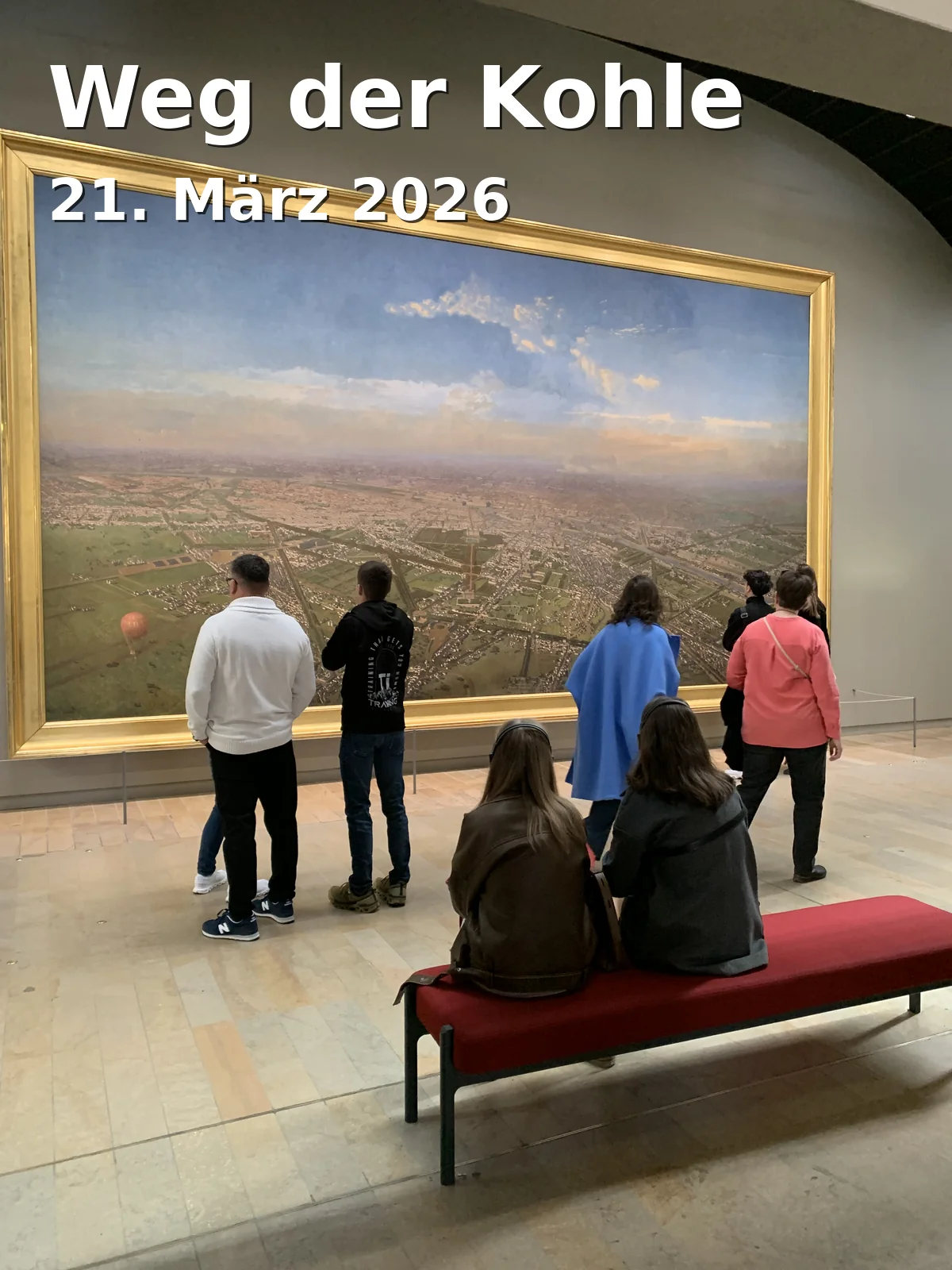
A powerful exhibition experience in the heart of Bochum: Path of Coal connects photography, industrial culture, and Ruhr area history. Free admission until 25.10.2026. #Ruhr area #Bochum

Metropolis Wilderness
See Bochum anew: Metropolis Wilderness connects photography, urban nature, and industrial culture at Zeche Hannover. Experience the outdoor exhibition now. #Bochum #UrbanNature
Khalil Noé Döring: Path of Coal
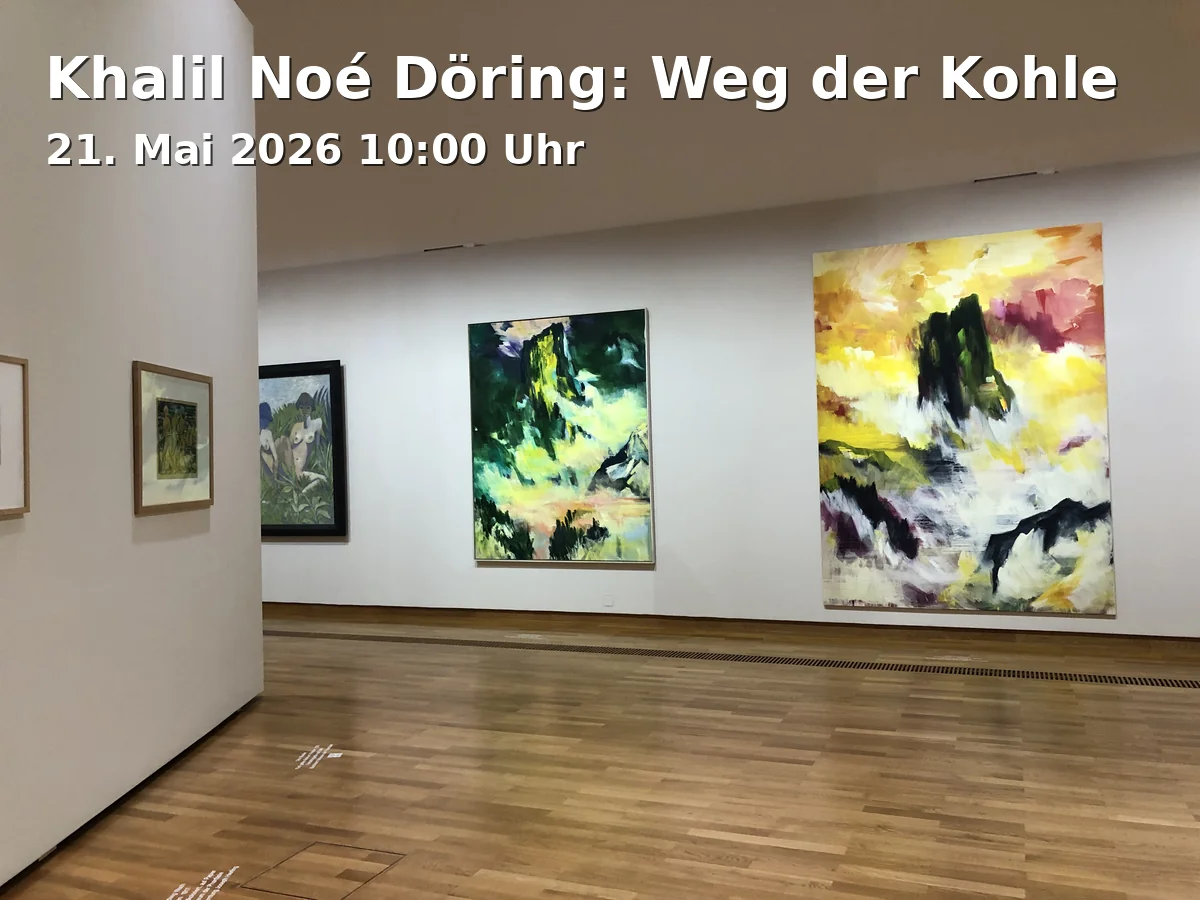
A photographic journey through coal, work, and change in Bochum. Khalil Noé Döring shows hidden paths of industry. #IndustrialCulture #Bochum

"Up High" with the Mobile High Ropes Course
Bochum gets action outdoors: the mobile high ropes course comes to Zeche Hannover. Climb, secure, and grow beyond yourself. #Bochum #Sport
Frequently Asked Questions
Reviews
Chandrashekhar Joshi
3. August 2024
Well maintained. Nice place for the entire family to see the German engineering of the last century.
Paweł Biela
26. July 2025
Amazing location! Really worth a visit.
C K
23. December 2023
Went there for the special Christmas market which was moved to the shed next door with no announcements or proper signage. A typical example of how Germany continues to waste tourist time because they couldn’t be bothered to staff the main museum. I brought my brother there for this experience and it was embarrassing.
Annа Zhuk
27. June 2025
Super
Dirk Jan van der Velde
8. November 2019
Top location