
Bochum
Karl-Lange-Straße 23, 44791 Bochum, Deutschland
Museum Telekom-Historik | Photos & Bochum
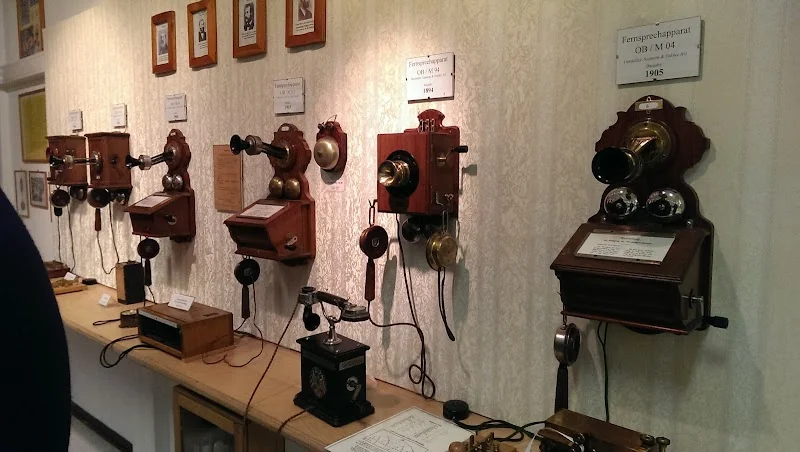
The Museum Telekom-Historik in Bochum is not a classic showcase, but a lively journey through the history of telecommunications. Visitors to the house experience historical telephones, teleprinters, tools, and measuring devices not just behind glass, but often operational. The association shows on the grounds of Deutsche Telekom at the telecommunications tower how modern communication emerged from Morse devices, manual switching, and electromechanical dialing systems. Especially for technology fans, families, and anyone looking for a special excursion destination in Bochum, the museum combines knowledge, nostalgia, and real interaction. The fact that admission is free and tours take place in a very personal setting makes the visit even more attractive. With 4.8 stars from 72 reviews, the house also appears to be a real insider tip for all who appreciate authentic industrial culture and vibrant exhibition technology. ([bochum-tourismus.de](https://www.bochum-tourismus.de/bochum-entdecken/kunst-und-museen/telefonmuseum.html))
History of Telecommunications and the Establishment of the Museum
The history of the museum is closely linked to the development of telecommunications in Germany. According to the association, the idea arose from the desire of several employees to preserve the technical devices and systems of the telecommunications world for the public rather than letting them simply disappear. In 1995, the Förderverein Telekom-Historik Bochum e.V. was founded after the telephone exchange Bochum Werne had already been shut down in 1991. From this starting point, a museum developed that focuses on a technical era that many people today only know from stories. The collection tells not only of devices but also of working methods, engineering skills, and everyday culture that have shaped our communication behavior over decades. ([telekom-historik.de](https://www.telekom-historik.de/html/der_verein.html?utm_source=openai))
What is particularly exciting is that the museum has not remained stagnant but has continually reorganized itself. The move in October 2016 marked an important turning point, as the house was further developed at its current location on the Telekom grounds. Thus, the idea of a lively technology museum was preserved while the exhibition simultaneously gained new possibilities. Today, the museum sees itself as a place where the development from classic switching through teleprinters to modern transmission forms can be traced. On the homepage, the association explicitly states that the history of this fascinating technology should be remembered. This is exactly what makes the charm of this place: It is not about dry theory, but about a comprehensible, tangible history that connects to real devices, real people, and real work. ([telekom-historik.de](https://www.telekom-historik.de/?utm_source=openai))
Photos, Tour, and the Operational Exchange
Those looking for pictures or a tour will find many concrete impressions from inside the museum on the official photo page. There, panoramic photos, tour images, and close-ups are shown, including from branch systems, teleprinters, switching technology, time announcement, and i-Telex. This is particularly helpful for visitors, as it allows for a realistic picture of the exhibition to be formed even before the visit. The photos not only show devices but also the structure of the house: an entrance area, corridor zones with technology, installations for long-distance traffic, and exhibition areas where historical communication systems become visible side by side. For search queries for images of Museum Telekom-Historik Bochum, this is the central strength of the site: It documents the exhibition not decoratively but informatively. ([telekom-historik.de](https://www.telekom-historik.de/html/fotos.html?utm_source=openai))
The centerpiece of the collection is the completely operational exchange with technology from the years 1922 to 1955. According to Bochum Tourism, visitors can make connections themselves and observe how the electromechanical selectors come into action. This practical access distinguishes the museum from many other technology locations. Instead of just looking at display boards, one can understand how telephone connections were made in the past and why so much electromechanical precision was necessary. The museum's guiding principle of showing as much as possible in operational condition fits this. For example, a 22 rotary selector in operation is mentioned on the homepage. The museum thus relies on a form of communication that makes technology comprehensible rather than just explaining it. For visitors, this is particularly memorable because history does not remain abstract here but becomes visible in real operation. ([bochum-tourismus.de](https://www.bochum-tourismus.de/bochum-entdecken/kunst-und-museen/telefonmuseum.html))
Additionally, there is the Acoustic Museum, which is described on the website as a highlight in its own right. It can be reached under two phone numbers and contains historical announcements, including a direct time announcement from 1958. The digital presentation of this area shows very well how creatively the association works: Not only devices are exhibited, but also historical functions are reconstructed and made tangible for visitors. Such details are valuable for people looking for photos, special features, and unusual technology stories. The tour thus becomes a kind of media archaeology in the best sense: One moves through rooms where telephony, teleprinting, line technology, and announcement services do not appear as pure past but as technically understandable development lines. This makes the museum interesting for technology enthusiasts, school classes, and older visitors alike. ([telekom-historik.de](https://www.telekom-historik.de/html/akustik-museum.html?utm_source=openai))
Opening Hours, Free Admission, and Contact for Visits
The practical visitor information is pleasantly clear. According to the official contact page, the museum is open on Tuesdays from 10 a.m. to 4 p.m., with the last admission at 2:30 p.m., and visits are also possible by appointment. Also important for planning: Admission is free. For anyone specifically searching for telephone museum opening hours or museum telekom historik bochum, these are the key details. The contact information is Karl-Lange-Straße 23, 44791 Bochum, phone 0234 516601970, and email post@telekom-historik.de. The same address and opening hours are confirmed on the Bochum Tourism site. This is particularly helpful for a spontaneous or specifically planned visit, as one does not have to search long for ticket categories or complicated reservation processes. ([telekom-historik.de](https://www.telekom-historik.de/html/kontaktaufnahme.html?utm_source=openai))
Another advantage is the personal character of the house. The association works on a voluntary basis, and you can feel this in the way the museum is presented. The homepage explicitly points out the specialists and their voluntary work. This leads to a very approachable atmosphere that many visitors positively evaluate in their reviews. With 4.8 stars from 72 reviews, the house appears small at first glance, but upon closer inspection, it is extraordinarily solid if you are looking for a place where expertise, passion, and real technology come together. During special openings, such as International Museum Day, the team also offers tours. It has been described on the news page that on this day, tours will take place at full and half-hour intervals, and admission is also free. This makes the museum suitable not only as a quiet excursion destination but also as an event location for special days on the calendar. ([telekom-historik.de](https://www.telekom-historik.de/html/news.html?utm_source=openai))
Those who prefer a brief phone contact before their visit can also contact the museum directly. The official page even states that one can ring the bell at the entrance or register by phone. This simple, personal organization is typical for a volunteer-run specialty museum and is simultaneously sympathetic. It fits the character of the house, which focuses more on encounters and explanations than on mass operations. For visitors, this means: Those who come on Tuesdays or make an appointment receive a very individual insight into an area that ranges from Morse devices to teleprinters to data technology. Especially in a large city like Bochum, a free, technically dense, and still accessible museum is a real added value. ([telekom-historik.de](https://www.telekom-historik.de/html/kontaktaufnahme.html?utm_source=openai))
Directions by Public Transport, Car, and Parking on Karl-Lange-Straße
The directions to the museum are well described and uncomplicated for visitors to Bochum. By public transport, visitors can take the U-Bahn 308 or 318 from Bochum Hbf to Stadion. From there, the path leads along Karl-Lange-Straße towards the telecommunications tower until one arrives at Deutsche Telekom after about 250 meters. This route is mentioned by both the official contact page and Bochum Tourism. It is especially practical for guests arriving without a car or wishing to combine their museum visit with a city stroll. Since the museum is located on the Telekom grounds and described in direct proximity to the telecommunications tower, orientation on site is relatively clear. This makes the journey pleasant even for first-time visitors. ([telekom-historik.de](https://www.telekom-historik.de/html/kontaktaufnahme.html?utm_source=openai))
Those arriving by car should use the A40, exit 36 Bochum-Stadion, according to the official description. From there, continue via Castroper Straße, then left towards Gerthe, and further into Karl-Lange-Straße to the visitor parking lot of Deutsche Telekom. For search queries like telephone museum directions or telephone museum bochum parking, these details are relevant. Even though the museum itself is not a large event arena, the visitor parking lot helps with planning. The location near the stadium and telecommunications tower is also a plus, as it allows the visit to be easily combined with other destinations in Bochum. Those traveling in the city also benefit from the fact that the location is not off the beaten path but in a well-connected area of the city. This also facilitates group trips, family visits, and spontaneous detours. ([telekom-historik.de](https://www.telekom-historik.de/html/kontaktaufnahme.html?utm_source=openai))
For practical orientation, it is also important that the Bochum Tourism site clearly states that the museum is located on the grounds of Deutsche Telekom. Therefore, upon arrival, one should not look for a classic museum hall but specifically head for the Telekom area. This is not a disadvantage but part of the special character of the place: The exhibition is located where telecommunications actually took place and remains technically tangible. This proximity of the historical collection and the real location makes the journey not only practical but also contextually fitting. Even the way to the museum is thus a small part of the story that one later experiences inside. ([bochum-tourismus.de](https://www.bochum-tourismus.de/bochum-entdecken/kunst-und-museen/telefonmuseum.html))
Reviews, Visitor Feedback, and Why the Visit is Worth It
The combination of high ratings and clear content signature makes the Museum Telekom-Historik a surprising favorite for many visitors. With 4.8 stars from 72 reviews, it shows that the house is not only technically interesting but also convincing in the visitor experience. Such reviews fit well with what the official website conveys: a place where technology does not become museum-like but remains operational. The term living technology is not chosen randomly on the homepage. Those who love historical devices do not get a distant showcase here, but a place where machines, switching technology, and communication history come together vividly. This also explains why the visit is particularly worthwhile for people seeking atmosphere alongside facts. ([telekom-historik.de](https://www.telekom-historik.de/?utm_source=openai))
Another plus point is the strong visitor participation. The Bochum Tourism site describes that one can make connections at the operational exchange. The photo page also shows that the museum not only presents devices but offers a tour with clear themes such as teleprinters, branch systems, switching technology, and time announcement. This keeps the visit exciting even for those who are not specialists in telecommunications technology. The communication is visual enough for beginners and simultaneously deep enough for experts. This balance is often praised in many good reviews because it makes the place accessible and unique at the same time. For families, technology fans, senior groups, and school classes, this is a very valuable mix. ([telekom-historik.de](https://www.telekom-historik.de/html/fotos.html?utm_source=openai))
A visit is particularly recommended if you want to get to know Bochum through its industrial culture. The museum not only shows individual devices but a development line from Morse devices and teleprinters through classic telephone technology to fiber optics in the present. The news page explicitly describes the historical arc as a journey from the Morse device to contemporary data technology and from overhead lines to fiber optic cables. This perspective makes the museum attractive for reviews: It offers not just nostalgia but an understandable access to a technical transformation that continues to shape our everyday world today. Those looking for a free, authentic, and simultaneously unusual destination in Bochum will therefore find a very convincing combination of education, experience, and personal touch. ([telekom-historik.de](https://www.telekom-historik.de/html/news.html?utm_source=openai))
Sources:
Mehr anzeigenWeniger anzeigen
Museum Telekom-Historik | Photos & Bochum
The Museum Telekom-Historik in Bochum is not a classic showcase, but a lively journey through the history of telecommunications. Visitors to the house experience historical telephones, teleprinters, tools, and measuring devices not just behind glass, but often operational. The association shows on the grounds of Deutsche Telekom at the telecommunications tower how modern communication emerged from Morse devices, manual switching, and electromechanical dialing systems. Especially for technology fans, families, and anyone looking for a special excursion destination in Bochum, the museum combines knowledge, nostalgia, and real interaction. The fact that admission is free and tours take place in a very personal setting makes the visit even more attractive. With 4.8 stars from 72 reviews, the house also appears to be a real insider tip for all who appreciate authentic industrial culture and vibrant exhibition technology. ([bochum-tourismus.de](https://www.bochum-tourismus.de/bochum-entdecken/kunst-und-museen/telefonmuseum.html))
History of Telecommunications and the Establishment of the Museum
The history of the museum is closely linked to the development of telecommunications in Germany. According to the association, the idea arose from the desire of several employees to preserve the technical devices and systems of the telecommunications world for the public rather than letting them simply disappear. In 1995, the Förderverein Telekom-Historik Bochum e.V. was founded after the telephone exchange Bochum Werne had already been shut down in 1991. From this starting point, a museum developed that focuses on a technical era that many people today only know from stories. The collection tells not only of devices but also of working methods, engineering skills, and everyday culture that have shaped our communication behavior over decades. ([telekom-historik.de](https://www.telekom-historik.de/html/der_verein.html?utm_source=openai))
What is particularly exciting is that the museum has not remained stagnant but has continually reorganized itself. The move in October 2016 marked an important turning point, as the house was further developed at its current location on the Telekom grounds. Thus, the idea of a lively technology museum was preserved while the exhibition simultaneously gained new possibilities. Today, the museum sees itself as a place where the development from classic switching through teleprinters to modern transmission forms can be traced. On the homepage, the association explicitly states that the history of this fascinating technology should be remembered. This is exactly what makes the charm of this place: It is not about dry theory, but about a comprehensible, tangible history that connects to real devices, real people, and real work. ([telekom-historik.de](https://www.telekom-historik.de/?utm_source=openai))
Photos, Tour, and the Operational Exchange
Those looking for pictures or a tour will find many concrete impressions from inside the museum on the official photo page. There, panoramic photos, tour images, and close-ups are shown, including from branch systems, teleprinters, switching technology, time announcement, and i-Telex. This is particularly helpful for visitors, as it allows for a realistic picture of the exhibition to be formed even before the visit. The photos not only show devices but also the structure of the house: an entrance area, corridor zones with technology, installations for long-distance traffic, and exhibition areas where historical communication systems become visible side by side. For search queries for images of Museum Telekom-Historik Bochum, this is the central strength of the site: It documents the exhibition not decoratively but informatively. ([telekom-historik.de](https://www.telekom-historik.de/html/fotos.html?utm_source=openai))
The centerpiece of the collection is the completely operational exchange with technology from the years 1922 to 1955. According to Bochum Tourism, visitors can make connections themselves and observe how the electromechanical selectors come into action. This practical access distinguishes the museum from many other technology locations. Instead of just looking at display boards, one can understand how telephone connections were made in the past and why so much electromechanical precision was necessary. The museum's guiding principle of showing as much as possible in operational condition fits this. For example, a 22 rotary selector in operation is mentioned on the homepage. The museum thus relies on a form of communication that makes technology comprehensible rather than just explaining it. For visitors, this is particularly memorable because history does not remain abstract here but becomes visible in real operation. ([bochum-tourismus.de](https://www.bochum-tourismus.de/bochum-entdecken/kunst-und-museen/telefonmuseum.html))
Additionally, there is the Acoustic Museum, which is described on the website as a highlight in its own right. It can be reached under two phone numbers and contains historical announcements, including a direct time announcement from 1958. The digital presentation of this area shows very well how creatively the association works: Not only devices are exhibited, but also historical functions are reconstructed and made tangible for visitors. Such details are valuable for people looking for photos, special features, and unusual technology stories. The tour thus becomes a kind of media archaeology in the best sense: One moves through rooms where telephony, teleprinting, line technology, and announcement services do not appear as pure past but as technically understandable development lines. This makes the museum interesting for technology enthusiasts, school classes, and older visitors alike. ([telekom-historik.de](https://www.telekom-historik.de/html/akustik-museum.html?utm_source=openai))
Opening Hours, Free Admission, and Contact for Visits
The practical visitor information is pleasantly clear. According to the official contact page, the museum is open on Tuesdays from 10 a.m. to 4 p.m., with the last admission at 2:30 p.m., and visits are also possible by appointment. Also important for planning: Admission is free. For anyone specifically searching for telephone museum opening hours or museum telekom historik bochum, these are the key details. The contact information is Karl-Lange-Straße 23, 44791 Bochum, phone 0234 516601970, and email post@telekom-historik.de. The same address and opening hours are confirmed on the Bochum Tourism site. This is particularly helpful for a spontaneous or specifically planned visit, as one does not have to search long for ticket categories or complicated reservation processes. ([telekom-historik.de](https://www.telekom-historik.de/html/kontaktaufnahme.html?utm_source=openai))
Another advantage is the personal character of the house. The association works on a voluntary basis, and you can feel this in the way the museum is presented. The homepage explicitly points out the specialists and their voluntary work. This leads to a very approachable atmosphere that many visitors positively evaluate in their reviews. With 4.8 stars from 72 reviews, the house appears small at first glance, but upon closer inspection, it is extraordinarily solid if you are looking for a place where expertise, passion, and real technology come together. During special openings, such as International Museum Day, the team also offers tours. It has been described on the news page that on this day, tours will take place at full and half-hour intervals, and admission is also free. This makes the museum suitable not only as a quiet excursion destination but also as an event location for special days on the calendar. ([telekom-historik.de](https://www.telekom-historik.de/html/news.html?utm_source=openai))
Those who prefer a brief phone contact before their visit can also contact the museum directly. The official page even states that one can ring the bell at the entrance or register by phone. This simple, personal organization is typical for a volunteer-run specialty museum and is simultaneously sympathetic. It fits the character of the house, which focuses more on encounters and explanations than on mass operations. For visitors, this means: Those who come on Tuesdays or make an appointment receive a very individual insight into an area that ranges from Morse devices to teleprinters to data technology. Especially in a large city like Bochum, a free, technically dense, and still accessible museum is a real added value. ([telekom-historik.de](https://www.telekom-historik.de/html/kontaktaufnahme.html?utm_source=openai))
Directions by Public Transport, Car, and Parking on Karl-Lange-Straße
The directions to the museum are well described and uncomplicated for visitors to Bochum. By public transport, visitors can take the U-Bahn 308 or 318 from Bochum Hbf to Stadion. From there, the path leads along Karl-Lange-Straße towards the telecommunications tower until one arrives at Deutsche Telekom after about 250 meters. This route is mentioned by both the official contact page and Bochum Tourism. It is especially practical for guests arriving without a car or wishing to combine their museum visit with a city stroll. Since the museum is located on the Telekom grounds and described in direct proximity to the telecommunications tower, orientation on site is relatively clear. This makes the journey pleasant even for first-time visitors. ([telekom-historik.de](https://www.telekom-historik.de/html/kontaktaufnahme.html?utm_source=openai))
Those arriving by car should use the A40, exit 36 Bochum-Stadion, according to the official description. From there, continue via Castroper Straße, then left towards Gerthe, and further into Karl-Lange-Straße to the visitor parking lot of Deutsche Telekom. For search queries like telephone museum directions or telephone museum bochum parking, these details are relevant. Even though the museum itself is not a large event arena, the visitor parking lot helps with planning. The location near the stadium and telecommunications tower is also a plus, as it allows the visit to be easily combined with other destinations in Bochum. Those traveling in the city also benefit from the fact that the location is not off the beaten path but in a well-connected area of the city. This also facilitates group trips, family visits, and spontaneous detours. ([telekom-historik.de](https://www.telekom-historik.de/html/kontaktaufnahme.html?utm_source=openai))
For practical orientation, it is also important that the Bochum Tourism site clearly states that the museum is located on the grounds of Deutsche Telekom. Therefore, upon arrival, one should not look for a classic museum hall but specifically head for the Telekom area. This is not a disadvantage but part of the special character of the place: The exhibition is located where telecommunications actually took place and remains technically tangible. This proximity of the historical collection and the real location makes the journey not only practical but also contextually fitting. Even the way to the museum is thus a small part of the story that one later experiences inside. ([bochum-tourismus.de](https://www.bochum-tourismus.de/bochum-entdecken/kunst-und-museen/telefonmuseum.html))
Reviews, Visitor Feedback, and Why the Visit is Worth It
The combination of high ratings and clear content signature makes the Museum Telekom-Historik a surprising favorite for many visitors. With 4.8 stars from 72 reviews, it shows that the house is not only technically interesting but also convincing in the visitor experience. Such reviews fit well with what the official website conveys: a place where technology does not become museum-like but remains operational. The term living technology is not chosen randomly on the homepage. Those who love historical devices do not get a distant showcase here, but a place where machines, switching technology, and communication history come together vividly. This also explains why the visit is particularly worthwhile for people seeking atmosphere alongside facts. ([telekom-historik.de](https://www.telekom-historik.de/?utm_source=openai))
Another plus point is the strong visitor participation. The Bochum Tourism site describes that one can make connections at the operational exchange. The photo page also shows that the museum not only presents devices but offers a tour with clear themes such as teleprinters, branch systems, switching technology, and time announcement. This keeps the visit exciting even for those who are not specialists in telecommunications technology. The communication is visual enough for beginners and simultaneously deep enough for experts. This balance is often praised in many good reviews because it makes the place accessible and unique at the same time. For families, technology fans, senior groups, and school classes, this is a very valuable mix. ([telekom-historik.de](https://www.telekom-historik.de/html/fotos.html?utm_source=openai))
A visit is particularly recommended if you want to get to know Bochum through its industrial culture. The museum not only shows individual devices but a development line from Morse devices and teleprinters through classic telephone technology to fiber optics in the present. The news page explicitly describes the historical arc as a journey from the Morse device to contemporary data technology and from overhead lines to fiber optic cables. This perspective makes the museum attractive for reviews: It offers not just nostalgia but an understandable access to a technical transformation that continues to shape our everyday world today. Those looking for a free, authentic, and simultaneously unusual destination in Bochum will therefore find a very convincing combination of education, experience, and personal touch. ([telekom-historik.de](https://www.telekom-historik.de/html/news.html?utm_source=openai))
Sources:
Museum Telekom-Historik | Photos & Bochum
The Museum Telekom-Historik in Bochum is not a classic showcase, but a lively journey through the history of telecommunications. Visitors to the house experience historical telephones, teleprinters, tools, and measuring devices not just behind glass, but often operational. The association shows on the grounds of Deutsche Telekom at the telecommunications tower how modern communication emerged from Morse devices, manual switching, and electromechanical dialing systems. Especially for technology fans, families, and anyone looking for a special excursion destination in Bochum, the museum combines knowledge, nostalgia, and real interaction. The fact that admission is free and tours take place in a very personal setting makes the visit even more attractive. With 4.8 stars from 72 reviews, the house also appears to be a real insider tip for all who appreciate authentic industrial culture and vibrant exhibition technology. ([bochum-tourismus.de](https://www.bochum-tourismus.de/bochum-entdecken/kunst-und-museen/telefonmuseum.html))
History of Telecommunications and the Establishment of the Museum
The history of the museum is closely linked to the development of telecommunications in Germany. According to the association, the idea arose from the desire of several employees to preserve the technical devices and systems of the telecommunications world for the public rather than letting them simply disappear. In 1995, the Förderverein Telekom-Historik Bochum e.V. was founded after the telephone exchange Bochum Werne had already been shut down in 1991. From this starting point, a museum developed that focuses on a technical era that many people today only know from stories. The collection tells not only of devices but also of working methods, engineering skills, and everyday culture that have shaped our communication behavior over decades. ([telekom-historik.de](https://www.telekom-historik.de/html/der_verein.html?utm_source=openai))
What is particularly exciting is that the museum has not remained stagnant but has continually reorganized itself. The move in October 2016 marked an important turning point, as the house was further developed at its current location on the Telekom grounds. Thus, the idea of a lively technology museum was preserved while the exhibition simultaneously gained new possibilities. Today, the museum sees itself as a place where the development from classic switching through teleprinters to modern transmission forms can be traced. On the homepage, the association explicitly states that the history of this fascinating technology should be remembered. This is exactly what makes the charm of this place: It is not about dry theory, but about a comprehensible, tangible history that connects to real devices, real people, and real work. ([telekom-historik.de](https://www.telekom-historik.de/?utm_source=openai))
Photos, Tour, and the Operational Exchange
Those looking for pictures or a tour will find many concrete impressions from inside the museum on the official photo page. There, panoramic photos, tour images, and close-ups are shown, including from branch systems, teleprinters, switching technology, time announcement, and i-Telex. This is particularly helpful for visitors, as it allows for a realistic picture of the exhibition to be formed even before the visit. The photos not only show devices but also the structure of the house: an entrance area, corridor zones with technology, installations for long-distance traffic, and exhibition areas where historical communication systems become visible side by side. For search queries for images of Museum Telekom-Historik Bochum, this is the central strength of the site: It documents the exhibition not decoratively but informatively. ([telekom-historik.de](https://www.telekom-historik.de/html/fotos.html?utm_source=openai))
The centerpiece of the collection is the completely operational exchange with technology from the years 1922 to 1955. According to Bochum Tourism, visitors can make connections themselves and observe how the electromechanical selectors come into action. This practical access distinguishes the museum from many other technology locations. Instead of just looking at display boards, one can understand how telephone connections were made in the past and why so much electromechanical precision was necessary. The museum's guiding principle of showing as much as possible in operational condition fits this. For example, a 22 rotary selector in operation is mentioned on the homepage. The museum thus relies on a form of communication that makes technology comprehensible rather than just explaining it. For visitors, this is particularly memorable because history does not remain abstract here but becomes visible in real operation. ([bochum-tourismus.de](https://www.bochum-tourismus.de/bochum-entdecken/kunst-und-museen/telefonmuseum.html))
Additionally, there is the Acoustic Museum, which is described on the website as a highlight in its own right. It can be reached under two phone numbers and contains historical announcements, including a direct time announcement from 1958. The digital presentation of this area shows very well how creatively the association works: Not only devices are exhibited, but also historical functions are reconstructed and made tangible for visitors. Such details are valuable for people looking for photos, special features, and unusual technology stories. The tour thus becomes a kind of media archaeology in the best sense: One moves through rooms where telephony, teleprinting, line technology, and announcement services do not appear as pure past but as technically understandable development lines. This makes the museum interesting for technology enthusiasts, school classes, and older visitors alike. ([telekom-historik.de](https://www.telekom-historik.de/html/akustik-museum.html?utm_source=openai))
Opening Hours, Free Admission, and Contact for Visits
The practical visitor information is pleasantly clear. According to the official contact page, the museum is open on Tuesdays from 10 a.m. to 4 p.m., with the last admission at 2:30 p.m., and visits are also possible by appointment. Also important for planning: Admission is free. For anyone specifically searching for telephone museum opening hours or museum telekom historik bochum, these are the key details. The contact information is Karl-Lange-Straße 23, 44791 Bochum, phone 0234 516601970, and email post@telekom-historik.de. The same address and opening hours are confirmed on the Bochum Tourism site. This is particularly helpful for a spontaneous or specifically planned visit, as one does not have to search long for ticket categories or complicated reservation processes. ([telekom-historik.de](https://www.telekom-historik.de/html/kontaktaufnahme.html?utm_source=openai))
Another advantage is the personal character of the house. The association works on a voluntary basis, and you can feel this in the way the museum is presented. The homepage explicitly points out the specialists and their voluntary work. This leads to a very approachable atmosphere that many visitors positively evaluate in their reviews. With 4.8 stars from 72 reviews, the house appears small at first glance, but upon closer inspection, it is extraordinarily solid if you are looking for a place where expertise, passion, and real technology come together. During special openings, such as International Museum Day, the team also offers tours. It has been described on the news page that on this day, tours will take place at full and half-hour intervals, and admission is also free. This makes the museum suitable not only as a quiet excursion destination but also as an event location for special days on the calendar. ([telekom-historik.de](https://www.telekom-historik.de/html/news.html?utm_source=openai))
Those who prefer a brief phone contact before their visit can also contact the museum directly. The official page even states that one can ring the bell at the entrance or register by phone. This simple, personal organization is typical for a volunteer-run specialty museum and is simultaneously sympathetic. It fits the character of the house, which focuses more on encounters and explanations than on mass operations. For visitors, this means: Those who come on Tuesdays or make an appointment receive a very individual insight into an area that ranges from Morse devices to teleprinters to data technology. Especially in a large city like Bochum, a free, technically dense, and still accessible museum is a real added value. ([telekom-historik.de](https://www.telekom-historik.de/html/kontaktaufnahme.html?utm_source=openai))
Directions by Public Transport, Car, and Parking on Karl-Lange-Straße
The directions to the museum are well described and uncomplicated for visitors to Bochum. By public transport, visitors can take the U-Bahn 308 or 318 from Bochum Hbf to Stadion. From there, the path leads along Karl-Lange-Straße towards the telecommunications tower until one arrives at Deutsche Telekom after about 250 meters. This route is mentioned by both the official contact page and Bochum Tourism. It is especially practical for guests arriving without a car or wishing to combine their museum visit with a city stroll. Since the museum is located on the Telekom grounds and described in direct proximity to the telecommunications tower, orientation on site is relatively clear. This makes the journey pleasant even for first-time visitors. ([telekom-historik.de](https://www.telekom-historik.de/html/kontaktaufnahme.html?utm_source=openai))
Those arriving by car should use the A40, exit 36 Bochum-Stadion, according to the official description. From there, continue via Castroper Straße, then left towards Gerthe, and further into Karl-Lange-Straße to the visitor parking lot of Deutsche Telekom. For search queries like telephone museum directions or telephone museum bochum parking, these details are relevant. Even though the museum itself is not a large event arena, the visitor parking lot helps with planning. The location near the stadium and telecommunications tower is also a plus, as it allows the visit to be easily combined with other destinations in Bochum. Those traveling in the city also benefit from the fact that the location is not off the beaten path but in a well-connected area of the city. This also facilitates group trips, family visits, and spontaneous detours. ([telekom-historik.de](https://www.telekom-historik.de/html/kontaktaufnahme.html?utm_source=openai))
For practical orientation, it is also important that the Bochum Tourism site clearly states that the museum is located on the grounds of Deutsche Telekom. Therefore, upon arrival, one should not look for a classic museum hall but specifically head for the Telekom area. This is not a disadvantage but part of the special character of the place: The exhibition is located where telecommunications actually took place and remains technically tangible. This proximity of the historical collection and the real location makes the journey not only practical but also contextually fitting. Even the way to the museum is thus a small part of the story that one later experiences inside. ([bochum-tourismus.de](https://www.bochum-tourismus.de/bochum-entdecken/kunst-und-museen/telefonmuseum.html))
Reviews, Visitor Feedback, and Why the Visit is Worth It
The combination of high ratings and clear content signature makes the Museum Telekom-Historik a surprising favorite for many visitors. With 4.8 stars from 72 reviews, it shows that the house is not only technically interesting but also convincing in the visitor experience. Such reviews fit well with what the official website conveys: a place where technology does not become museum-like but remains operational. The term living technology is not chosen randomly on the homepage. Those who love historical devices do not get a distant showcase here, but a place where machines, switching technology, and communication history come together vividly. This also explains why the visit is particularly worthwhile for people seeking atmosphere alongside facts. ([telekom-historik.de](https://www.telekom-historik.de/?utm_source=openai))
Another plus point is the strong visitor participation. The Bochum Tourism site describes that one can make connections at the operational exchange. The photo page also shows that the museum not only presents devices but offers a tour with clear themes such as teleprinters, branch systems, switching technology, and time announcement. This keeps the visit exciting even for those who are not specialists in telecommunications technology. The communication is visual enough for beginners and simultaneously deep enough for experts. This balance is often praised in many good reviews because it makes the place accessible and unique at the same time. For families, technology fans, senior groups, and school classes, this is a very valuable mix. ([telekom-historik.de](https://www.telekom-historik.de/html/fotos.html?utm_source=openai))
A visit is particularly recommended if you want to get to know Bochum through its industrial culture. The museum not only shows individual devices but a development line from Morse devices and teleprinters through classic telephone technology to fiber optics in the present. The news page explicitly describes the historical arc as a journey from the Morse device to contemporary data technology and from overhead lines to fiber optic cables. This perspective makes the museum attractive for reviews: It offers not just nostalgia but an understandable access to a technical transformation that continues to shape our everyday world today. Those looking for a free, authentic, and simultaneously unusual destination in Bochum will therefore find a very convincing combination of education, experience, and personal touch. ([telekom-historik.de](https://www.telekom-historik.de/html/news.html?utm_source=openai))
Sources:
Upcoming Events
No events found
Frequently Asked Questions
Reviews
Andrew
27. August 2024
Amazing museum that delves into the past 230 years of remote communications; into the evolution of telecommunications and telephone switching systems. The conservators of this museum are deeply passionate about the museum and the importance of its history in connecting humans to each other. If you're in a technical field at all, or even just a curious individual, you will love this museum. Please visit and provide any sort of donation to keep this amazing time capsule of history intact and educating further generations.
Horst Fiedler
5. November 2024
You get a beautifully presented collection of old telecommunications technology explained by very nice and knowledgeable retirees. Even if you don't want to dive deep into the tech, you won't be able to resist the charm of the old technology.
Phil Kottkamp (Phil Kottkamp)
14. January 2025
Very well done, cool place. Everything on display works and can be operated. It's fun to understand how Germany worked back then before there were mobile phones, computers, and tablets in every household, WhatsApp, and Google. Really very nice. I can recommend it to anyone aged 5-99.
Marius Klöck
17. September 2024
Very nice people here who know their stuff and are happy to share it. You can not only look at the phones but also try many of them out. This ranges from old crank phones to a BTX. You can even watch the original switching technology in action.
Drones Hobby
28. December 2022
There are very nice retirees working there who keep everything running. Admission is free, and so are the tours. You can try out older phones there. You see many old devices that you can use to make calls and can even operate some of them. You can also see the first inventions of phones. The cable solutions for phones (Nokia) are displayed in showcases. You can also see the different telephone cables. It's a really interesting museum.