
Hamburg
22 Hamburg, Deutschland
City Park Hamburg | Open Air & Concerts 2026
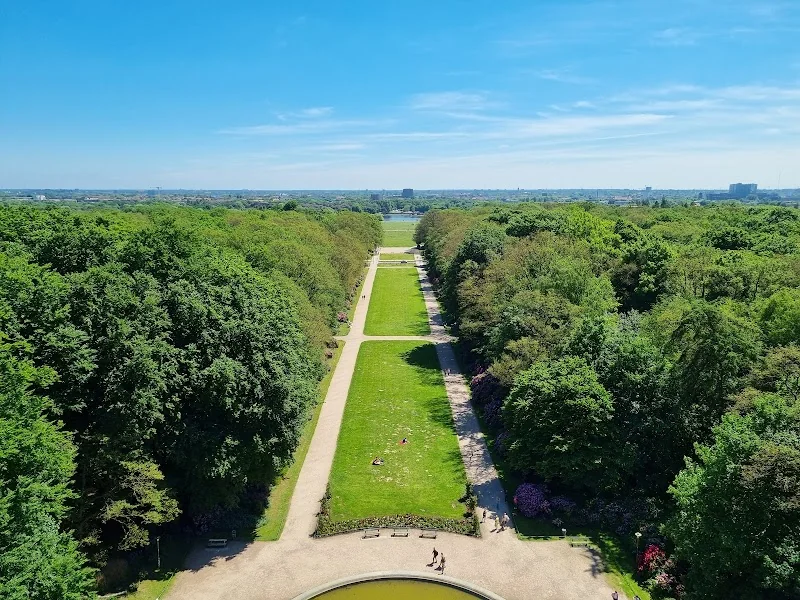
The City Park Hamburg is much more than a well-known green space in Winterhude: With nearly 150 hectares, it is one of the largest park areas in the Hanseatic city, opened in 1914, and remains a place where relaxation, movement, family time, and culture naturally belong together. Between the festival meadow, City Park Lake, planetarium, and open-air stage, a city space is created that invites walking, exercising, and breathing during the day and transforms into one of the most famous open-air venues in Northern Germany in the evening. Therefore, those searching for City Park Hamburg, City Park Open Air, or City Park Hamburg concerts often mean the same special mix of nature, history, and live experience. This connection is what makes the place appealing: The park is a green oasis with historical character, the concert venue is also a summer destination with a long tradition, and both together shape the perception of the City Park far beyond Hamburg. ([hamburg.de](https://www.hamburg.de/tourismus/sehenswuerdigkeiten/parks/stadtpark-306002))
History of City Park Hamburg and its Open-Air Stage
The history of the City Park begins with an urban planning idea that was groundbreaking for Hamburg at the time: In the course of industrialization and population growth, voices for more public green spaces emerged, including Alfred Lichtwark, the then director of the Hamburg Kunsthalle. After the city purchased the Sierische Gehölze in 1901, the redesign of the area was decided, but a competition with 66 designs initially did not yield a convincing result. In 1910, Fritz Sperber and Fritz Schumacher presented a joint design that combined picturesque and strictly geometric elements. The park was opened in 1914, although its completion took years. This origin is important because it explains why the City Park still appears so clearly composed today: not as an accidental green space, but as a consciously designed people's park with axes, spaces, sightlines, and a strong connection between nature and architecture. The park lake and the connection to the Alster canals were artificially created, and the arrangement of paths and areas still follows this historical basic idea. ([hamburg.de](https://www.hamburg.de/tourismus/sehenswuerdigkeiten/parks/stadtpark-306002))
The open-air stage is also part of this early planning and is therefore not a later foreign body, but an organic component of the overall facility. Where concerts take place today, there was originally a group of alders that provided protection from sudden rain for the performing ensembles. The stage was first used in 1925; later, various formats utilized this special space in the open air. Since 1975, the City Park Open Air has existed in its current form, and it is from this that the international appeal of the place has developed. Officially, the stage describes itself as a charming concert venue with a particularly intimate atmosphere, framed by tall hedges and trees. From the beginning, the City Park has also been a place of art: Today, 22 statues still stand in the expansive area, including well-known works such as Diana on the stag, the penguins at the fountain, and the mythical creature at the paddling pool. Another prominent attraction is the planetarium in the northwestern part of the park, which was originally built as a water tower from 1912 to 1916, converted into a planetarium in 1929, and has been recognized as a cultural monument since 1981. Thus, City Park Hamburg continues to connect landscape architecture, art history, and urban culture in a compact space. ([stadtparkopenair.de](https://www.stadtparkopenair.de/ueber-uns/))
City Park Open Air 2026: Program, Stars, and Summer Season
The City Park Open Air is the musical soul of the place and one of the main reasons why so many people specifically search for City Park Hamburg concerts or City Park Open Air Hamburg. The official description states that concerts have been held in the City Park since 1914 and that the concert series in its current form has existed since 1975. The open-air stage is considered one of the most beautiful open-air stages in Germany and can accommodate up to 4,000 listeners. What is special is not only the capacity but also the atmosphere: A grassy roundel, high hedges, mature trees, and the open summer air create a setting that clearly differs from a classic hall. Here, closeness and size are not contradictions but exactly the mix that has characterized the place for decades. The City Park Open Air is often described as a green living room because the audience and artists are unusually close, while the park's expansiveness carries the evening. ([hamburg.de](https://www.hamburg.de/stadtpark-konzerte/))
For the 2026 season, the official program page has already confirmed a broad lineup that showcases the thematic diversity of the City Park: From pop and rock to world music and special formats like poetry slam or children's concerts, everything is represented. Among the announced names are Lotto King Karl, Glen Hansard, Erobique, Madsen, Garbage, The Streets, Max Herre & Joy Denalane, Beat, Angus & Julia Stone, Ethel Cain, ZZ Top, Madness, Charlie Puth, Beirut, Nena, Counting Crows, Haevn, Xavier Rudd, Seal, The Wailers, Agnes Obel, Dick Brave, Florian Künstler, Hermanos Gutiérrez, Lichterkinder, Zaz, Helge Schneider, Deine Freunde, The BossHoss, Marlo Grosshardt, and Heaven Can Wait Choir. Additionally, formats such as Lütt im Park and the benefit open-air children's clinic concerts are part of the season. This mix explains the high search demand for City Park Hamburg concerts 2026 and City Park Open Air 2026: The location stands not only for individual evenings but for an entire summer season with profile, recognition value, and an audience that consciously travels to this special environment. ([stadtparkopenair.de](https://www.stadtparkopenair.de/programm-2026/?utm_source=openai))
Access to City Park Hamburg: HVV, Subway, and Parking
Those looking for access to City Park Hamburg or City Park Open Air Hamburg parking will find very clear information on the official pages. The most relaxing solution is to travel by public transport, as every City Park ticket includes the round trip with HVV. The nearest stations are Alte Wöhr with the S-Bahn S1, Saarlandstraße with the U-Bahn U3, and Borgweg also with the U3. The walking distance from Alte Wöhr is about five minutes, from Saarlandstraße about twelve minutes, and from Borgweg about 15 minutes. The official recommendation is therefore clear: better to arrive by train and bus, especially since U-Bahn and S-Bahn usually run until about 11:30 PM. For many visitors, this is a significant advantage, as arrival and departure can be easily combined with the concert visit, allowing one to end the evening without searching for parking. Bicycles are also a good option, as there are various StadtRAD rental stations in and around the City Park, making the location even more attractive. ([stadtparkopenair.de](https://www.stadtparkopenair.de/anfahrt-lageplan/))
Those arriving by car also receive concrete guidance: Parking at Überseering in City Nord is officially recommended. From there, the walking distance to the open-air stage is about five to ten minutes, depending on the route; the address for navigation systems is Saarlandstraße 73. The access routes are also described: From the west via the A7 and the Stellingen exit, then towards Ring 2 or City Nord; from the east via the A1 and towards the center, then further to Barmbek and City Nord. These details are particularly important for the search queries City Park Hamburg, City Park Open Air Hamburg, and City Park Hamburg concerts, as they facilitate the practical use of the place. Especially on large summer evenings with high occupancy, the combination of public transport recommendations, clearly designated parking spaces, and easily reachable walking distances is crucial for a relaxed visit. Those who arrive early can also enjoy the park itself instead of rushing directly to the entrance. ([stadtparkopenair.de](https://www.stadtparkopenair.de/anfahrt-lageplan/))
Tickets, Entry, and Rules at City Park Open Air
At the City Park concerts, clear procedures apply that make the visit safe and predictable. The official FAQ emphasizes that these are fundamentally standing places. Folding chairs, seat cushions, blankets, or other seating options may not be brought for safety reasons. This is a crucial point for many visitors when searching for seating plans for City Park Hamburg or the best seats, as the open-air concept is deliberately designed for standing audiences. The open-air stage thrives on this open, compact atmosphere, creating closeness to the stage and a shared dynamic in the audience. Therefore, those planning a relaxed evening should choose comfortable shoes and light equipment instead of relying on classic seating logic. Larger bags are also not allowed: Only bags with the largest side not exceeding a DIN A4 sheet are permitted, such as fanny packs, gym bags, or tote bags. This is accompanied by more thorough checks with metal detectors and body checks, underscoring the security standards of the organizer. ([stadtparkopenair.de](https://www.stadtparkopenair.de/faq/))
Important for planning is also the entry: It begins at least one hour before the start, and at sold-out concerts, sometimes even one and a half hours earlier. The ticket always states the start time, not the entry time. Usually, there is a short changeover between the opening act and the main band, while longer breaks at rock and pop concerts are rather unusual. Events end due to legal regulations no later than 10:00 PM, making the evening well calculable. Food and drinks may not be brought onto the premises because a catering operation has the concession for the open-air stage; however, a comprehensive gastronomic offer is available on-site. Payments can be made at the sales points in cash, by card, and with Apple Pay. For guests with mobility impairments, there is also a wheelchair platform, and its tickets are only available through the ticket service and only in advance. All these rules show that the City Park Open Air stands not only for big names but also for well-organized processes, clear security standards, and a visit designed from the first minute for a smooth summer evening. ([stadtparkopenair.de](https://www.stadtparkopenair.de/faq/))
Festival Meadow, City Park Lake, and Leisure in the Green Heart of Hamburg
The City Park Hamburg is not only a concert venue but also one of the most popular leisure parks in the city. Especially the sunbathing lawn, officially called the festival meadow, forms the central heart of the facility. Here, locals and visitors gather in the summer to picnic, relax, or simply enjoy the atmosphere. The area is large enough to allow both tranquility and bustle: Those who wish can lie on a blanket in the grass, while others stroll towards the water or observe the colorful hustle and bustle. The City Park Lake enhances this use with a water side that makes the park particularly diverse. According to official information, the lake is suitable for stand-up paddling, paddling, canoeing, and pedal boating; the adjacent outdoor pool invites swimming. Additionally, there are sports options such as soccer, volleyball, and jogging, a mini-golf course, and two chess tables, one at the reading café in the rose garden and one near the Landhaus Walter. For families, the large playground with a paddling pool is an important attraction that makes the City Park a lively place even during the day. ([hamburg.de](https://www.hamburg.de/tourismus/sehenswuerdigkeiten/parks/stadtpark-306002))
Gastronomy is also part of the City Park's identity. Originally, five gastronomic providers were planned; today, among others, the Trinkhalle and the traditional Landhaus Walter are still open. Additional places to stay include the reading café Stadtpark, located in a brick house from 1914 in the middle of the park, and the City Park Terraces by the Goldbek Canal. This variety makes the place attractive not only for concert guests but also for day visitors. Many associate their stay in the park with coffee, breakfast, a walk, or a family outing. The planetarium in the northwestern part of the park further enhances this excursion character: The former water tower was converted into a planetarium starting in 1929 and now attracts more than 300,000 visitors each year. Together with the statues, the old trees, the rose gardens, and the sightlines, a place emerges that goes far beyond its function as an event space. This is exactly why City Park Hamburg is so present in search queries: It is not only an address for concerts but a complete urban experience of history, landscape, movement, gastronomy, and culture. ([hamburg.de](https://www.hamburg.de/tourismus/sehenswuerdigkeiten/parks/stadtpark-306002))
Sources:
Show moreShow less
City Park Hamburg | Open Air & Concerts 2026
The City Park Hamburg is much more than a well-known green space in Winterhude: With nearly 150 hectares, it is one of the largest park areas in the Hanseatic city, opened in 1914, and remains a place where relaxation, movement, family time, and culture naturally belong together. Between the festival meadow, City Park Lake, planetarium, and open-air stage, a city space is created that invites walking, exercising, and breathing during the day and transforms into one of the most famous open-air venues in Northern Germany in the evening. Therefore, those searching for City Park Hamburg, City Park Open Air, or City Park Hamburg concerts often mean the same special mix of nature, history, and live experience. This connection is what makes the place appealing: The park is a green oasis with historical character, the concert venue is also a summer destination with a long tradition, and both together shape the perception of the City Park far beyond Hamburg. ([hamburg.de](https://www.hamburg.de/tourismus/sehenswuerdigkeiten/parks/stadtpark-306002))
History of City Park Hamburg and its Open-Air Stage
The history of the City Park begins with an urban planning idea that was groundbreaking for Hamburg at the time: In the course of industrialization and population growth, voices for more public green spaces emerged, including Alfred Lichtwark, the then director of the Hamburg Kunsthalle. After the city purchased the Sierische Gehölze in 1901, the redesign of the area was decided, but a competition with 66 designs initially did not yield a convincing result. In 1910, Fritz Sperber and Fritz Schumacher presented a joint design that combined picturesque and strictly geometric elements. The park was opened in 1914, although its completion took years. This origin is important because it explains why the City Park still appears so clearly composed today: not as an accidental green space, but as a consciously designed people's park with axes, spaces, sightlines, and a strong connection between nature and architecture. The park lake and the connection to the Alster canals were artificially created, and the arrangement of paths and areas still follows this historical basic idea. ([hamburg.de](https://www.hamburg.de/tourismus/sehenswuerdigkeiten/parks/stadtpark-306002))
The open-air stage is also part of this early planning and is therefore not a later foreign body, but an organic component of the overall facility. Where concerts take place today, there was originally a group of alders that provided protection from sudden rain for the performing ensembles. The stage was first used in 1925; later, various formats utilized this special space in the open air. Since 1975, the City Park Open Air has existed in its current form, and it is from this that the international appeal of the place has developed. Officially, the stage describes itself as a charming concert venue with a particularly intimate atmosphere, framed by tall hedges and trees. From the beginning, the City Park has also been a place of art: Today, 22 statues still stand in the expansive area, including well-known works such as Diana on the stag, the penguins at the fountain, and the mythical creature at the paddling pool. Another prominent attraction is the planetarium in the northwestern part of the park, which was originally built as a water tower from 1912 to 1916, converted into a planetarium in 1929, and has been recognized as a cultural monument since 1981. Thus, City Park Hamburg continues to connect landscape architecture, art history, and urban culture in a compact space. ([stadtparkopenair.de](https://www.stadtparkopenair.de/ueber-uns/))
City Park Open Air 2026: Program, Stars, and Summer Season
The City Park Open Air is the musical soul of the place and one of the main reasons why so many people specifically search for City Park Hamburg concerts or City Park Open Air Hamburg. The official description states that concerts have been held in the City Park since 1914 and that the concert series in its current form has existed since 1975. The open-air stage is considered one of the most beautiful open-air stages in Germany and can accommodate up to 4,000 listeners. What is special is not only the capacity but also the atmosphere: A grassy roundel, high hedges, mature trees, and the open summer air create a setting that clearly differs from a classic hall. Here, closeness and size are not contradictions but exactly the mix that has characterized the place for decades. The City Park Open Air is often described as a green living room because the audience and artists are unusually close, while the park's expansiveness carries the evening. ([hamburg.de](https://www.hamburg.de/stadtpark-konzerte/))
For the 2026 season, the official program page has already confirmed a broad lineup that showcases the thematic diversity of the City Park: From pop and rock to world music and special formats like poetry slam or children's concerts, everything is represented. Among the announced names are Lotto King Karl, Glen Hansard, Erobique, Madsen, Garbage, The Streets, Max Herre & Joy Denalane, Beat, Angus & Julia Stone, Ethel Cain, ZZ Top, Madness, Charlie Puth, Beirut, Nena, Counting Crows, Haevn, Xavier Rudd, Seal, The Wailers, Agnes Obel, Dick Brave, Florian Künstler, Hermanos Gutiérrez, Lichterkinder, Zaz, Helge Schneider, Deine Freunde, The BossHoss, Marlo Grosshardt, and Heaven Can Wait Choir. Additionally, formats such as Lütt im Park and the benefit open-air children's clinic concerts are part of the season. This mix explains the high search demand for City Park Hamburg concerts 2026 and City Park Open Air 2026: The location stands not only for individual evenings but for an entire summer season with profile, recognition value, and an audience that consciously travels to this special environment. ([stadtparkopenair.de](https://www.stadtparkopenair.de/programm-2026/?utm_source=openai))
Access to City Park Hamburg: HVV, Subway, and Parking
Those looking for access to City Park Hamburg or City Park Open Air Hamburg parking will find very clear information on the official pages. The most relaxing solution is to travel by public transport, as every City Park ticket includes the round trip with HVV. The nearest stations are Alte Wöhr with the S-Bahn S1, Saarlandstraße with the U-Bahn U3, and Borgweg also with the U3. The walking distance from Alte Wöhr is about five minutes, from Saarlandstraße about twelve minutes, and from Borgweg about 15 minutes. The official recommendation is therefore clear: better to arrive by train and bus, especially since U-Bahn and S-Bahn usually run until about 11:30 PM. For many visitors, this is a significant advantage, as arrival and departure can be easily combined with the concert visit, allowing one to end the evening without searching for parking. Bicycles are also a good option, as there are various StadtRAD rental stations in and around the City Park, making the location even more attractive. ([stadtparkopenair.de](https://www.stadtparkopenair.de/anfahrt-lageplan/))
Those arriving by car also receive concrete guidance: Parking at Überseering in City Nord is officially recommended. From there, the walking distance to the open-air stage is about five to ten minutes, depending on the route; the address for navigation systems is Saarlandstraße 73. The access routes are also described: From the west via the A7 and the Stellingen exit, then towards Ring 2 or City Nord; from the east via the A1 and towards the center, then further to Barmbek and City Nord. These details are particularly important for the search queries City Park Hamburg, City Park Open Air Hamburg, and City Park Hamburg concerts, as they facilitate the practical use of the place. Especially on large summer evenings with high occupancy, the combination of public transport recommendations, clearly designated parking spaces, and easily reachable walking distances is crucial for a relaxed visit. Those who arrive early can also enjoy the park itself instead of rushing directly to the entrance. ([stadtparkopenair.de](https://www.stadtparkopenair.de/anfahrt-lageplan/))
Tickets, Entry, and Rules at City Park Open Air
At the City Park concerts, clear procedures apply that make the visit safe and predictable. The official FAQ emphasizes that these are fundamentally standing places. Folding chairs, seat cushions, blankets, or other seating options may not be brought for safety reasons. This is a crucial point for many visitors when searching for seating plans for City Park Hamburg or the best seats, as the open-air concept is deliberately designed for standing audiences. The open-air stage thrives on this open, compact atmosphere, creating closeness to the stage and a shared dynamic in the audience. Therefore, those planning a relaxed evening should choose comfortable shoes and light equipment instead of relying on classic seating logic. Larger bags are also not allowed: Only bags with the largest side not exceeding a DIN A4 sheet are permitted, such as fanny packs, gym bags, or tote bags. This is accompanied by more thorough checks with metal detectors and body checks, underscoring the security standards of the organizer. ([stadtparkopenair.de](https://www.stadtparkopenair.de/faq/))
Important for planning is also the entry: It begins at least one hour before the start, and at sold-out concerts, sometimes even one and a half hours earlier. The ticket always states the start time, not the entry time. Usually, there is a short changeover between the opening act and the main band, while longer breaks at rock and pop concerts are rather unusual. Events end due to legal regulations no later than 10:00 PM, making the evening well calculable. Food and drinks may not be brought onto the premises because a catering operation has the concession for the open-air stage; however, a comprehensive gastronomic offer is available on-site. Payments can be made at the sales points in cash, by card, and with Apple Pay. For guests with mobility impairments, there is also a wheelchair platform, and its tickets are only available through the ticket service and only in advance. All these rules show that the City Park Open Air stands not only for big names but also for well-organized processes, clear security standards, and a visit designed from the first minute for a smooth summer evening. ([stadtparkopenair.de](https://www.stadtparkopenair.de/faq/))
Festival Meadow, City Park Lake, and Leisure in the Green Heart of Hamburg
The City Park Hamburg is not only a concert venue but also one of the most popular leisure parks in the city. Especially the sunbathing lawn, officially called the festival meadow, forms the central heart of the facility. Here, locals and visitors gather in the summer to picnic, relax, or simply enjoy the atmosphere. The area is large enough to allow both tranquility and bustle: Those who wish can lie on a blanket in the grass, while others stroll towards the water or observe the colorful hustle and bustle. The City Park Lake enhances this use with a water side that makes the park particularly diverse. According to official information, the lake is suitable for stand-up paddling, paddling, canoeing, and pedal boating; the adjacent outdoor pool invites swimming. Additionally, there are sports options such as soccer, volleyball, and jogging, a mini-golf course, and two chess tables, one at the reading café in the rose garden and one near the Landhaus Walter. For families, the large playground with a paddling pool is an important attraction that makes the City Park a lively place even during the day. ([hamburg.de](https://www.hamburg.de/tourismus/sehenswuerdigkeiten/parks/stadtpark-306002))
Gastronomy is also part of the City Park's identity. Originally, five gastronomic providers were planned; today, among others, the Trinkhalle and the traditional Landhaus Walter are still open. Additional places to stay include the reading café Stadtpark, located in a brick house from 1914 in the middle of the park, and the City Park Terraces by the Goldbek Canal. This variety makes the place attractive not only for concert guests but also for day visitors. Many associate their stay in the park with coffee, breakfast, a walk, or a family outing. The planetarium in the northwestern part of the park further enhances this excursion character: The former water tower was converted into a planetarium starting in 1929 and now attracts more than 300,000 visitors each year. Together with the statues, the old trees, the rose gardens, and the sightlines, a place emerges that goes far beyond its function as an event space. This is exactly why City Park Hamburg is so present in search queries: It is not only an address for concerts but a complete urban experience of history, landscape, movement, gastronomy, and culture. ([hamburg.de](https://www.hamburg.de/tourismus/sehenswuerdigkeiten/parks/stadtpark-306002))
Sources:
City Park Hamburg | Open Air & Concerts 2026
The City Park Hamburg is much more than a well-known green space in Winterhude: With nearly 150 hectares, it is one of the largest park areas in the Hanseatic city, opened in 1914, and remains a place where relaxation, movement, family time, and culture naturally belong together. Between the festival meadow, City Park Lake, planetarium, and open-air stage, a city space is created that invites walking, exercising, and breathing during the day and transforms into one of the most famous open-air venues in Northern Germany in the evening. Therefore, those searching for City Park Hamburg, City Park Open Air, or City Park Hamburg concerts often mean the same special mix of nature, history, and live experience. This connection is what makes the place appealing: The park is a green oasis with historical character, the concert venue is also a summer destination with a long tradition, and both together shape the perception of the City Park far beyond Hamburg. ([hamburg.de](https://www.hamburg.de/tourismus/sehenswuerdigkeiten/parks/stadtpark-306002))
History of City Park Hamburg and its Open-Air Stage
The history of the City Park begins with an urban planning idea that was groundbreaking for Hamburg at the time: In the course of industrialization and population growth, voices for more public green spaces emerged, including Alfred Lichtwark, the then director of the Hamburg Kunsthalle. After the city purchased the Sierische Gehölze in 1901, the redesign of the area was decided, but a competition with 66 designs initially did not yield a convincing result. In 1910, Fritz Sperber and Fritz Schumacher presented a joint design that combined picturesque and strictly geometric elements. The park was opened in 1914, although its completion took years. This origin is important because it explains why the City Park still appears so clearly composed today: not as an accidental green space, but as a consciously designed people's park with axes, spaces, sightlines, and a strong connection between nature and architecture. The park lake and the connection to the Alster canals were artificially created, and the arrangement of paths and areas still follows this historical basic idea. ([hamburg.de](https://www.hamburg.de/tourismus/sehenswuerdigkeiten/parks/stadtpark-306002))
The open-air stage is also part of this early planning and is therefore not a later foreign body, but an organic component of the overall facility. Where concerts take place today, there was originally a group of alders that provided protection from sudden rain for the performing ensembles. The stage was first used in 1925; later, various formats utilized this special space in the open air. Since 1975, the City Park Open Air has existed in its current form, and it is from this that the international appeal of the place has developed. Officially, the stage describes itself as a charming concert venue with a particularly intimate atmosphere, framed by tall hedges and trees. From the beginning, the City Park has also been a place of art: Today, 22 statues still stand in the expansive area, including well-known works such as Diana on the stag, the penguins at the fountain, and the mythical creature at the paddling pool. Another prominent attraction is the planetarium in the northwestern part of the park, which was originally built as a water tower from 1912 to 1916, converted into a planetarium in 1929, and has been recognized as a cultural monument since 1981. Thus, City Park Hamburg continues to connect landscape architecture, art history, and urban culture in a compact space. ([stadtparkopenair.de](https://www.stadtparkopenair.de/ueber-uns/))
City Park Open Air 2026: Program, Stars, and Summer Season
The City Park Open Air is the musical soul of the place and one of the main reasons why so many people specifically search for City Park Hamburg concerts or City Park Open Air Hamburg. The official description states that concerts have been held in the City Park since 1914 and that the concert series in its current form has existed since 1975. The open-air stage is considered one of the most beautiful open-air stages in Germany and can accommodate up to 4,000 listeners. What is special is not only the capacity but also the atmosphere: A grassy roundel, high hedges, mature trees, and the open summer air create a setting that clearly differs from a classic hall. Here, closeness and size are not contradictions but exactly the mix that has characterized the place for decades. The City Park Open Air is often described as a green living room because the audience and artists are unusually close, while the park's expansiveness carries the evening. ([hamburg.de](https://www.hamburg.de/stadtpark-konzerte/))
For the 2026 season, the official program page has already confirmed a broad lineup that showcases the thematic diversity of the City Park: From pop and rock to world music and special formats like poetry slam or children's concerts, everything is represented. Among the announced names are Lotto King Karl, Glen Hansard, Erobique, Madsen, Garbage, The Streets, Max Herre & Joy Denalane, Beat, Angus & Julia Stone, Ethel Cain, ZZ Top, Madness, Charlie Puth, Beirut, Nena, Counting Crows, Haevn, Xavier Rudd, Seal, The Wailers, Agnes Obel, Dick Brave, Florian Künstler, Hermanos Gutiérrez, Lichterkinder, Zaz, Helge Schneider, Deine Freunde, The BossHoss, Marlo Grosshardt, and Heaven Can Wait Choir. Additionally, formats such as Lütt im Park and the benefit open-air children's clinic concerts are part of the season. This mix explains the high search demand for City Park Hamburg concerts 2026 and City Park Open Air 2026: The location stands not only for individual evenings but for an entire summer season with profile, recognition value, and an audience that consciously travels to this special environment. ([stadtparkopenair.de](https://www.stadtparkopenair.de/programm-2026/?utm_source=openai))
Access to City Park Hamburg: HVV, Subway, and Parking
Those looking for access to City Park Hamburg or City Park Open Air Hamburg parking will find very clear information on the official pages. The most relaxing solution is to travel by public transport, as every City Park ticket includes the round trip with HVV. The nearest stations are Alte Wöhr with the S-Bahn S1, Saarlandstraße with the U-Bahn U3, and Borgweg also with the U3. The walking distance from Alte Wöhr is about five minutes, from Saarlandstraße about twelve minutes, and from Borgweg about 15 minutes. The official recommendation is therefore clear: better to arrive by train and bus, especially since U-Bahn and S-Bahn usually run until about 11:30 PM. For many visitors, this is a significant advantage, as arrival and departure can be easily combined with the concert visit, allowing one to end the evening without searching for parking. Bicycles are also a good option, as there are various StadtRAD rental stations in and around the City Park, making the location even more attractive. ([stadtparkopenair.de](https://www.stadtparkopenair.de/anfahrt-lageplan/))
Those arriving by car also receive concrete guidance: Parking at Überseering in City Nord is officially recommended. From there, the walking distance to the open-air stage is about five to ten minutes, depending on the route; the address for navigation systems is Saarlandstraße 73. The access routes are also described: From the west via the A7 and the Stellingen exit, then towards Ring 2 or City Nord; from the east via the A1 and towards the center, then further to Barmbek and City Nord. These details are particularly important for the search queries City Park Hamburg, City Park Open Air Hamburg, and City Park Hamburg concerts, as they facilitate the practical use of the place. Especially on large summer evenings with high occupancy, the combination of public transport recommendations, clearly designated parking spaces, and easily reachable walking distances is crucial for a relaxed visit. Those who arrive early can also enjoy the park itself instead of rushing directly to the entrance. ([stadtparkopenair.de](https://www.stadtparkopenair.de/anfahrt-lageplan/))
Tickets, Entry, and Rules at City Park Open Air
At the City Park concerts, clear procedures apply that make the visit safe and predictable. The official FAQ emphasizes that these are fundamentally standing places. Folding chairs, seat cushions, blankets, or other seating options may not be brought for safety reasons. This is a crucial point for many visitors when searching for seating plans for City Park Hamburg or the best seats, as the open-air concept is deliberately designed for standing audiences. The open-air stage thrives on this open, compact atmosphere, creating closeness to the stage and a shared dynamic in the audience. Therefore, those planning a relaxed evening should choose comfortable shoes and light equipment instead of relying on classic seating logic. Larger bags are also not allowed: Only bags with the largest side not exceeding a DIN A4 sheet are permitted, such as fanny packs, gym bags, or tote bags. This is accompanied by more thorough checks with metal detectors and body checks, underscoring the security standards of the organizer. ([stadtparkopenair.de](https://www.stadtparkopenair.de/faq/))
Important for planning is also the entry: It begins at least one hour before the start, and at sold-out concerts, sometimes even one and a half hours earlier. The ticket always states the start time, not the entry time. Usually, there is a short changeover between the opening act and the main band, while longer breaks at rock and pop concerts are rather unusual. Events end due to legal regulations no later than 10:00 PM, making the evening well calculable. Food and drinks may not be brought onto the premises because a catering operation has the concession for the open-air stage; however, a comprehensive gastronomic offer is available on-site. Payments can be made at the sales points in cash, by card, and with Apple Pay. For guests with mobility impairments, there is also a wheelchair platform, and its tickets are only available through the ticket service and only in advance. All these rules show that the City Park Open Air stands not only for big names but also for well-organized processes, clear security standards, and a visit designed from the first minute for a smooth summer evening. ([stadtparkopenair.de](https://www.stadtparkopenair.de/faq/))
Festival Meadow, City Park Lake, and Leisure in the Green Heart of Hamburg
The City Park Hamburg is not only a concert venue but also one of the most popular leisure parks in the city. Especially the sunbathing lawn, officially called the festival meadow, forms the central heart of the facility. Here, locals and visitors gather in the summer to picnic, relax, or simply enjoy the atmosphere. The area is large enough to allow both tranquility and bustle: Those who wish can lie on a blanket in the grass, while others stroll towards the water or observe the colorful hustle and bustle. The City Park Lake enhances this use with a water side that makes the park particularly diverse. According to official information, the lake is suitable for stand-up paddling, paddling, canoeing, and pedal boating; the adjacent outdoor pool invites swimming. Additionally, there are sports options such as soccer, volleyball, and jogging, a mini-golf course, and two chess tables, one at the reading café in the rose garden and one near the Landhaus Walter. For families, the large playground with a paddling pool is an important attraction that makes the City Park a lively place even during the day. ([hamburg.de](https://www.hamburg.de/tourismus/sehenswuerdigkeiten/parks/stadtpark-306002))
Gastronomy is also part of the City Park's identity. Originally, five gastronomic providers were planned; today, among others, the Trinkhalle and the traditional Landhaus Walter are still open. Additional places to stay include the reading café Stadtpark, located in a brick house from 1914 in the middle of the park, and the City Park Terraces by the Goldbek Canal. This variety makes the place attractive not only for concert guests but also for day visitors. Many associate their stay in the park with coffee, breakfast, a walk, or a family outing. The planetarium in the northwestern part of the park further enhances this excursion character: The former water tower was converted into a planetarium starting in 1929 and now attracts more than 300,000 visitors each year. Together with the statues, the old trees, the rose gardens, and the sightlines, a place emerges that goes far beyond its function as an event space. This is exactly why City Park Hamburg is so present in search queries: It is not only an address for concerts but a complete urban experience of history, landscape, movement, gastronomy, and culture. ([hamburg.de](https://www.hamburg.de/tourismus/sehenswuerdigkeiten/parks/stadtpark-306002))
Sources:
Upcoming Events
Frequently Asked Questions
Reviews
Nadia Andrietta
13. August 2025
Beautiful huge park! It was raining on that day, but I still really enjoyed walking around. There are so many photo spots and places to explore, but I could only check out a few: the lake, boat riding area, playground, and rose garden. I love watching the ducks swimming around 🥰. Can't wait for a sunny day to bring my picnic mat!
Zeal Z
15. November 2025
This is a large, open park on the north side of Hamburg's city center, integrated into the urban landscape without big gates or fences. Many people come here to jog, walk, or walk their dogs, or cycle. The park also offers several restaurants and small cafes for relaxation. You might even spot a street performer playing the trumpet. If you like, don’t spare your coins! The best part is the non-artificiality. There are no neatly paved running tracks, only wide paths covered in fallen leaves, with the smell of earth and moisture. Dogs, especially large dogs, can have a blast here, running freely on the grass without leashes. Although Hamburg winters are often gloomy and sunless, the vibrancy of this park is truly therapeutic.
Abby Romano
19. August 2025
Great park for families! The huge water play area kept the kids entertained for hours. Lots of space to run around, clean facilities, and plenty of shade for parents to relax. Perfect spot for a summer day out.
Santana
2. January 2026
Beautiful in any weather. Huge park with multiple cafes to get a drink.
mehrdad faridi
9. April 2025
Astonishing place for walking, relaxing, exercising, picnic, kayaking or whatever you like. 😍🤩 You will definitely enjoy it, has place for children to play too.