
André le Brun
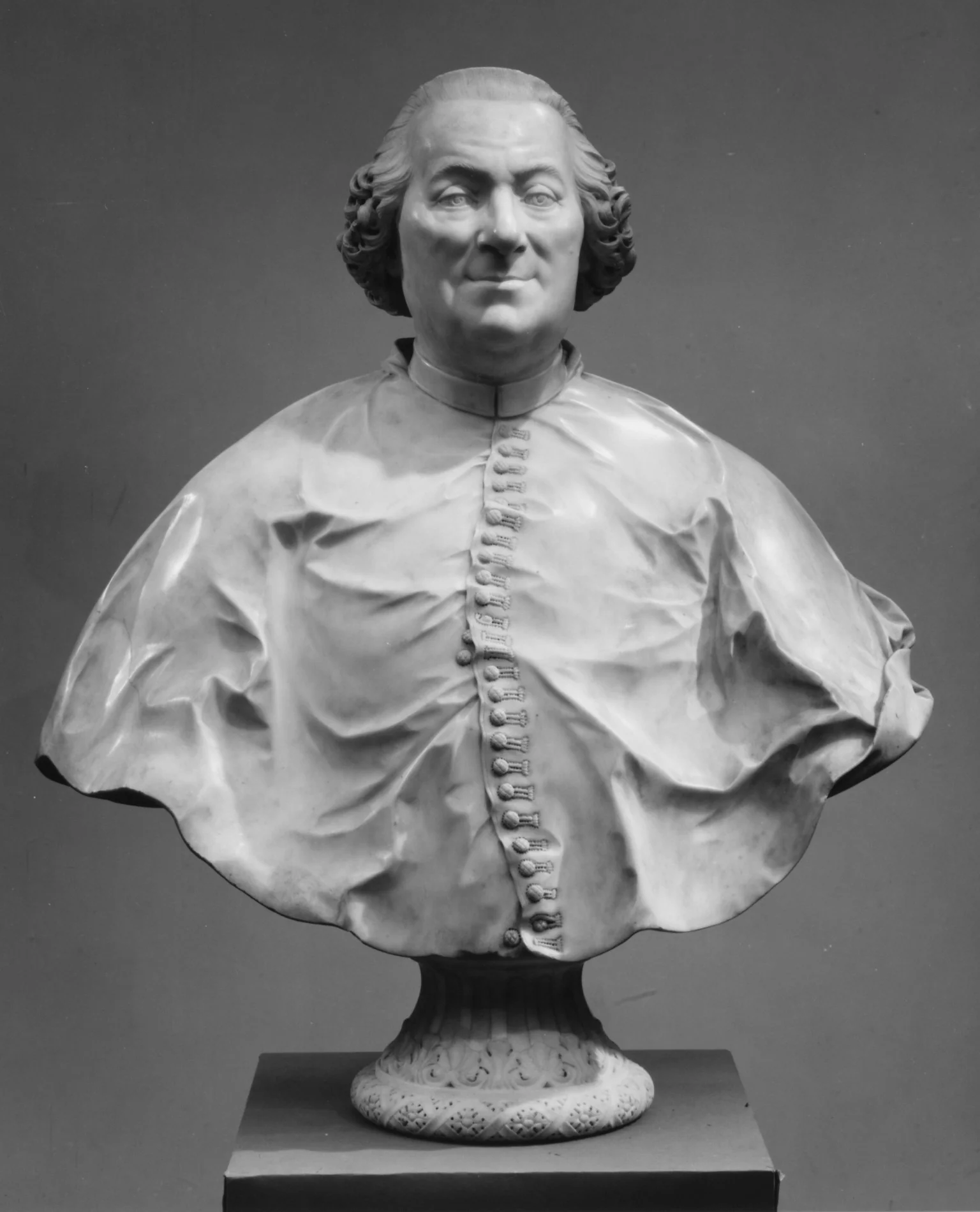
Image from Wikipedia
Image from Wikipedia
André le Brun – the French Sculptor Between Rome, Warsaw, and Vilnius
An Artist Between Court, Academy, and European Cultural History
André le Brun, also known as André-Jean le Brun, was an 18th-century French sculptor and draftsman, born in 1737 in Paris and died in 1811 in Vilnius. His career took him from his education in Paris to Rome, and then to the courts and institutions in Warsaw and St. Petersburg, where he was a defining figure of the late European art world. Le Brun combines academic rigor, courtly representation, and remarkable mobility between the centers of the Enlightenment. ([de.wikipedia.org](https://de.wikipedia.org/wiki/Andr%C3%A9_le_Brun?utm_source=openai))
Biographical Beginnings in Paris
Le Brun studied at the Académie royale de peinture et de sculpture in Paris under Jean-Baptiste Pigalle, one of the most significant French sculptors of his time. In 1756, he won the Prix de Rome, an award that qualified him for study at the Académie de France in Rome and significantly opened up his career. It was clear early on that Le Brun not only possessed craftsmanship excellence but was also regarded as a highly gifted artist within the academic system of the 18th century. ([de.wikipedia.org](https://de.wikipedia.org/wiki/Andr%C3%A9_le_Brun?utm_source=openai))
The Parisian education permanently shaped his artistic development. The path through Pigalle and the Académie royale locates him within the French tradition of the classical portrait and representative sculpture. Already here, one can see the connection of technical precision and formal dignity that characterized his later works in the courtly environment. ([de.wikipedia.org](https://de.wikipedia.org/wiki/Andr%C3%A9_le_Brun?utm_source=openai))
Rome as a School of Classical Vision
After winning the Prix de Rome, Le Brun continued his studies in Rome. This phase was crucial for sculptors of the 18th century as it allowed direct contact with ancient models, collections, and the Roman art landscape. For Le Brun, Rome meant not only an expansion of his formal vocabulary but also the confirmation of his classical style, which oriented itself towards clarity, ideal proportions, and representative impact. ([de.wikipedia.org](https://de.wikipedia.org/wiki/Andr%C3%A9_le_Brun?utm_source=openai))
His successes in Rome led to his further rise. The recommendation by Marie Thérèse Rodet Geoffrin to King Stanislaus II of Poland shows how much Le Brun’s name already circulated within the networks of European patrons and diplomats. In an era when artistic fame was often mediated through patronage, this was a crucial step in his career. ([de.wikipedia.org](https://de.wikipedia.org/wiki/Andr%C3%A9_le_Brun?utm_source=openai))
The Rise in Warsaw: Court Artist and First Sculptor of the King
The most important phase of his activity began in Warsaw, where Le Brun served as "Chief Sculptor" at the court of Stanisław August for almost three decades. There, he was among the most prominent artists of the late Polish-Lithuanian Commonwealth and shaped the visual language of a court that understood art as a tool for political representation. His position as the first court sculptor made him a key figure in the court culture of that time. ([lazienki-krolewskie.pl](https://www.lazienki-krolewskie.pl/en/historia/postacie-historyczne/andre-le-brun?utm_source=openai))
In Warsaw, Le Brun did not work in isolation but within a vibrant art system with commissions, collections, and academic structures. Sources indicate his activities for the king and his influence in the environment of court art production, including sculptural portraits and decorative projects. His name became associated with the aesthetic program of an enlightened court that merged French art with local prestige. ([lazienki-krolewskie.pl](https://www.lazienki-krolewskie.pl/en/historia/postacie-historyczne/andre-le-brun?utm_source=openai))
Vilnius and the Academic Transmission of Knowledge
After his years in Warsaw, Le Brun’s work shifted to Vilnius, where he was appointed professor of sculpture and stone carving at the university in 1803. This role highlights a second dimension of his career: not only working for a court but also passing on knowledge to the next generation of artists. In Vilnius, he contributed to the establishment of an academic collection and training structure. ([alexis-bordes.com](https://www.alexis-bordes.com/en/thegallery/new-acquisitions/drawings/article/venus-requesting-arms-from-vulcan-for-aeneas-the?utm_source=openai))
Significantly, in 1802, under his direction, the establishment of a sculpture collection began in the sculpture department. This points to his role as a mediator of forms, objects, and teaching materials needed for education at the university. Le Brun was thus not only an executing artist but also an organizer of cultural knowledge. ([vda.lt](https://www.vda.lt/en/museum/?utm_source=openai))
Works, Themes, and Artistic Signature
Le Brun’s work is primarily preserved as sculptures and drawings, scattered across Italy, Poland, and Russia. Research emphasizes the diversity of his oeuvre and at the same time the relative rarity of his graphic work, which stands out for its virtuosity. His art represents a classicism that does not appear rigid but reacts to courtly needs, portrait culture, and institutional representation. ([alexis-bordes.com](https://www.alexis-bordes.com/en/thegallery/new-acquisitions/drawings/article/venus-requesting-arms-from-vulcan-for-aeneas-the?utm_source=openai))
Typical of his career is the connection between portrait art and monumental commissioning. Sources mention portrait commissions for ecclesiastical and political elites, including a commission from Cardinal Pierre de Bernis and the portrait of Pope Pius VI. These works illustrate how well Le Brun was embedded in the network of European elite portrait art. ([sculptureetcollection.com](https://sculptureetcollection.com/andre-jean-lebrun-premier-sculpteur-roi-stanislas-auguste/?utm_source=openai))
Cultural Influence and Art Historical Significance
Le Brun belongs to that generation of French artists whose impact extended far beyond the borders of their home country. His career between Paris, Rome, Warsaw, and Vilnius illustrates how profoundly European Enlightenment art was shaped by mobility, courtly patronage, and academic education. In this sense, Le Brun is an exemplary artist of the transnational art history of the 18th century. ([lazienki-krolewskie.pl](https://www.lazienki-krolewskie.pl/en/historia/postacie-historyczne/andre-le-brun?utm_source=openai))
His significance lies not only in individual works but in the condensation of functions: sculptor, draftsman, court artist, teacher, collection initiator. This very complexity makes him culturally and historically intriguing. Le Brun represents an art that not only shapes beauty but also influences institutions, designs representative spaces, and passes on knowledge. ([vda.lt](https://www.vda.lt/en/museum/?utm_source=openai))
Contextualization of His Career
André le Brun’s career showcases a classical yet exceptionally mobile artist path of the 18th century. From the French educational system to the Roman study period, through leadership roles in Warsaw and a professorship in Vilnius – a life arc is drawn that makes European art history tangibly experienceable. Those who explore Le Brun recognize the power of the academy, court, and cultural transfer during a time of upheaval. ([de.wikipedia.org](https://de.wikipedia.org/wiki/Andr%C3%A9_le_Brun?utm_source=openai))
This very blend of courtly representation, pedagogical responsibility, and artistic authority keeps André le Brun interesting even today. His biography opens a window into an international art network that functioned long before modernity yet seems remarkably modern. Those interested in French sculpture, Polish court art, and the art centers of Europe will find in Le Brun a fascinating figure of high art historical density. ([lazienki-krolewskie.pl](https://www.lazienki-krolewskie.pl/en/historia/postacie-historyczne/andre-le-brun?utm_source=openai))
Conclusion: A European Artist of the Enlightenment
André le Brun combines education, travel, court service, and teaching into an impressive artist biography. His career reveals how sculpture in the 18th century was both art, diplomacy, and cultural representation. This very blend of classical form language and European reach makes him appealing to both art lovers and historians. ([lazienki-krolewskie.pl](https://www.lazienki-krolewskie.pl/en/historia/postacie-historyczne/andre-le-brun?utm_source=openai))
Anyone who wants to understand Enlightenment art should recognize André le Brun as a formative voice of his time. His works and academic activity showcase an artist who not only created but shaped cultural order. A visit to the places and collections influenced by him is worthwhile because the history of a European sculptor remains vibrant there. ([vda.lt](https://www.vda.lt/en/museum/?utm_source=openai))
Official Channels of André le Brun:
- Instagram: no official profile found
- Facebook: no official profile found
- YouTube: no official profile found
- Spotify: no official profile found
- TikTok: no official profile found