
André le Brun
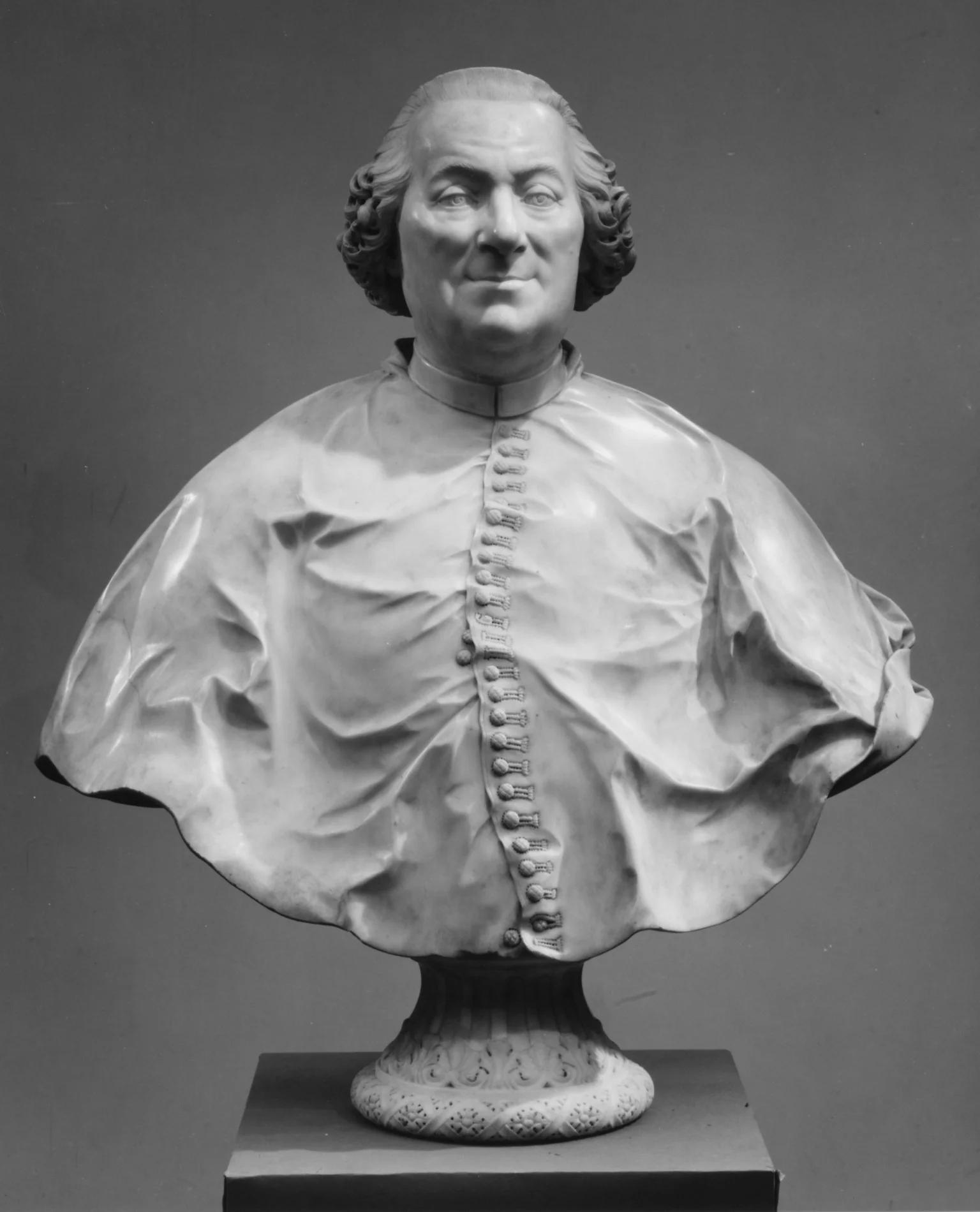
Image from Wikipedia
Image from Wikipedia
André le Brun: A French Sculptor Between Rome, Warsaw, and St. Petersburg
An Artist's Life in the Tension of European Courts
André le Brun, sometimes referred to as André-Jean le Brun, is one of those French artists of the 18th century whose work cannot be confined to a single school or city. Born in 1737 in Paris and died in 1811 in Vilnius, he navigated as a sculptor and draftsman among the major cultural centers of his time. His career led him to Rome, Warsaw, and St. Petersburg, places where art was regarded not just as decoration but as an expression of power, education, and representation.
His life story reflects European mobility, court patronage, and artistic adaptability. Training in Paris laid the foundation, but his true impact developed through his work in the international environment of Late Baroque and Classicism. Le Brun exemplifies an artist whose sculptures and drawings emerged in dialogue with politics, architecture, and the culture of collecting.
Early Years in Paris and the Influence of the French Art World
Paris was a focal point of French art production in the 18th century, and André le Brun grew up in an environment where the academic system, the studio tradition, and court patronage were closely intertwined. His training as a sculptor and draftsman anchored him in a tradition that demanded craftsmanship, formal discipline, and a keen understanding of anatomical and compositional order. Drawing, in particular, was not merely a preliminary stage but an independent medium of artistic idea.
The available sources portray him as an artist whose reputation was established early enough to be sought after outside France. In the European art of the time, it was not only the stylistic quality that mattered but also the ability to work in diplomatic and representative contexts. Le Brun embodied this connection of technical skill and cultural agility.
Rome as an Artistic Test
A critical phase of his career took André le Brun to Rome. There, an 18th-century artist had to measure himself against antiquity, the Renaissance, and the vibrant competition of international talents. For a sculptor, Rome meant not only study and orientation but also a rigorous test of one's formal vocabulary. Those who wanted to succeed here needed secure modeling, clear contours, and a sensitivity for idealized corporeality.
Le Brun's successes in Rome significantly bolstered his status. The mention of these successes in the preserved sources demonstrates that he gained recognition in the Italian capital and established a profile as a skilled sculptor. This experience made him attractive to other European courts actively seeking artists who could translate international language into local representation.
Warsaw: Court Art in the Service of Stanislaus II
The recommendation from Marie Thérèse Rodet Geoffrin to the Polish King Stanislaus II marks an important career step. In Warsaw, le Brun worked within a court that aimed to culturally modernize and position itself within Europe. For a sculptor, this environment provided the opportunity to co-create art as part of a larger political and intellectual staging. His work was thus charged not only aesthetically but also representatively.
Especially in the courtly context, the authority of the artist is evident: A sculptor of this era does not just shape stone or plaster but also forms images of rulers, institutional spaces, and cultural identity. Le Brun's activities in Warsaw demonstrate his ability to meet the expectations of a demanding client while maintaining a distinct visual language. Consequently, his career gained an international dimension that extended far beyond Paris.
St. Petersburg and the Northeastern Horizon of European Art
André le Brun was also active in St. Petersburg, one of the major cultural centers of the Russian Empire. There, Western and Central European art traditions converged with the representational aspirations of a court that sought to consciously position itself within the grand history of European art. For a French sculptor, this context meant new demands regarding style, material understanding, and iconographic adaptation.
His work in St. Petersburg underscores how le Brun can be thought of as a European artist. His career indicates a network of commissions and recommendations that was crucial for the dissemination of forms, motifs, and aesthetic standards in the 18th century. He was among the artists who did not cling to a local identity but worked at the intersection of multiple cultural spaces.
Drawing, Sculpture, and the Language of Classicism
As a sculptor and draftsman, André le Brun moved between materiality and design. Sculpture demanded spatial thinking, the modeling of volumes, and a precise sense of light and shadow. Drawing, in turn, allowed for the structuring of ideas, planning of figures, and foreshadowing of compositions. In this dual practice, the professional maturity of an artist who not only executed but also conceived is evident.
Stylistically, le Brun can be situated within an environment where the transition from Baroque movement to Classical clarity became increasingly pronounced. For court patrons, balance, dignity, and control were often as important as expressive gesture. Le Brun's art likely convinced at this intersection: through formal discipline, representative elegance, and the ability to place figures into an ordered visual context.
Vilnius and the Late Development of a Collection Culture
The last years of his life connected André le Brun with Vilnius, where he died in 1811. His role in establishing a sculpture collection for the University of Vilnius from 1802 onward is particularly significant. In this way, he emerged not only as an executing artist but also as an actor in the fields of art education and collection practices. The establishment of collections for education and study portrays him as someone who understood the institutional value of art.
This aspect of his biography gives his career a remarkably modern profile. Art served here not only the court but also education, systematization, and the transmission of knowledge. Le Brun thus participated in an infrastructure that closely connected academic education and visual culture. This engagement makes his historical significance visible.
Discographic Classification? Why André le Brun Must Be Considered an Artist of the Visual Arts
André le Brun was not a musician; thus, he has no discography, no hit singles, and no chart placements. For a serious artist description, the logic of pop culture does not apply to him, but rather the art-historical classification. His significance lies in sculpture, drawing, court representation, and the development of European art relationships in the 18th century.
This clarity is crucial for the credibility of an artist portrait. Instead of forcing inappropriate musical terms, it is worthwhile to look at his actual cultural achievements: Le Brun was part of a transnational art system where drawing, sculpture, collecting, and networks of patrons interacted. His work stands for the mobility and professionalism of a French artist during the European Classicism.
Cultural Influence and Historical Significance
Le Brun's cultural influence is less evident in spectacular individual works and more in how he anchored art in several courts and cities. His career illustrates the exchange between France, Italy, Poland, and the Russian Empire. He belongs to that generation of artists who practically shaped the European artistic space long before the concept of international art mobility, as understood today, was coined.
Moreover, the connection between court representation and university collection culture makes him remarkable. An artist like André le Brun is fascinating for art history because he not only created forms but also operated within structures that shaped knowledge, taste, and visual order. His biography offers deep insights into the mechanisms of the 18th century, in which art was a central means of cultural self-assertion.
Conclusion: A Far-sighted European Sculptor
André le Brun remains a fascinating name in French art history because his career extended far beyond the boundaries of a single city. Rome, Warsaw, St. Petersburg, and Vilnius mark the stations of a life characterized by artistic adaptability, institutional relevance, and court recognition. Anyone interested in 18th-century sculpture will discover in him an artist of remarkable European reach.
What makes André le Brun particularly exciting is that he did not understand art in isolation but as part of education, representation, and cultural networking. His career shows how a French sculptor could have a significant impact in various political and aesthetic spaces. Those who wish to experience the art of this era vividly should familiarize themselves with le Brun's world and reconsider the power of sculpture within its historical context.
Official Channels of André le Brun:
- Instagram: No official profile found
- Facebook: No official profile found
- YouTube: No official profile found
- Spotify: No official profile found
- TikTok: No official profile found
Sources:
- Wikipedia - André le Brun
- Wikidata - André Lebrun
- Encyclopedia.com - Artistic Patronage
- Encyclopedia.com - The Palace of Versailles
- Wikipedia: Image and Text Source