
André le Brun
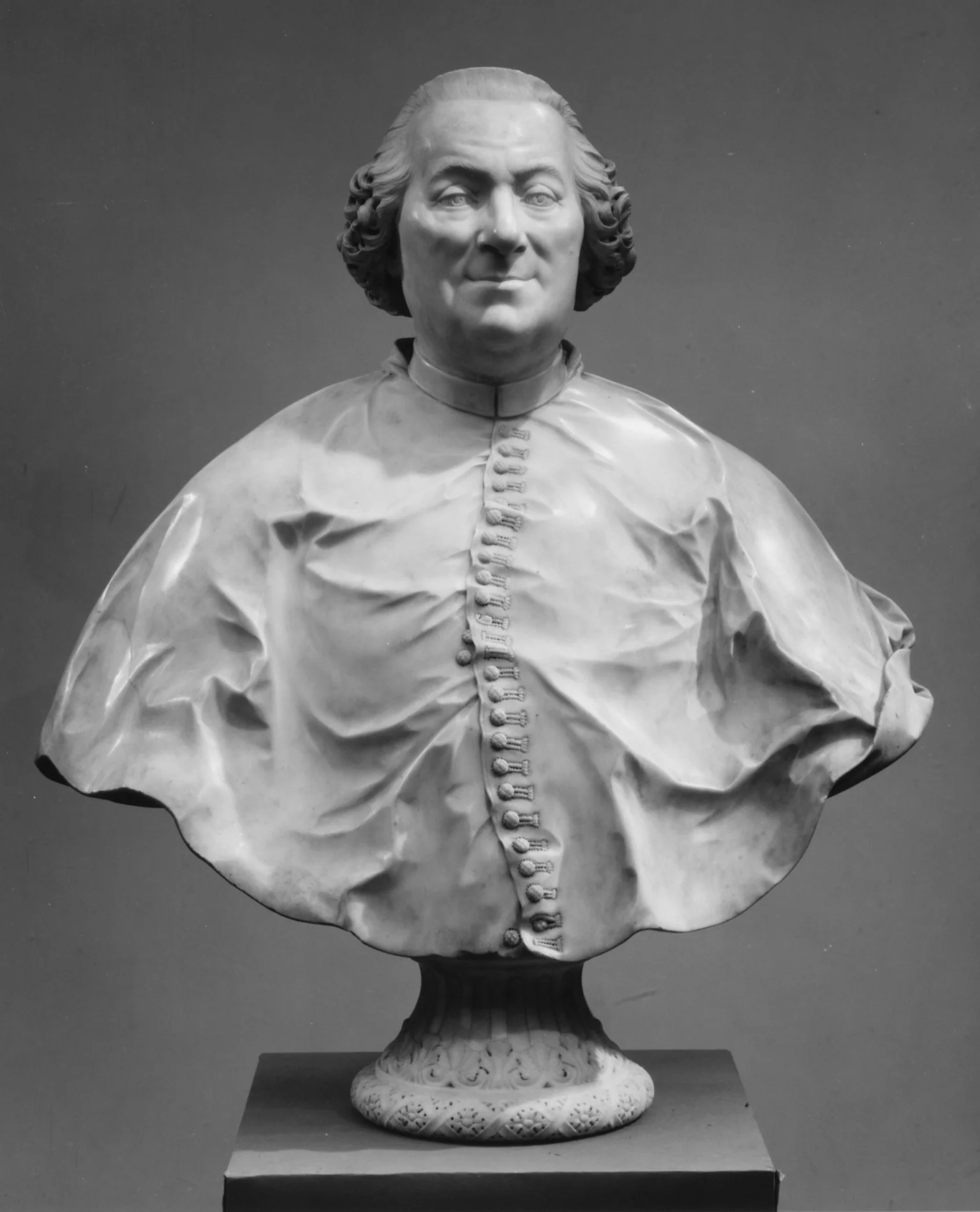
Image from Wikipedia
Image from Wikipedia
André le Brun – The French Sculptor Between Rome, Warsaw, and Vilnius
A European Artist of the Late 18th Century
André le Brun, also known as André-Jean le Brun, is among those sculptors of the 18th century whose work cannot be limited to a single art metropolis. Born in 1737 in Paris and died in Vilnius in 1811, he evolved from a Paris Academy student to a prominent figure at the courts in Rome, Warsaw, and St. Petersburg. His career exemplifies how strongly artistic trajectories in the Enlightenment were shaped by travel, patronage, and international networks. ([de.wikipedia.org](https://de.wikipedia.org/wiki/Andr%C3%A9_le_Brun?utm_source=openai))
Biographical Beginnings in Paris and Academic Training
The artistic foundation of André le Brun was established at the Académie royale de peinture et de sculpture in Paris, where he studied under Jean-Baptiste Pigalle. As early as 1756, he won the Grand Prix de l’Académie, the Prix de Rome, which granted him a scholarship to the Académie de France in Rome. This early success not only marked his breakthrough but also his entry into the courtly-academic art world, where education, competition, and representation were closely intertwined. ([lazienki-krolewskie.pl](https://www.lazienki-krolewskie.pl/en/historia/postacie-historyczne/andre-le-brun?utm_source=openai))
Le Brun's training exemplifies the classical French school of sculpture that emphasized technical precision, anatomy, and a profound understanding of portraiture and ideal form. Sources indicate that his early career was already accompanied by recognition, and his talent was perceived not only in Paris but also in Rome. This academic discipline forms the backdrop for his later role as court sculptor and draftsman. ([lazienki-krolewskie.pl](https://www.lazienki-krolewskie.pl/en/historia/postacie-historyczne/andre-le-brun?utm_source=openai))
Rome as a Laboratory of Form and International Reputation
Rome became a decisive place for the artistic maturation of André le Brun. His time there deepened his understanding of ancient prototypes, classical forms, and the modeling of figures with great presence. Art research sources also indicate that his works in Rome and his drawing style gained him a reputation that extended far beyond France. ([lazienki-krolewskie.pl](https://www.lazienki-krolewskie.pl/en/historia/postacie-historyczne/andre-le-brun?utm_source=openai))
This Roman reputation later opened doors for him in Poland-Lithuania. Marie Thérèse Rodet Geoffrin recommended him to the Polish King Stanislaus II Augustus after his successes in Rome, which was typical for the art world of that time: personal recommendation, courtly demand, and international style transferred artists across national borders. As a result, Le Brun became part of a Europe-wide system of patronage and representation. ([de.wikipedia.org](https://de.wikipedia.org/wiki/Andr%C3%A9_le_Brun?utm_source=openai))
Warsaw: Court Artist, Portraitist, and "Premier Sculpteur"
In Warsaw began the longest and most significant phase of his artistic career – in the case of a sculptor, one must speak more precisely of his artistic trajectory. André le Brun served as chief sculptor at the court of Stanislaus August for almost 30 years and was one of the most prominent artists of the Republic during the last decades of the 18th century. His role extended beyond mere production of work: he was part of the cultural self-design of a court that staged power, education, and modernity through art. ([lazienki-krolewskie.pl](https://www.lazienki-krolewskie.pl/en/historia/postacie-historyczne/andre-le-brun?utm_source=openai))
His tasks included portraits, plaster and bronze models, as well as works for the king's representative spaces. In the Sali Rycerskiej, bronze-like likenesses of significant Poles were installed in 1786, including historical and contemporary figures modeled by Le Brun based on pictorial templates. Additionally, two other bronze busts for the Sali Audiencjonalna are associated with his name in the sources. Thus, he contributed to the visual memory of a state that legitimized itself through art. ([lazienki-krolewskie.pl](https://www.lazienki-krolewskie.pl/pl/edukacja/baza-wiedzy/andre-le-brun-pierwszy-rzezbiarz-krola-stanislawa-augusta?utm_source=openai))
Drawing, Sculpture, and the Connection of Line and Volume
André le Brun was not only a sculptor but also a draftsman. This dual talent is not unusual for artists of the 18th century, but in his case, the drawing competency stands out particularly. An art critique describes his graphic work as independent and stylistically recognizable, with brown ink, widely flowing washes, and a rather angular line quality. This indicates a conceptual understanding in which sculpture and drawing complement each other. ([latribunedelart.com](https://www.latribunedelart.com/a-drawing-by-andre-lebrun-for-the-louvre?lang=en&utm_source=openai))
It is precisely the connection of sculptural plasticity and drawing precision that makes Le Brun interesting for art history. His works illustrate how the language of form changed in the late Rococo and early Classicism: away from pure decoration, towards stronger characterization, portrait accuracy, and architectural presence in space. In this regard, he stands in a long tradition of French sculptors who worked with court programs and intellectual ambition. ([latribunedelart.com](https://www.latribunedelart.com/a-drawing-by-andre-lebrun-for-the-louvre?lang=en&utm_source=openai))
St. Petersburg and the Later Years in Vilnius
After his long phase in Warsaw, André le Brun worked in St. Petersburg from 1795 to 1803. This chapter further demonstrates the high mobility of his career and his ability to connect with the major courts of Eastern Europe. Sources mention a portrait of Empress Maria Feodorovna, underscoring his enduring significance as a sculptor for aristocratic representation. ([lazienki-krolewskie.pl](https://www.lazienki-krolewskie.pl/en/historia/postacie-historyczne/andre-le-brun?utm_source=openai))
He spent his last years in Vilnius, where he died in 1811. Notably, he was involved in the establishment of a sculpture collection for the University of Vilnius in 1802. This marked a shift in his activities from court commission work to institutional collection culture, signifying the transition from purely representative art to a museum and academic context. ([de.wikipedia.org](https://de.wikipedia.org/wiki/Andr%C3%A9_le_Brun?utm_source=openai))
Discography? No – But a Legacy in Museums and Collections
As André le Brun was a sculptor and draftsman, he naturally does not possess a discography in the musical sense. However, his oeuvre has remained alive in museums, collections, and art historical references. Works such as a cardinal porcelain or marble works in Warsaw, along with drawings regarded as independent testimonials of his handwriting in art historical debates, are particularly noted. The reception of his work therefore does not proceed through charts or hit singles, but rather through collection presence, art historical research, and museum contexts. ([dewiki.de](https://dewiki.de/Lexikon/Andr%C3%A9_le_Brun?utm_source=openai))
The critical reception follows this pattern: his significance lies less in a canonized "masterwork" than in the sum of his contributions to courtly image culture. Research highlights his role as a portraitist and his connection to the power centers of Europe. Those who study Le Brun recognize an artist who was not focused on spectacular individual works but rather on long-lasting cultural impact. ([sculptureetcollection.com](https://sculptureetcollection.com/andre-jean-lebrun-premier-sculpteur-roi-stanislas-auguste/?utm_source=openai))
Style, Cultural Influence, and Art Historical Contextualization
Stylistically, André le Brun navigates between French academic rigor, Roman-influenced classicism, and courtly representation art. His portrait work displays a pronounced sensitivity to dignity, status, and physiognomic presence, while his drawings possess a lively, almost tactile quality. This blend imbues his work with a tension that distinguishes him from purely decorative sculptors of his time. ([latribunedelart.com](https://www.latribunedelart.com/a-drawing-by-andre-lebrun-for-the-louvre?lang=en&utm_source=openai))
Culturally, he is essential as a mediating figure. He brought the French Academy tradition to Central and Eastern Europe and adapted it to the needs of an international court system. His journey from Paris through Rome to Warsaw, St. Petersburg, and Vilnius narrates a European art history in motion. This is precisely what makes André le Brun exciting: as an artist who translated power, education, and style into stone and bronze forms. ([de.wikipedia.org](https://de.wikipedia.org/wiki/Andr%C3%A9_le_Brun?utm_source=openai))
Conclusion: Why André le Brun Still Fascinates Today
André le Brun captivates with his rare clarity of connection between academic training, international mobility, and courtly significance. He represents an era in which art was not only meant to be beautiful but to make authority, memory, and cultural order visible. Those who follow his career discover a sculptor of European caliber, whose work continues to thrive in museums, archives, and art historical discourses. Anyone enthusiastic about 18th-century art should not view Le Brun as a marginal figure but as an important creator of a continent-wide space of style and representation. ([lazienki-krolewskie.pl](https://www.lazienki-krolewskie.pl/en/historia/postacie-historyczne/andre-le-brun?utm_source=openai))
Official Channels of André le Brun:
- Instagram: No official profile found
- Facebook: No official profile found
- YouTube: No official profile found
- Spotify: No official profile found
- TikTok: No official profile found
Sources:
- André le Brun – Wikipedia
- Łazienki Królewskie – André Le Brun
- Łazienki Królewskie – André Le Brun, First Sculptor of King Stanislaus August
- La Tribune de l’Art – A drawing by André Lebrun for the Louvre
- Sculpture & Collection – André Jean Lebrun, Premier Sculptor of King Stanislas Auguste
- Wikipedia: Image and text source