
August Strindberg
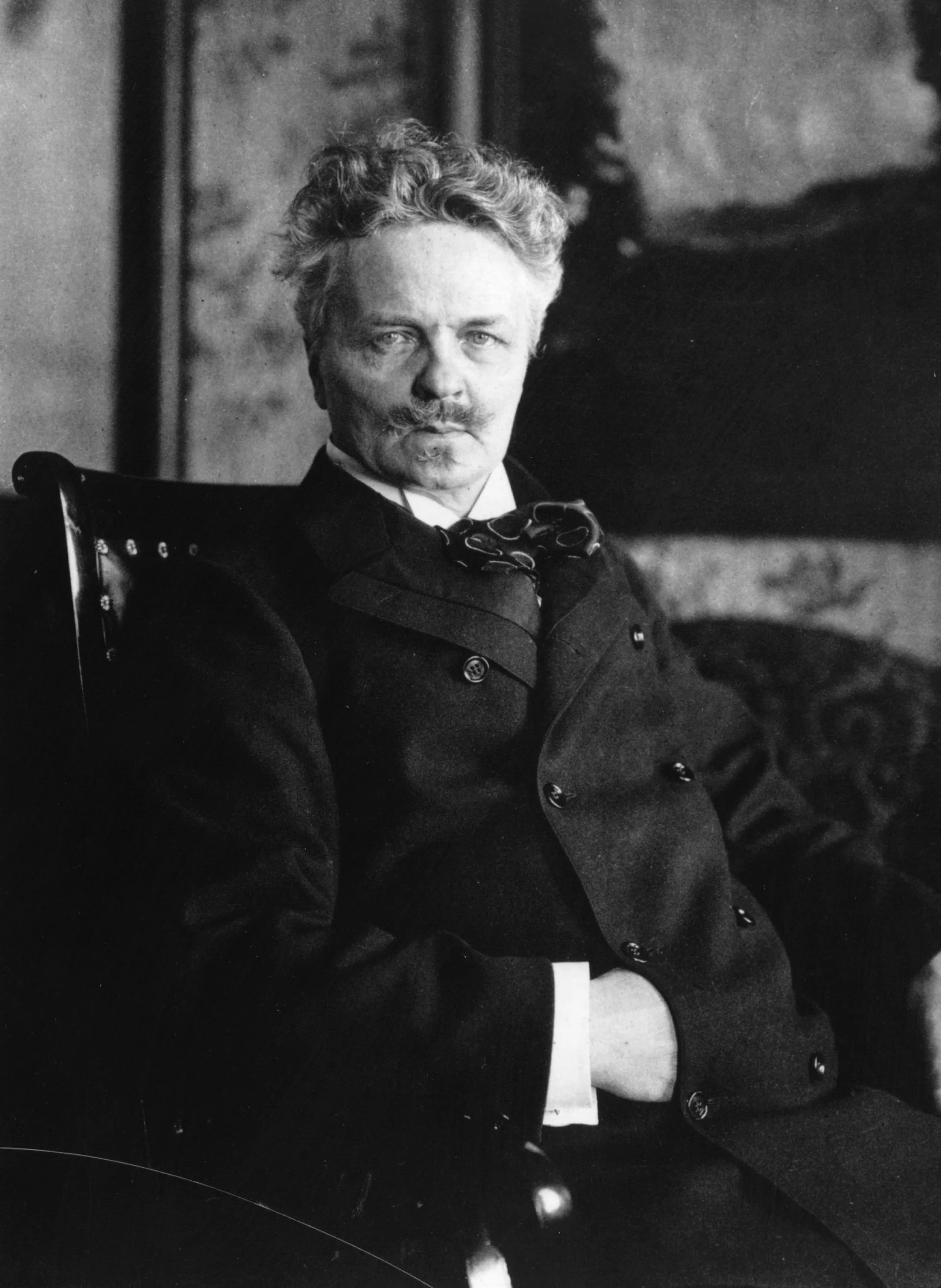
Image from Wikipedia
Image from Wikipedia
August Strindberg: The Radical Classic of Swedish Literature Between Drama, Protest, and Art
An Author Whose Work Resounds to This Day
August Strindberg is among the defining voices of world literature and one of the most influential Swedish authors of all time. Born on January 22, 1849, in Stockholm and dying there on May 14, 1912, he became a figure who not only wrote literary history but experienced it with maximum intensity. His texts combine social indictment, psychological precision, formal radicalism, and an uneasy, searching mentality that characterizes his entire oeuvre. (de.wikipedia.org)
Strindberg was a novelist, playwright, short story writer, polemicist, and visual artist. His significance extends far beyond Swedish literature, as he anticipated developments that later became central to naturalism, symbolism, expressionism, and modern theater. Engaging with August Strindberg means encountering not a smooth classic, but an author whose work thrives on conflicts, crises, and a permanent search for artistic rebirth. (snl.no)
Biographical Origins and Early Influences
Johan August Strindberg was born as the fourth of eight children into a middle-class Stockholm family. His father worked as a steamship commissioner, and his mother was a former housemaid; the household fostered education, home music, and cultural interests, even though their financial circumstances remained unstable. This mixture of bourgeois aspirations, economic insecurity, and frequent relocations left a mark on his perspective on society and social order. (de.wikipedia.org)
From an early age, Strindberg showed a tendency to transform observation into literature. After graduating from high school in 1867, he studied aesthetics and living languages in Uppsala, dabbled in various occupations, and abandoned a medical degree to pursue an acting career. Although this path did not succeed, it marked an important moment: Strindberg moved early between art, job seeking, and intellectual self-discovery. (de.wikipedia.org)
The Literary Breakthrough with Socially Critical Impact
His real breakthrough came in 1879 with the novel Röda rummet (“The Red Room”), which is regarded as one of the first modern Swedish novels. The work made Strindberg instantly famous because it targeted political, cultural, and social institutions with sharp satire and resonated with the tone of a new literary era. His trademark was already evident: the combination of precise milieu observation, aggressiveness, and stylistic agility. (snl.no)
In the early 1880s, Strindberg wrote further works that solidified his position as a combative social diagnostician. These include Herr Bengts hustru and the short story collection Svenska öden och äventyr as well as the polemical work Det nya riket. This phase showcases an author who dissects social institutions with literary means and understands the novel as a tool of criticism. (snl.no)
Drama as a Lens: Strindberg and the Renewal of Theater
Strindberg's global impact is particularly based on his dramas. His early reformist play Meister Olof and later works like Fräulein Julie, Gläubiger, or Der Vater made him a key figure in modern theater. The plays concentrate conflicts, power dynamics, and psychological trials in a form that continues to work on stages today. (strindbergmuseum.at)
Strindberg's influence became particularly prominent in Germany, where Max Reinhardt’s productions starting in 1902 facilitated the breakthrough of his plays. This established Strindberg not only as a national author but also as a European renewer of the stage, whose dialogue techniques, character psychology, and dramatic intensification provided essential impulses for 20th-century theater. His dramas often function like seismographs of inner and societal upheavals. (de.wikipedia.org)
Exile, Crises, and Productive Restlessness
From 1883 to 1889, Strindberg lived with his family in France, Switzerland, Germany, and Denmark. These years of wandering were highly productive artistically but marked by tension; among other things, he created the so-called Swiss short stories here. The change of location became a motor for perception for Strindberg: new countries, new conflicts, new themes. (snl.no)
Later, Strindberg fell into a famous inner and spiritual crisis, which manifested in Inferno and Legenden. The texts from this phase are characterized by mysticism, feelings of persecution, and radical self-questioning. Their literary power lies precisely in this: Strindberg transformed personal upheavals into art and made the crisis itself the subject. (auguststrindberg.se)
Late Works, Historical Dramas, and Public Controversies
After the turn of the 20th century, Strindberg wrote historical dramas such as Gustav Vasa, Erik XIV, Karl XII, and Gustav Adolf. Concurrently, late prose works like Götiska rummen and Svarta fanor emerged, which again exhibit societal acuity and polemical energy. Even in his final years, he remained a figure at the center of literary debates. (de.wikipedia.org)
His last years were not calm, but rather marked by journalistic disputes, including the so-called Strindberg Feud from 1910 to 1912. His engagement with other prominent authors and intellectuals demonstrates the unwavering nature of his temperament. Strindberg remained, until the end, an author who did not merely write but also argued, provoked, and took a stand. (snl.no)
The Artist Strindberg: Painting, Self-Presentation, and View of the World
In addition to literature, visual art also played a role in Strindberg's work. He painted during various periods, and his works are described as powerful and expressionistic. This second artistic existence aligns with his overall image: Strindberg worked not only with language but also with forms of expression meant to make inner states visible. (snl.no)
His self-presentation is also part of his nature as an author. In letters and autobiographically influenced texts, he repeatedly reshaped his own image, as seen in Tjänstekvinnans son, En dåres försvarstal, and Inferno. The result is a work that intertwines biography and literature, making the author himself the dramatic main character. (auguststrindberg.se)
Overview of Works, Style, and Literary Significance
Strindberg's body of work is exceptionally broad: novels, short stories, autobiographies, historical texts, polemical writings, and dramas form a vast oeuvre. This very diversity explains his enduring relevance. He shaped the development of the Swedish language in prose and decisively influenced the development of drama in the 20th century. (snl.no)
His style oscillates between realistic observation, satirical intensification, psychological analysis, and symbolic concentration. In the early socially critical texts, sharp diagnoses of society dominate, while in the later works, there is a stronger focus on inner turmoil and fragmented perceptions of the world. This range makes Strindberg an author who cannot be confined to a single epoch. (snl.no)
Cultural Influence and Aftermath
Strindberg is considered an author who anticipated world theater. His influence is evident in the development of naturalism, symbolism, expressionism, and later forms of modern, psychologically focused theater. The fact that his plays are continually staged internationally is due to the intensity of their conflicts and the precision of their character constellations. (wissen.de)
His legacy remains strong in scholarly and editorial contexts as well. The Strindberg Society supports research, and extensive collected editions ensure the preservation of texts. Strindberg is therefore not only the subject of literary admiration but also a part of a vibrant international research culture. (snl.no)
Current Projects and Publications
Since August Strindberg passed away in 1912, there are no current musical projects, albums, or tours. His ongoing presence does not arise from new publications but through new productions, scholarly editions, and the continuous reception of his work. This is what makes him a classic with remarkable relevance: his oeuvre remains in motion, even though his life is complete. (sok.riksarkivet.se)
Conclusion: Why August Strindberg Continues to Fascinate Today
August Strindberg fascinates because he does not smooth out extremes but makes them productive: social criticism, personal conflict, artistic reinvention, and linguistic precision converge in his work. Those who read him experience literature as a power field where society, psyche, and form ceaselessly wrestle with each other. This is where his enduring greatness lies. (auguststrindberg.se)
Strindberg remains an author for readers seeking literary intensity and who are willing to engage with uncomfortable truths. His dramas and novels show how close art can come to life, crisis, and understanding. To experience Strindberg live today is not to find him on the contemporary stage, but in the immediate impact of his texts. (snl.no)
Official Channels of August Strindberg:
- Instagram: no official profile found
- Facebook: no official profile found
- YouTube: no official profile found
- Spotify: no official profile found
- TikTok: no official profile found