
Beate Rudolf
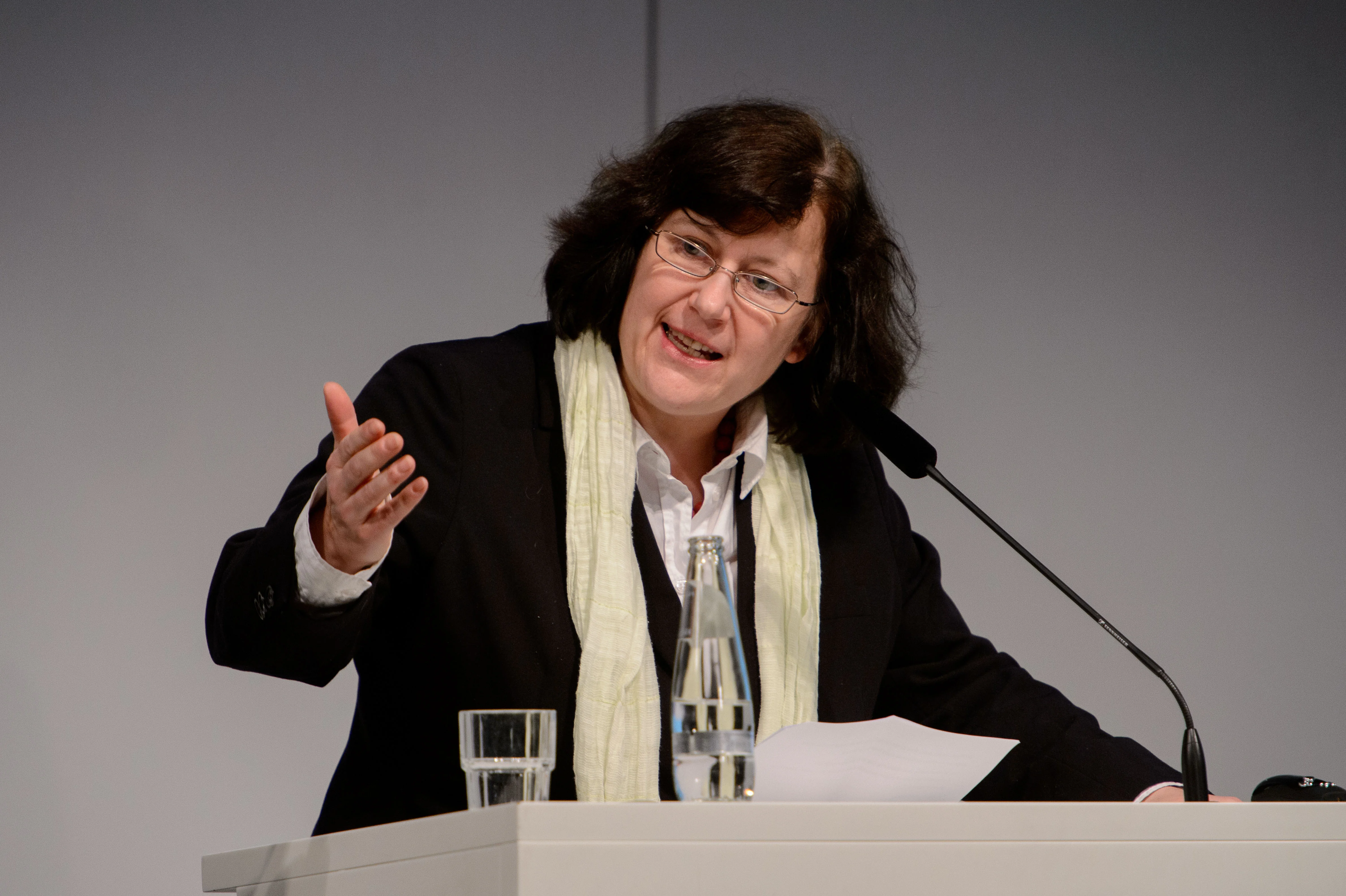
Image from Wikipedia
Image from Wikipedia
Beate Rudolf: Legal Authority, Human Rights Advocacy, and a Shaping Voice for Equality
A Biography Bridging Science, Law, and International Human Rights Work
Beate Rudolf, born on June 12, 1964 in Cologne, is one of the defining German legal scholars of her generation. Since January 1, 2010, she has served as the Director of the German Institute for Human Rights, where she has established herself as a prominent voice for human dignity, equality, and the rule of law. Her career combines academic precision with institutional responsibility and long-standing human rights practice. ([institut-fuer-menschenrechte.de](https://www.institut-fuer-menschenrechte.de/das-institut/team/kurzbiografie-prof-dr-beate-rudolf-direktorin?utm_source=openai))
Early Years and Academic Influences
Beate Rudolf's professional journey is closely tied to legal scholarship. She taught and conducted research at the universities of Bonn and Düsseldorf, at Tulane Law School in New Orleans, and at the Free University of Berlin. These stages reflect an international academic socialization that has profoundly shaped her understanding of constitutional law, international law, and issues of equality. ([institut-fuer-menschenrechte.de](https://www.institut-fuer-menschenrechte.de/das-institut/team/kurzbiografie-prof-dr-beate-rudolf-direktorin?utm_source=openai))
Her work at Heinrich Heine University Düsseldorf was particularly formative, where she served as a research assistant from 1994 to 2000 in the areas of public law, foreign public law, international law, and European law, and completed her doctorate in 1999. This phase marked the transition from legal education to an independent scholarly and political authority. ([dewiki.de](https://dewiki.de/Lexikon/Beate_Rudolf?utm_source=openai))
Career Focused on Human Rights
Rudolf's professional development led her early on into practical human rights work. Her experiences include an internship in the Human Rights Directorate of the Council of Europe, representing complainants before the European Court of Human Rights, and long-standing voluntary work with the German Women Lawyers Association and the European Women Lawyers Association. Until the end of 2011, she served as Vice President of this European association of female lawyers. ([institut-fuer-menschenrechte.de](https://www.institut-fuer-menschenrechte.de/das-institut/team/kurzbiografie-prof-dr-beate-rudolf-direktorin?utm_source=openai))
With her role at the helm of the German Institute for Human Rights, Rudolf gained institutional weight. The Institute describes her as a director with extensive research experience and practical expertise in human rights work. Since 2010, she has shaped the substantive direction of an organization that monitors the human rights situation in Germany and addresses social, political, and legal matters. ([institut-fuer-menschenrechte.de](https://www.institut-fuer-menschenrechte.de/en/institute/governance-and-supervisory-bodies/board-of-directors?utm_source=openai))
Leadership, Influence, and Public Perception
Rudolf's public presence is not fueled by theatrics, but by professional authority. She speaks on constitutional issues, discrimination protection, women's rights, and the implementation of international human rights norms with a clarity that combines academic depth with political relevance. Interviews and expert contributions from the Institute portray her as a personality who translates legal complexity into social debates. ([institut-fuer-menschenrechte.de](https://www.institut-fuer-menschenrechte.de/im-fokus/menschenrechte-und-rechtstaat-staerken?utm_source=openai))
Her work has also received institutional recognition: in 2017, the Free University of Berlin awarded her the Margherita von Brentano Prize for her outstanding contributions to the field of human rights and, in particular, women's rights. Additionally, in 2016 she was elected Chair of the World Federation of National Human Rights Institutions for three years, further underscoring her international authority. ([institut-fuer-menschenrechte.de](https://www.institut-fuer-menschenrechte.de/das-institut/team/kurzbiografie-prof-dr-beate-rudolf-direktorin?utm_source=openai))
Focus Areas: Equality, Anti-Discrimination, and the Rule of Law
Rudolf represents a human rights-based perspective on democracy and the state. The Institute documents her positions on legal equality, gender-based violence, racist discrimination, and the protection of the right to assemble. She emphasizes precise analysis, institutional responsibility, and practical implementability rather than mere symbolic politics. ([institut-fuer-menschenrechte.de](https://www.institut-fuer-menschenrechte.de/das-institut/25-jahre-dimr?utm_source=openai))
Her work on women's rights and protection against sexual violence plays a particularly important role. The Institute points to her expertise in this area, such as evaluating care gaps following sexual violence or categorizing legal standards for discrimination protection. Her authority is based on years of specialized work rather than short-term media attention. ([institut-fuer-menschenrechte.de](https://www.institut-fuer-menschenrechte.de/das-institut/team/kurzbiografie-prof-dr-beate-rudolf-direktorin?utm_source=openai))
Current Projects and Public Responsibilities
In 2024 and 2025, Beate Rudolf remains an active voice in the human rights discourse. The Institute recently published contributions and annual reports with her as director; new tasks have also been created, such as the reporting office for gender-based violence and the reporting office for human trafficking, to systematically highlight human rights violations. Rudolf is at the forefront of an organization that responds to current political and societal challenges. ([institut-fuer-menschenrechte.de](https://www.institut-fuer-menschenrechte.de/das-institut/25-jahre-dimr?utm_source=openai))
Her recent public statements revolve around strengthening the rule of law, the significance of the European Convention on Human Rights, and the question of how fundamental rights can be defended even under pressure. This connection of analysis, practice, and political responsibility makes her role in the public sphere particularly enduring. ([institut-fuer-menschenrechte.de](https://www.institut-fuer-menschenrechte.de/im-fokus/menschenrechte-und-rechtstaat-staerken?utm_source=openai))
Discography, Charts, and Musical Reception
For Beate Rudolf, there is no music discography, no hit singles, no chart history, and no critical reception in the music press. The available Wikipedia text and verifiable web sources describe her exclusively as a legal scholar and director of the German Institute for Human Rights. Therefore, no musical releases, albums, or artistic projects can be substantiated. ([institut-fuer-menschenrechte.de](https://www.institut-fuer-menschenrechte.de/das-institut/team/kurzbiografie-prof-dr-beate-rudolf-direktorin?utm_source=openai))
No official social media profiles in the sense of a musical artist appearance could be verified either. Web searches did not yield any clearly official accounts on Instagram, Facebook, YouTube, Spotify, or TikTok. Therefore, this area remains factually empty and refers to the institutional information channels of the German Institute for Human Rights. ([institut-fuer-menschenrechte.de](https://www.institut-fuer-menschenrechte.de/das-institut/team/kurzbiografie-prof-dr-beate-rudolf-direktorin?utm_source=openai))
Cultural Influence and Social Significance
Beate Rudolf is not a pop or stage figure, but her impact is nonetheless significant culturally and politically. She contributes to establishing human rights as a living component of democratic culture and brings legal expertise into debates about dignity, equality, and anti-discrimination. This is precisely where her relevance lies: she works on the foundations of an open society. ([institut-fuer-menschenrechte.de](https://www.institut-fuer-menschenrechte.de/das-institut/25-jahre-dimr?utm_source=openai))
Her profile combines academic seriousness with public responsibility. Her long-standing work at universities, within the Council of Europe, in associations, and at the helm of the German Institute for Human Rights makes her an authority whose influence is primarily visible in political and legal decision-making spaces. This creates a portrait of enduring significance, even without a classic cultural or musical biography. ([institut-fuer-menschenrechte.de](https://www.institut-fuer-menschenrechte.de/en/institute/governance-and-supervisory-bodies/board-of-directors?utm_source=openai))
Conclusion: Why Beate Rudolf Remains Interesting
Beate Rudolf represents a career in which expertise, stance, and institutional responsibility intertwine. She has established herself as a lawyer, scholar, and human rights expert in the German and European discourse. She remains interesting because her work not only explains how rights are protected but also shows how democracy is defended in everyday life. ([institut-fuer-menschenrechte.de](https://www.institut-fuer-menschenrechte.de/das-institut/team/kurzbiografie-prof-dr-beate-rudolf-direktorin?utm_source=openai))
Those interested in human rights, equality, and the state of the rule of law should closely follow her positions and projects. Beate Rudolf embodies a form of authority that does not need to be loud to have an impact. This is why it is worthwhile to take a look at her work and the debates she shapes. ([institut-fuer-menschenrechte.de](https://www.institut-fuer-menschenrechte.de/im-fokus/menschenrechte-und-rechtstaat-staerken?utm_source=openai))
Official Channels of Beate Rudolf:
- Instagram: no official profile found
- Facebook: no official profile found
- YouTube: no official profile found
- Spotify: no official profile found
- TikTok: no official profile found
Sources:
- Institute for Human Rights – Brief Biography of Prof. Dr. Beate Rudolf, Director
- Institute for Human Rights – Board
- German Institute for Human Rights – Board of Directors
- Institute for Human Rights – Strengthening Human Rights and the Rule of Law
- Institute for Human Rights – 75 Years of the Basic Law
- Wikipedia – Beate Rudolf
- DeWiki – Beate Rudolf