
Marcus H. Rosenmüller
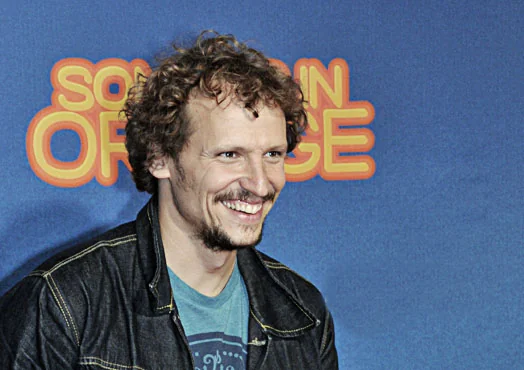
Image from Wikipedia
Image from Wikipedia
Marcus H. Rosenmüller – The Chronicler of Bavarian Visual Worlds and Modern German Television Narratives
A Director Between Home, Humor, and Cinematic Precision
Marcus H. Rosenmüller, whose full name is Marcus Heinrich Rosenmüller, was born on July 21, 1973, in Tegernsee and has established a firm place as a German director and screenwriter in contemporary cinema and television. He gained recognition for his early Bavarian subjects, his distinctive Heimat films, and later for popular TV productions that blend regional atmosphere with clear dramaturgy. His career showcases a rare mix of down-to-earth storytelling, a strong sense for various environments, and professional directorial strengths. ([en.wikipedia.org](https://en.wikipedia.org/wiki/Marcus_H._Rosenm%C3%BCller?utm_source=openai))
Biographical Roots and Film Education
Rosenmüller's journey into storytelling did not begin as a loud industry event but as a steadily cultivated practice. According to his official biography, he studied communication sciences at LMU Munich and was already directing image and advertising films during his studies. Concurrently, he worked for several years on music videos and clips, honing his eye for rhythm, visual composition, and impactful scene direction. ([marcusrosenmueller.de](https://www.marcusrosenmueller.de/.cm4all/uproc.php/0/Marcus_O_Rosenmueller_Biography2023.pdf?_=186b7ccc53a&cdp=a))
Even before his film career took off, he gained extensive experience in moving images: Between 1989 and 1999, he produced over 120 music videos, including those for Udo Lindenberg, Uwe Ochsenknecht, Heike Makatsch, Jule Neigel, and Extrabreit. This early exposure to music and pop culture significantly influenced his visual style. In 1991, he co-founded the production company MME – Me, Myself & Eye. ([marcusrosenmueller.de](https://www.marcusrosenmueller.de/.cm4all/uproc.php/0/Marcus_O_Rosenmueller_Biography2023.pdf?_=186b7ccc53a&cdp=a))
The Breakthrough with Bavarian Profile
His artistic breakthrough came with works deeply rooted in Bavarian everyday life, in the melody of language, and regional characteristics. Early short and television films such as "Nur Schreiner machen Frauen glücklich," "Kümmel & Korn," "Hotel Deepa," and "C’est la vie" already appear in the filmography of Cineuropa. From this foundation, Rosenmüller developed a distinctive style that understands local color not as folklore but as narrative strength. ([cineuropa.org](https://cineuropa.org/en/filmography/147257/))
His reputation as a director of modern Bavarian Heimat films is particularly lasting. The Wikipedia text specifically highlights "Wer früher stirbt ist länger tot," and even in later projects, the tension between home, tradition, and contemporary staging remains central. Rosenmüller combines comedy and melancholy, everyday language and precise visual direction, making his films frequently both popular and culturally relevant. ([en.wikipedia.org](https://en.wikipedia.org/wiki/Marcus_H._Rosenm%C3%BCller?utm_source=openai))
Filmography, Series Work, and Popular TV Projects
Rosenmüller's body of work is diverse, ranging from feature films to TV movies, as well as series and miniseries. Notable directorial works include "Wunderkinder," "Die Holzbaronin," "Die Affäre Borgward," "Flucht durchs Höllental," "Ostfriesenmoor," "Schneekind – ein Schwarzwaldkrimi," and "Münter & Kandinsky." "The Keeper," "Best Chance," "Good Times," and "Grave Decisions" also belong to his international and German-speaking filmography. ([marcusrosenmueller.de](https://www.marcusrosenmueller.de/.cm4all/uproc.php/0/Marcus_O_Rosenmueller_Biography2023.pdf?_=186b7ccc53a&cdp=a))
Particularly in television, his strength shows through a blend of narrative clarity and reliable audience resonance. His official website lists several productions with high viewership, including "Teufelsmoor," "Wer Gewalt sät," and "Waldgericht – Ein Schwarzwaldkrimi." These figures highlight that Rosenmüller has become a staple of German television not only aesthetically but also in terms of mass appeal. ([marcusrosenmueller.de](https://www.marcusrosenmueller.de/))
Stylistics: Visual Language, Tonality, and Directorial Signature
Rosenmüller's directorial style thrives on a keen sense for characters, landscapes, and social nuances. His works use locations not merely as backdrops but as atmospheric elements of storytelling. This results in a visual language, particularly in Heimat films, crime dramas, and historical dramas, that creates intimacy while remaining cinematic. ([cineuropa.org](https://cineuropa.org/en/filmography/147257/))
His authority is also evident in his choice of subjects: Rosenmüller is interested in real biographies, historical contexts, and social conflicts. "Die Affäre Borgward," for instance, is noted on his website for receiving the 2019 German Economic Film Award, while "Wunderkinder" has garnered several international accolades and audience awards. This indicates an artistic stance that marries popular accessibility with thematic substance. ([marcusrosenmueller.de](https://www.marcusrosenmueller.de/Auszeichnungen/))
Critical Reception and Awards
The response to Rosenmüller's works has remained remarkably consistent over the years. His official awards page documents recognitions for "Wunderkinder," "Die Holzbaronin," "Die Affäre Borgward," "Flucht durchs Höllental," and other productions. Notably, "Wunderkinder" has collected international awards and nominations in Israel, Italy, Denmark, the USA, Argentina, and Germany, underscoring the broader significance of his directorial work. ([marcusrosenmueller.de](https://www.marcusrosenmueller.de/Auszeichnungen/))
Recent projects continue this trajectory. In 2024, "Münter & Kandinsky" premiered at the Munich Film Festival and was nominated for the Rheingold Audience Award; in 2025, the film received the Grand Prix for "Best Film" at the festival "Love is folly" in Varna. Additionally, his official website announced the historical drama "Block 10" as a new project for 2026. This reflects a director who continuously expands his thematic portfolio while remaining true to a distinct style. ([marcusrosenmueller.de](https://www.marcusrosenmueller.de/Auszeichnungen/))
Current Projects and Artistic Presence
Currently, Rosenmüller is primarily working on large television and film projects with historical or popular significance. His official website mentions the filming of "Block 10," a historical Auschwitz drama set for 2025, and the ongoing presence of "Münter & Kandinsky" in festival and cinema contexts. This is complemented by current crime series formats such as the Schwarzwaldkrimi revolving around "Vogelfrei." ([marcusrosenmueller.de](https://www.marcusrosenmueller.de/))
His projects typically combine dramaturgical stability with a pronounced interest in German history, regional identities, and compelling characters. This blend makes him appealing to producers, broadcasters, and audiences alike: Rosenmüller masters both the grand format and the meticulously crafted character narrative. In a media landscape often seeking clear profiles, he delivers a recognizable signature. ([marcusrosenmueller.de](https://www.marcusrosenmueller.de/.cm4all/uproc.php/0/Marcus_O_Rosenmueller_Biography2023.pdf?_=186b7ccc53a&cdp=a))
Cultural Influence and Positioning
Marcus H. Rosenmüller represents a generation of German filmmakers who do not treat regional subjects as a fringe topic but rather as carriers of cultural identity. His early Bavarian films, successful TV crime dramas, and historical dramas have demonstrated that local color and broad reach are not contradictory. He belongs to that group of directors who enrich the German-speaking mainstream with a clear signature. ([en.wikipedia.org](https://en.wikipedia.org/wiki/Marcus_H._Rosenm%C3%BCller?utm_source=openai))
As a professor at HFF Munich, as noted by a production site, he extends his influence beyond mere directorial work into the education of the next generation. This connection between practice, teaching, and continuous production reinforces his authority in the German film industry. Rosenmüller is thus not only a successful director but also a shaper of cinematic culture. ([lieblingsfilm.biz](https://www.lieblingsfilm.biz/en/about/marcus-rosenmueller/?utm_source=openai))
Marcus H. Rosenmüller remains intriguing because he combines popular storytelling with formal sovereignty. His films carry a distinct style, attitude, and recognizability without losing touch with the audience. Those wishing to experience German film culture between home, history, and modern TV dramaturgy should closely follow his upcoming works and festival premieres. ([marcusrosenmueller.de](https://www.marcusrosenmueller.de/))
Official Channels of Marcus H. Rosenmüller:
- Instagram: no official profile found
- Facebook: no official profile found
- YouTube: no official profile found
- Spotify: no official profile found
- TikTok: no official profile found
Sources:
Upcoming Events
Five Lakes Film Festival 2026: 20 Years of Cinema by the Lake
20 Years of Cinema by the Lake: The Five Lakes Film Festival 2026 Brings Anniversary Flair, Open Air, and Great Film Art to Starnberg. #FSFF
Gerd Baumann & Marcus H. Rosenmüller: If Not Who You
Amberg experiences an evening full of poetry, music, and fine wit: Gerd Baumann and Marcus H. Rosenmüller read, sing, and surprise. #Literature